
Japan’s ispace has taken a step that helps clarify the direction of the emerging lunar economy. The company hasn’t announced tourist trips to the Moon but rather something more immediate and likely more important for the market: a shared lunar cargo transportation service using Starship, the large launch and landing system developed by SpaceX.
According to Reuters, ispace has purchased 500 kilograms of capacity for $50 million on a future Starship mission that could land on the Moon starting in 2030. With this capacity, the company aims to offer a sort of “lunar bus” for small payloads, experiments, scientific instruments, or commercial equipment that don’t justify a dedicated mission.
The idea is significant. Until now, bringing cargo to the lunar surface has been a costly, complex operation reserved for space agencies or large contracts. ispace seeks to position itself as an integrator: buying capacity on Starship, consolidating loads from various clients, integrating them into its own system, and providing services after landing. Essentially, it’s attempting to make lunar access more like shared logistics than a one-time expedition.
A “Lunar Bus” for Small Loads
Hideaki Kamiya, senior vice president of ispace, described the new service as a “bus” to the Moon, contrasting it with the company’s own lunar modules, which would operate more like a “taxi” dedicated to surface missions. The analogy is useful: not all clients need to pay for an entire vehicle if they only want to send a small payload.
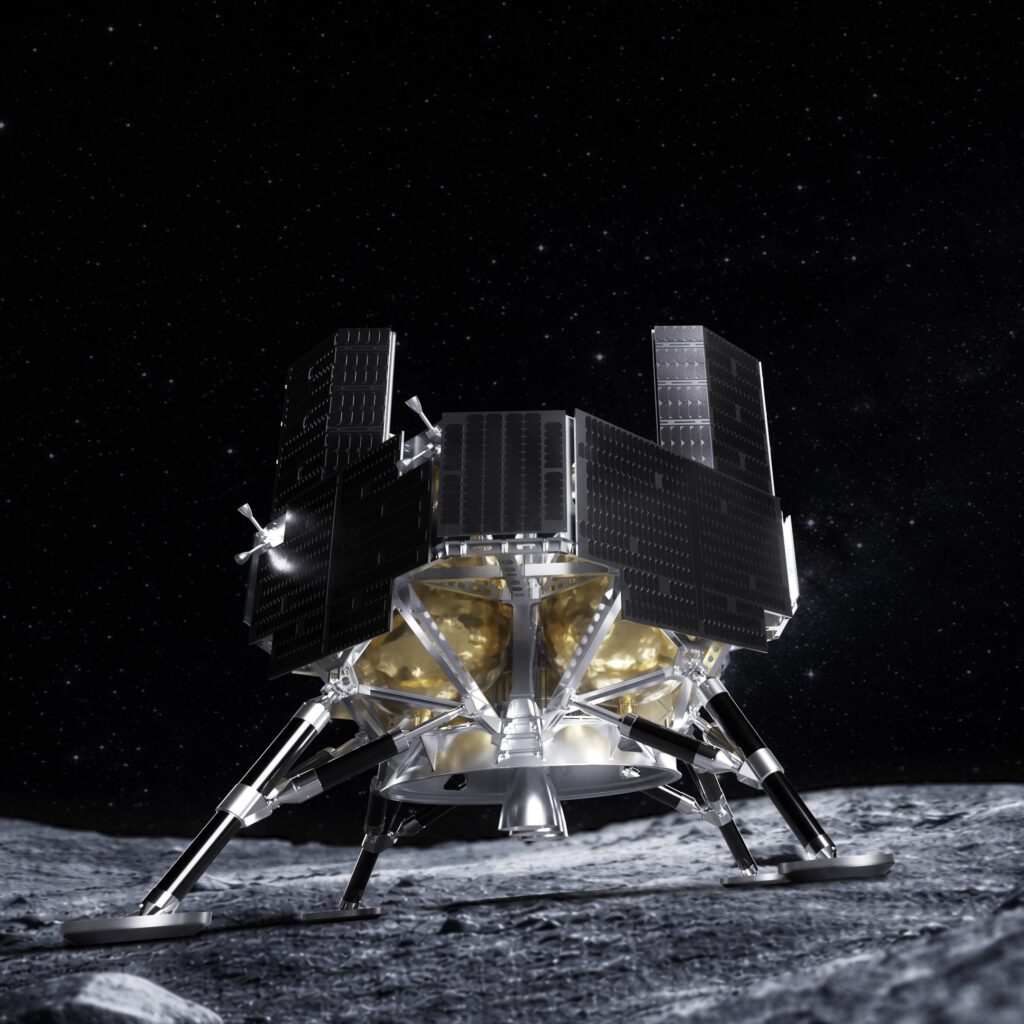
To make this possible, ispace will develop a lunar surface vehicle capable of carrying loads from different clients and deploying them once Starship has landed. Payload Space reports that the company calls this Mobile Cargo System, a separate spacecraft or system from its lunar module ULTRA, designed to transport cargo within the scope of this new integration service.
The concept is reminiscent of how SpaceX has already done in low Earth orbit with ride-sharing launches of small satellites, but adapted to a much more challenging environment. Instead of contracting a full launch, multiple clients can share a mission and split costs. The difference here is that, instead of just reaching orbit, the mission must land on the Moon, deploy cargo, and in some cases provide surface services.
ispace aims to occupy the space between the launcher and the end customer. It does not compete with Starship but leverages its capacity. It also continues to develop its own lunar modules. Combining these with a new line of business could make sense if lunar demand begins to grow.
Starship as a Central Piece of Lunar Logistics
Starship is central to this strategy because it’s more than just a rocket. SpaceX presents it as a fully reusable system designed to transport cargo and crew to Earth orbit, the Moon, Mars, and beyond.
The distinction from Falcon 9 is important. Falcon 9 has supported lunar missions for ispace but is not a lunar landing vehicle. Starship, on the other hand, is part of SpaceX and NASA’s plans to carry large payloads—and in the future, astronauts—to the lunar surface.
NASA’s goal remains the first crewed Artemis lunar landing in 2028 during Artemis IV. The agency explains that two astronauts would transfer from Orion to a commercial lunar lander system to descend to the surface and then return to lunar orbit. The development of these commercial modules, including SpaceX’s Starship HLS or Blue Moon from Blue Origin, will determine which provider can execute the mission.
For ispace, Starship offers a different opportunity: not to build the entire heavy-lift transportation system but to utilize its capacity to offer integration, deployment, and operation services to clients who need to arrive at the Moon with smaller payloads.
A Bet After Two Failed Attempts
The announcement follows two failed attempts by ispace to land on the Moon. The HAKUTO-R Mission 1, launched on a Falcon 9, failed to achieve a soft landing in 2023. The second mission, also launched on Falcon 9 in 2025, likewise ended with an unsuccessful landing. Reuters notes that while the company has used SpaceX Falcon 9 rockets for these missions, it has yet to succeed in a soft lunar landing.
This has not halted its plans. ispace aims to land three ULTRA modules on the Moon before 2030, including a mission under NASA’s Commercial Lunar Payload Services (CLPS) program. In March 2026, the company already re-scheduled its timeline and delayed a NASA-sponsored mission to 2030, partly due to previous challenges and strategic reorganization.
The partnership with SpaceX can be seen as a way to expand the business beyond reliance solely on its own modules. If ULTRA is the lunar “taxi,” then Starship would enable a shared transport line for loads that require volume and mass but not a dedicated mission.
The Moon as a Logistics Market Begins to Take Shape
For decades, the Moon was associated with scientific exploration, national prestige, or crewed missions. The new phase is different. The Moon is starting to be viewed as a market for transportation, communications, navigation, future energy, mining, research, and tech demonstrations.
That market remains small, uncertain, and risky, but it’s organizing. NASA invests in services from private companies via CLPS. SpaceX develops Starship as a high-capacity system. Astrolab has also reserved space on a future Starship mission for its lunar rover, FLEX. ispace aims to act as an integrator of lunar access for clients unable or unwilling to manage the entire process.
The key word here is infrastructure. The lunar economy won’t emerge just because someone sends a load to the Moon. It requires launch systems, landing modules, communications, navigation, surface vehicles, energy infrastructure, standards, insurance, contracts, and recurring customers. ispace’s announcement targets a specific layer of that infrastructure: bundling demand and making it transportable.
Cost considerations are also relevant. Paying $50 million for 500 kg is high compared to terrestrial or low Earth orbit logistics, but it can make sense for specialized lunar cargo. The important point is that this opens a pathway to share costs among multiple clients and lower entry barriers.
Not Tourist Trips, at Least for Now
It’s important not to misinterpret the announcement. ispace has not introduced a service for sending people to the Moon. The business focus is on shared lunar cargo. While Starship is designed by SpaceX to carry crew in future versions, and NASA intends to use commercial systems to return astronauts to the lunar surface during Artemis, ispace’s agreement pertains specifically to cargo capacity and integration services for clients.
This distinction matters because it prevents overpromising on human lunar tourism. human return to the Moon is an enormous technical challenge in itself. Commercial cargo transport will likely be the first market to mature: scientific instruments, small rovers, tech demonstrators, communications equipment, sensors, small mining devices, or institutional payloads.
If that market develops, more complex services—including crewed missions—would follow. But before establishing commercial human trips, repeated landings, safety, reuse, surface support, return or evacuation operations, and a much more robust operational chain will be necessary.
ispace is betting on a more modest piece—transforming Starship into a platform for others to purchase partial access to the lunar surface.
Japan Seeks a Place in the New Space Economy
The operation also has a geographic perspective. ispace is a Japanese company with international activity, aiming to position itself in a market where the United States dominates most contracts and China is rapidly advancing in lunar exploration. Japan does not want to remain merely a technological partner or industrial supplier; it wants to develop companies capable of selling lunar services.
SpaceX’s support adds visibility but also highlights a clear dependency: the new lunar logistics will largely revolve around whoever controls economical heavy-lift transportation. If Starship performs as promised, many companies will seek to build businesses on top of it. Delays would slow the entire lunar economy.
While ispace’s announcement does not guarantee a stable commercial route to the Moon by 2030, it signals that the market is beginning to behave that way: kilos are being purchased, slots are being reserved, integration services are being designed, and vehicles are being prepared for post-landing operations.
The Moon is still distant, but the business is starting to resemble a logistics chain rather than a single mission.
Frequently Asked Questions
Will ispace offer human trips to the Moon?
Not as announced. The company is preparing a shared lunar cargo service using Starship capacity.
How much capacity has ispace purchased on Starship?
500 kilograms for $50 million, on a mission that could land on the Moon starting in 2030.
What role will SpaceX play?
SpaceX will provide Starship as a transportation and lunar landing system. ispace will act as an integrator for clients wishing to send small cargos.
What is a “lunar bus”?
It’s a term for a shared service: multiple clients send loads on the same mission instead of contracting a dedicated lunar module.
Has ispace already landed on the Moon?
No. Its attempts in 2023 and 2025 ended without soft landings, but the company plans to carry out new ULTRA missions before 2030.
