
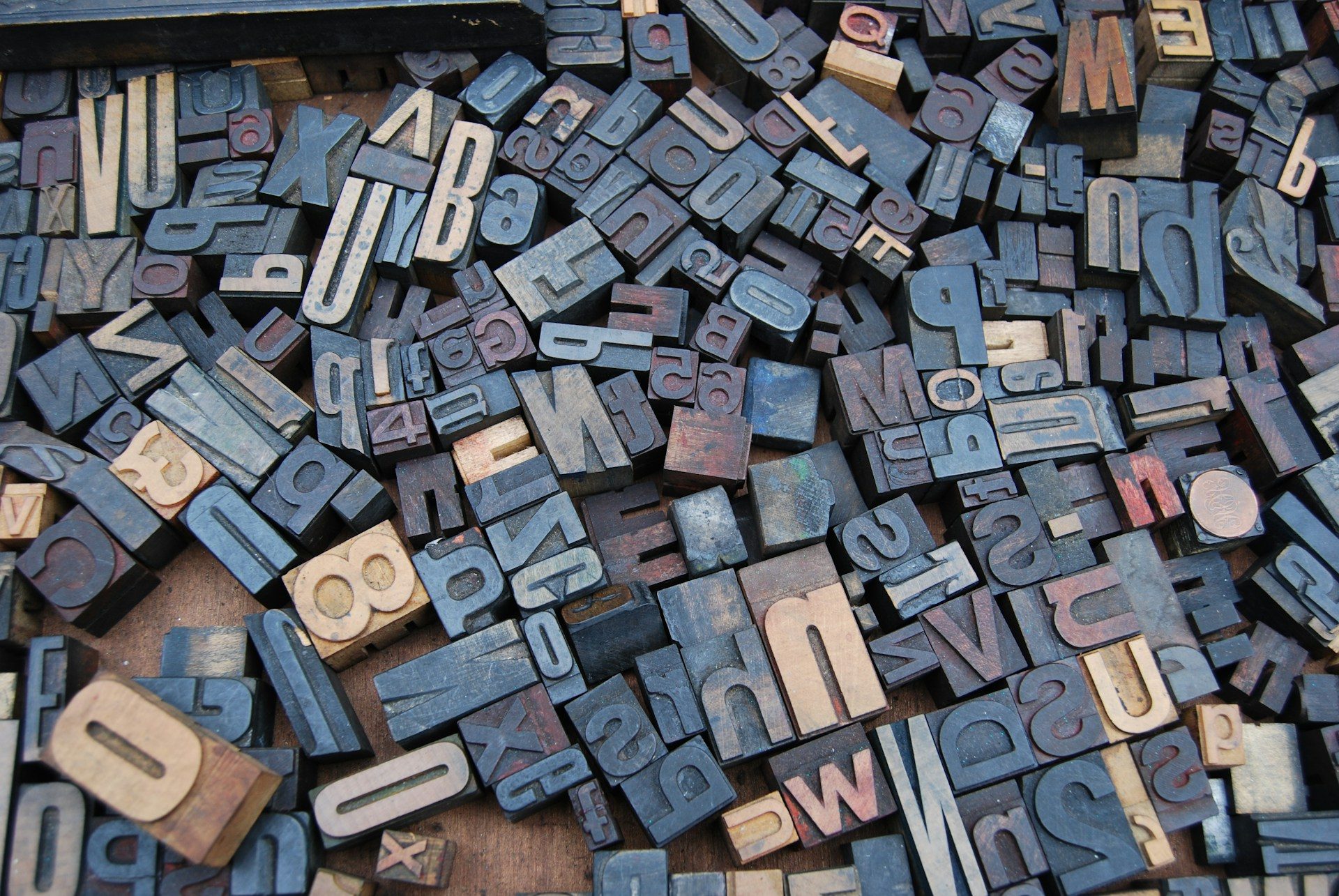
Before processors, the internet, programming languages, and artificial intelligence, there was a much more discreet technology that changed history: the alphabet. A small set of symbols capable of transforming sounds, ideas, commands, laws, names, memories, and stories into something portable, copyable, and durable.
From a technological perspective, an alphabet is an interface. It reduces the complexity of the world to minimal units that can be combined almost infinitely. With just a few letters, novels, contracts, messages, source code, technical documentation, prompts, judicial rulings, system manuals, and personal notes can be written. Its power lies in that blend of simplicity and scope.
The image illustrating the evolution of the alphabet— from proto-Sinaitic signs to modern Latin script— allows us to see writing with new eyes. Not just as an academic heritage, but as a cultural infrastructure that has been functioning for thousands of years. And also as a timely reminder in the era of generative AI: producing text is not the same as giving it meaning.
The alphabet was a compression technology
One of computer science’s great obsessions is data compression: representing more with less. The alphabet achieved something similar long before computing existed. It transitioned from graphic systems tied to concrete objects or ideas to signs capable of representing sounds. This abstraction was a huge technical improvement.
It wasn’t necessary to have a unique symbol for each thing. A small set of combinable signs was enough. That decision enabled the writing of new words, proper names, different languages, and concepts without straightforward imagery. The sign stopped being merely a drawing and started to behave like a reusable piece.
From a technological viewpoint, the alphabet resembles a protocol. It defines a set of units, usage rules, and a shared way of encoding information. For it to work, it’s not enough that signs exist. A community must accept them, teach them, repeat them, and trust in them.
That’s why the alphabet is more than just a character table. It’s a social agreement. Each current letter carries old decisions, support changes, commercial influences, political impositions, linguistic adaptations, and usage habits. The shape of a letter isn’t neutral: it’s the result of many generations of writing, copying, correcting, and teaching.
Modern technology has built several layers upon this foundation. ASCII, Unicode, keyboards, OCR, digital fonts, word processors, search engines, spell checkers, translation systems, and language models all depend on the same core idea: converting signs into processable information. Generative AI doesn’t emerge outside of this story; it adds a new layer to it.
From letters to tokens: what changes with AI
Language models don’t read exactly like people do. They typically work with tokens—units that can be words, word fragments, signs, or character combinations. AI processes patterns, calculates probabilities, and generates plausible output based on vast amounts of examples.
That explains much of their power. They can write quickly, maintain different styles, summarize large documents, translate, complete code, suggest headlines, rephrase texts, or generate nearly infinite variations. In many professional applications, they are already useful tools.
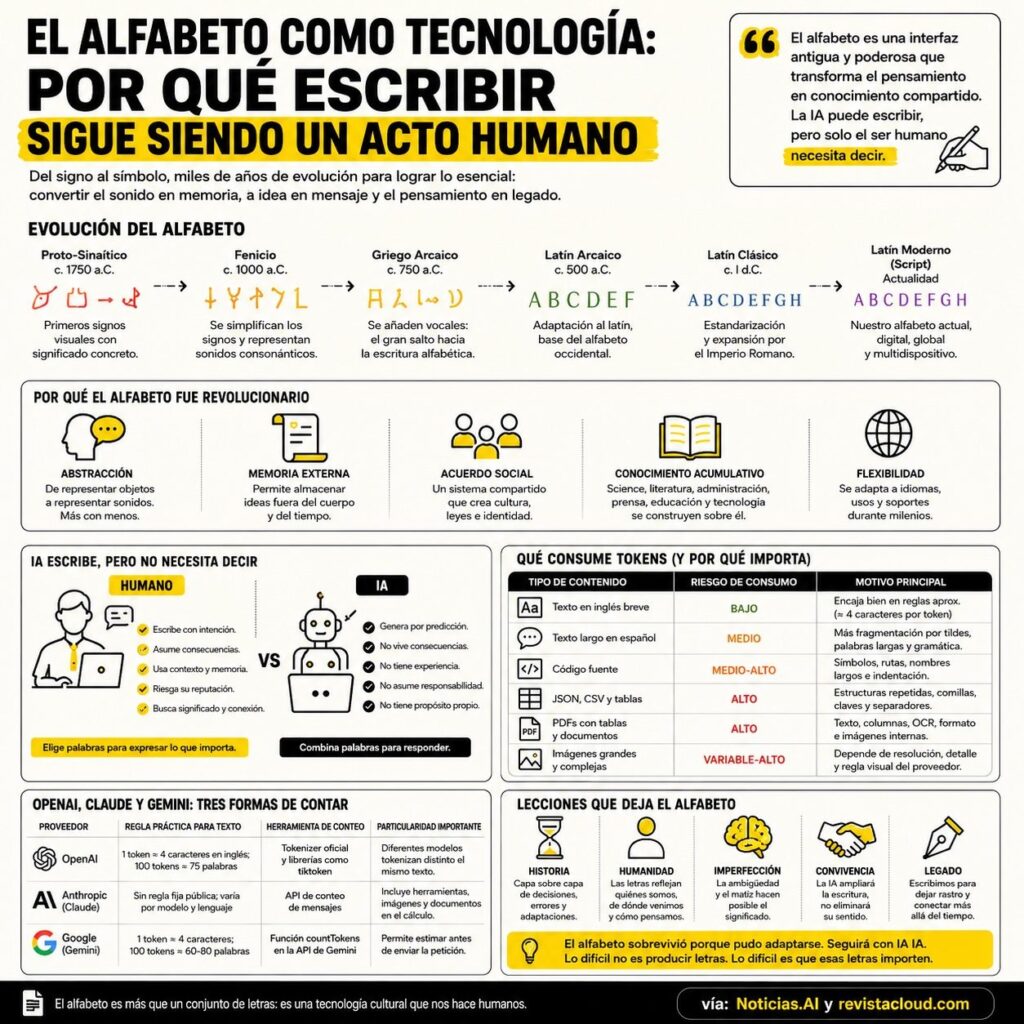
But it also sets a limit. A model can generate text without having an intrinsic need to say something. It doesn’t write because it remembers, promises, doubts, regrets, wants to persuade, or fears making mistakes. It writes because it has learned relationships between linguistic forms and responds to an instruction.
This difference matters. The alphabet was born so people could leave traces of what they needed to communicate. AI generates language based on patterns, but it doesn’t inhabit the history of those signs. It can explain the evolution of a letter, but it doesn’t belong to a community that had to dispute, teach, or use it to preserve memory.
In technology, we often value efficiency—and rightly so. But human language doesn’t only work through efficiency. Sometimes, a local word is more meaningful than its standard counterpart. A deliberate typo can carry intent. A short phrase might contain a biography. A silence in the middle of a text also communicates. Meaning isn’t solely in the sequence of characters but in who uses it, when, why, and in front of whom.
That’s why AI can assist in writing but doesn’t automatically turn any text into meaningful communication. Quality isn’t just about grammatical correctness. It’s about whether it responds to an intention.
Human writing as a system of identity
Every technological advancement has changed writing. The printing press altered the dissemination of knowledge. The typewriter changed rhythms and styles. The computer enabled editing without rewriting from scratch. The internet multiplied how much text circulates. Mobile devices made us write more, faster, and in shorter formats. AI adds another layer: automating a significant part of textual production.
This change shouldn’t be seen solely as a threat. It also creates possibilities. A technician can document a system more thoroughly. A company can summarize meetings. A programmer can generate drafts of comments or documentation. A writer can explore different approaches. Someone with difficulty writing can rely on tools that reduce barriers.
The risk arises when assistance is mistaken for full substitution. In a world full of AI-generated text, the difference will increasingly lie in intention, judgment, and responsibility. Who signs off? Who decides? Who bears the consequences? Who knows when a phrase is technically correct but humanly hollow?
The alphabet evolved because millions of people used it imperfectly. It changed as it moved from one culture to another, from one medium to another, from one language to another. It survived because it was flexible, not because it was perfect. AI, on the other hand, evolves through data, parameters, training, evaluation, and computational capacity. It’s a formidable technology, but its relationship with language is different.
Human writing has something that can’t be fully reduced to prediction: identity. When someone invents a word, breaks a rule, writes with a personal accent, or leaves an out-of-place phrase, they’re doing more than merely combining signs. They’re making a statement.
AI can imitate this gesture. It can do so convincingly. But it risks nothing in doing so. It doesn’t lose prestige, gain memory, betray a promise, reconcile with anyone, or remember a generation. It calculates an output.
The alphabet’s technology will continue coexisting with more advanced technologies. It will still be embedded in code, prompts, operating systems, smart contracts, language models, and daily messages. AI will write a lot. Very much. But the key question won’t just be how much text it can produce, but how much of that text truly matters.
The hardest part has never been to string letters together. It’s to make those letters say something someone needed to leave in the world.
Frequently Asked Questions
Why can the alphabet be considered a technology?
Because it allows encoding sounds and ideas in reusable signs, storing information, and transmitting it across people, places, and generations.
What’s the connection between the alphabet and computing?
Computing relies on information encoding. ASCII, Unicode, keyboards, search engines, word processors, and language models depend on digital representation of signs.
Does AI understand language like a person?
No. Language models process patterns and generate plausible text from data. They can produce useful results but lack human experience, intention, or responsibility.
Can AI replace human writing?
It can automate many writing tasks but doesn’t fully replace the judgment, identity, context, and intention that give meaning to human text.
What value will writing have in a world with generative AI?
It will gain value when it expresses personal judgment, experience, responsibility, and a recognizable voice. The abundance of automatic text will make knowing what truly deserves to be said more important.
