
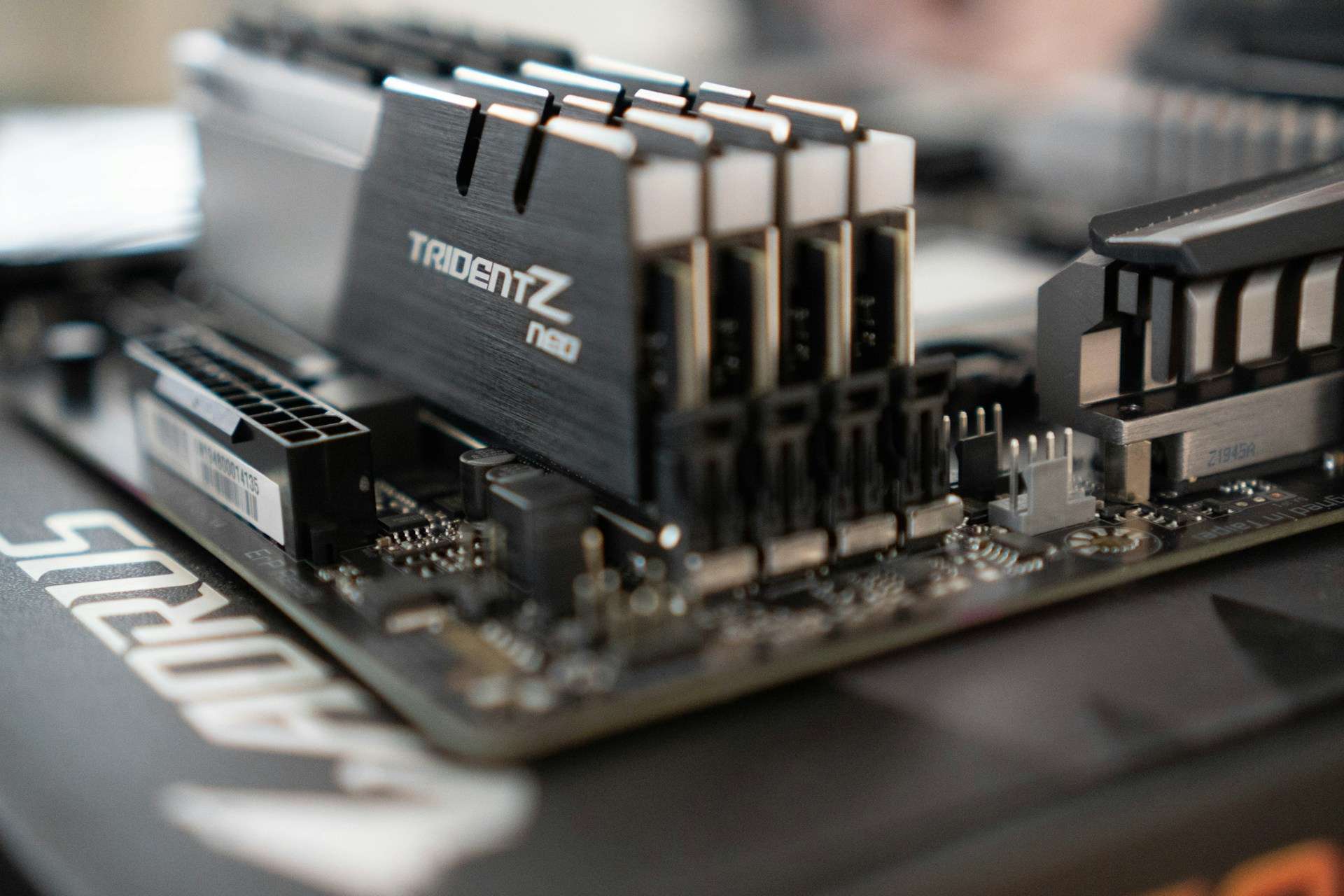
The memory price decline will have to wait. After several quarters of sharp increases, the market is starting to show signs of fatigue in consumption, but demand for AI servers remains strong enough to maintain pressure. TrendForce predicts that conventional DRAM contracts will rise between 13% and 18% quarter-over-quarter in Q3 2026, while NAND Flash will increase between 10% and 15%.
The interpretation isn’t as simple as “prices are moderating.” Yes, the growth rate is slowing compared to previous quarters, but prices are already at record levels, and PC, smartphone, and consumer electronics customers are beginning to reach their absorption limits. AI has created a split market: on one side, data centers, servers, and enterprise storage continue to buy; on the other, end users are starting to pay higher prices for laptops, mobiles, and SSDs in a weaker demand environment.
Memory shifts toward where AI pays
TrendForce’s report clearly indicates: memory manufacturers are prioritizing AI, servers, and data center applications. This decision makes industrial sense. Server memory, enterprise SSDs, and higher-margin products offer better returns than many consumer segments, especially when manufacturing capacity remains limited.
The secondary effect is evident. The more capacity allocated to servers, the less margin remains for PC DRAM, LPDDR for smartphones, UFS products, eMMC, client SSDs, or memory for traditional electronics. This doesn’t mean memory is scarce across all markets equally; rather, the allocation becomes more selective.
| Segment | Situation in 3Q 2026 | Expected Effect |
|---|---|---|
| Conventional DRAM | Projected quarterly increase of 13-18% | Supply remains tight due to server priority |
| NAND Flash | Projected quarterly increase of 10-15% | AI and data centers sustain demand |
| PC DRAM | OEMs rebuilding inventories, but under cost pressure | Higher laptop prices and possible shipment impact |
| Server DRAM | Solid demand from AI agentic and x86 servers | RDIMM will remain constrained |
| LPDRAM | Smartphones trying to pass costs to end users | Risk of lower terminal sales |
| Client SSD | High inventories at OEMs | Less room for further price increases |
| Enterprise SSD | Strong demand from data centers and inference | Prices still climbing |
AI not only drives GPU demand; it consumes memory at many layers. Models are trained and deployed on clusters with high requirements for DRAM, HBM, and fast storage. Large-scale inference demands servers with ample memory, enterprise SSDs, and networks capable of moving data with low latency. That is why the impact extends beyond accelerators.
TrendForce notes that x86 servers with RDIMM configurations remain a key platform for agentic AI workloads, due to their ability to perform multiple tasks in parallel. Progressive improvements in CPU availability also support server shipments and RDIMM memory consumption through the second half of 2026.
PCs and mobiles are starting to feel the price pinch
The biggest contrast is on the consumption side. In PCs, manufacturers have continued buying memory to rebuild inventories, but the rising cost of components will eventually be reflected in laptop prices. TrendForce warns that retail notebook prices are expected to rise broadly as more expensive components enter inventory, potentially dragging down annual shipments.
A similar situation occurs with smartphones. Brands will try to pass costs onto consumers by raising prices, but this may dampen demand. If consumers perceive mobiles as more expensive, manufacturers may adopt more conservative production and component procurement strategies. This reduced appetite could lower LPDDR demand, even though suppliers continue to prioritize AI-related applications.
| Consumer Market | What’s happening | Risk |
|---|---|---|
| Laptops | Memory costs in inventory are rising | Higher retail prices and fewer sales |
| Smartphones | Brands are passing some costs to users | More conservative production |
| TVs & traditional electronics | Weak demand for consumer DRAM | Less capacity allocated by suppliers |
| Client SSD | OEMs have already purchased heavily in H1 | Longer negotiations and more moderate increases |
| UFS and eMMC | Reduced demand in mid-range and entry-level segments | Relatively higher availability |
The direct consequence for users is clear: memory is once again acting as a factor of technological inflation. A laptop’s price doesn’t rise solely because of the CPU or display. A mobile doesn’t price up just because of the camera. When DRAM and NAND costs increase bills of materials, manufacturers have three options: raise prices, reduce capacity, or accept lower margins. None are easy choices.
Enterprise SSDs remain under pressure
In NAND Flash, the situation is especially interesting. Consumption is weak, yet demand for enterprise SSDs remains strong due to AI inference and large data center deployments. Suppliers are allocating more capacity to this segment, supported by the gradual rollout of platforms like NVIDIA Vera Rubin and by weakness in consumer electronics.
That said, it’s not all about NAND capacity. TrendForce highlights that the ongoing shortage of internal DRAM continues to limit the supply of small, high-performance enterprise SSDs. This is significant: modern storage relies not only on NAND chips but also on DRAM for controllers, caches, and performance management. If that memory is scarce, the final product suffers.
In the consumer SSD market, the situation is different. PC manufacturers made aggressive purchases in H1, and high inventory levels now reduce their willingness to accept further sharp increases. NAND suppliers are offering more flexible pricing to avoid limiting shipments, which explains why contract increases are moderating compared to previous quarters.
Prices are slowing but not stopping
The core point of the report is this: the market is cooling in consumption but not in infrastructure. The 13-18% increase in DRAM and 10-15% in NAND is lower than in previous phases, but still substantial for components already expensive. Tom’s Hardware highlights this contrast: price growth is decelerating, but AI-driven demand keeps prices rising, with no immediate relief for PC buyers or integrators.
The pressure on manufacturers is also evident. Reuters reports that Samsung Electronics expected to significantly boost its operating profits in Q2 2026 due to AI-related memory demand, amid a backdrop of global shortages and rising DRAM and NAND prices.
This environment favors memory manufacturers and well-positioned server suppliers but complicates planning for OEMs, integrators, and companies needing to upgrade equipment. In data centers, the question is no longer just how many GPUs can be acquired, but how much memory, how many enterprise SSDs, and at what price.
Implications for businesses and buyers
The practical message for companies is clear: infrastructure costs will remain tense through Q3 2026. Those planning server expansions, storage, virtualization, database, internal AI, or VDI projects should review budgets with updated price figures, as estimates from six months ago may now be outdated.
It’s also advisable to avoid reactive purchasing. In a market where suppliers prioritize high-margin clients and long-term agreements, waiting until the last moment can be more expensive. Supply contracts, capacity forecasts, and configuration standardization again carry importance.
For consumers, the effect will be less technical but more visible: laptops, mobiles, and SSDs could become more expensive or stay high for longer. There might be some inventory-driven discounts, but the underlying trend doesn’t favor a quick fall in prices.
AI has transformed memory into a strategic infrastructure component. For years, GPU shortages were the main concern. Now, the market recognizes that an AI server also needs DRAM, SSDs, HBM, controllers, and dedicated manufacturing capacity. The bottleneck has widened.
Frequently Asked Questions
How much will memory prices increase in Q3 2026?
TrendForce forecasts increases of 13-18% for conventional DRAM and 10-15% for NAND Flash quarterly.
Why are prices still rising despite weakening consumer demand?
Because AI servers, inference, and data center demand continue to absorb capacity and push manufacturers to prioritize higher-margin products.
Will this affect laptop and mobile prices?
Yes. TrendForce expects increases in laptops and price pressures in smartphones due to memory costs.
Will SSDs also become more expensive?
Enterprise SSDs’ prices continue upward due to data center demand. Consumer SSDs are moderating price increases due to high inventories.
Are price increases slowing down?
The pace is moderating compared to previous quarters, but prices remain high from already elevated levels.
via: trendforce
