
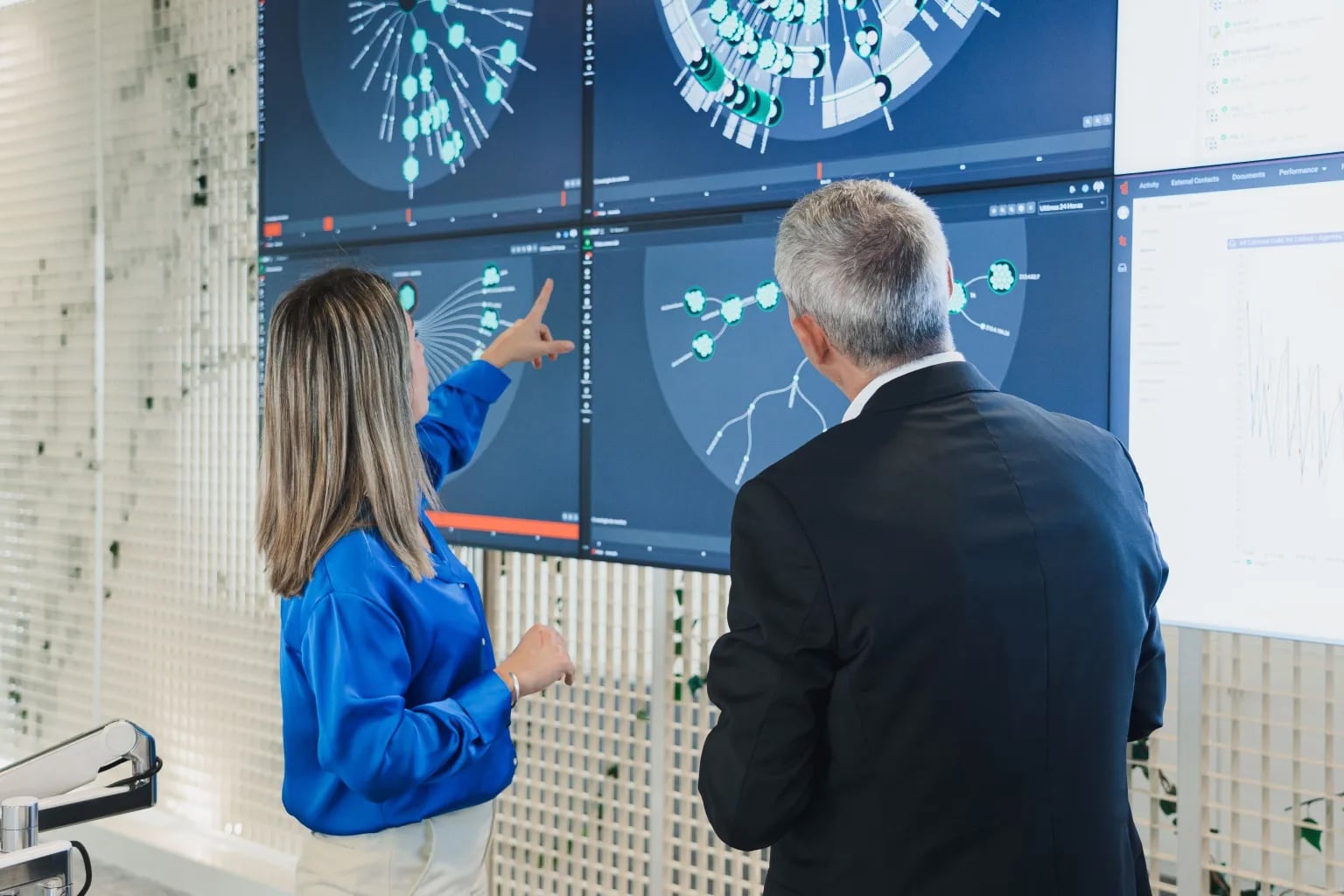
Telefónica has launched a comprehensive management platform for local police, aiming to address one of the common issues faced by many municipalities: operational information spread across applications, calls, cameras, files, patrols, sanctions, documentation, and municipal systems that are not always well connected.
Developed by Telefónica Defense and Security, the solution is designed to centralize local police activity in real time and provide operational managers with a clearer view of what’s happening, where available resources are located, and which interventions require priority. The company presents it as a modular, scalable, and interoperable system suitable for both large cities and smaller municipalities.
This development aligns with a broader trend: local public services are shifting from fragmented management to command, coordination, and traceability platforms. In citizen safety, this change is particularly significant. A patrol, a control room, a sanctions file, a camera, a radar, or an emergency call can no longer operate as isolated pieces if quick response and clear documentation of each action are to be achieved.
From isolated applications to a unified operational view
The platform functions like an ERP tailored for police forces, with a natural evolution toward a command and control environment. That is, it doesn’t just record administrative data but aims to connect daily management with on-the-street response.
According to Telefónica, the system allows integration of incidents, calls, patrols, operational resources, sanctions management, surveillance cameras, radars, documentation, and communications. This integration creates a common layer from which responsible personnel can assign resources, monitor actions, and access real-time dashboards.
The mobile application is a key component. It enables officers to access information during operations and submit reports or citations directly from mobile devices. In practice, this can reduce duplicative work, eliminate delays between field actions and back-office processing, and improve data quality for subsequent shifts.
The promise is straightforward: less paper, fewer disconnected systems, and more real-time information. However, its true value depends on implementation. Digitizing a poorly defined process in public administration does not necessarily improve service. For a platform like this to be effective, workflows, roles, permissions, training, and operational criteria must be carefully designed before deploying the technology.
Interoperability: a critical point for municipalities
One of the most notable aspects of the announcement is interoperability. Telefónica states that the platform can connect with existing municipal systems and third-party technologies, avoiding the creation of new information silos. This is vital because many municipalities already have programs for registry, sanctions, files, cameras, communications, document management, or citizen service portals.
Replacing all those systems entirely is rarely feasible due to cost, ongoing contracts, vendor dependencies, and the complexity of municipal services. Therefore, a modern police platform cannot be solely a closed system. It must serve as an integration and coordination layer.
Geolocated tracking of patrols and incidents can also improve resource planning. Knowing where units are, which types of incidents recur, which areas see more activity, and how long interventions take enables better scheduling, routing, and prioritization. This is about more than just faster reactions; it’s about gaining deeper insights into daily police activity.
At the same time, geolocation, video surveillance, and traceability require caution. Local police handle sensitive data and conduct actions that may impact fundamental rights. Any such platform must be implemented with access controls, activity logs, role differentiation, proper evidence preservation, and strict compliance with data protection regulations.
The GDPR governs personal data processing in the European Union, and in Spain’s public sector, the National Security Scheme establishes principles and requirements to protect information and electronic services of government agencies and their technology providers.
Citizen security, data, and public responsibility
Police digitalization can enhance efficiency but also requires better data governance. A platform that centralizes incidents, sanctions, communications, cameras, and resources is not just an administrative application; it’s a critical infrastructure for local public service.
Implementation should include reviewing user profiles, minimum necessary access, robust authentication, role separation, activity auditing, encryption, continuity plans, backups, and incident response procedures. It should also address internal communication with personnel, data retention policies, durations, and purposes.
The challenge isn’t merely purchasing technology but ensuring it doesn’t overwhelm the municipality. Many local police operate with limited resources, small teams, and very different realities depending on the municipality’s size. A large capital may require complex dashboards and integration with multiple systems, while a small town might only need to organize incidents, shifts, documentation, and communication between officers.
Telefónica’s modular architecture can be beneficial if it allows phased growth. In public safety, progressive deployment tends to be more practical than a full-scale launch from day one—starting with incidents and patrols, then adding mobility, camera integration, sanctions, dashboards, and connections to other emergency services like civil protection or fire departments.
Better coordination between field and office
The greatest potential benefit lies in better linking on-the-street activity with internal management. In many local agencies, an intervention generates calls, notes, forms, photos, reports, communications, and updates that need to be transferred to administrative systems. Each manual step introduces room for error, loss of context, or delays.
If officers can record information via mobile, the control room can see the intervention’s status, and the back-office receives synchronized data, the operation becomes more seamless. Traceability also improves: what happened, who responded, when, where, and with what outcome.
This not only enhances immediate response but also supports planning. Dashboards help identify patterns, assess workload, justify resources, and prioritize areas or services. For a municipality, such insights can benefit citizen safety, mobility, events, ordinances, emergencies, or neighborhood relations.
Telefónica also suggests that the platform could evolve to include other emergency services like civil protection or fire brigades. While this makes sense if a shared coordination logic is maintained, each service has distinct procedures, responsibilities, and data. Integration must be designed without diluting accountability.
The new platform arrives as municipalities seek to modernize essential services without sacrificing control over safety, privacy, and operational continuity. Digitalizing local policing isn’t just equipping patrol cars with tablets; it’s about organizing information, reducing redundancies, improving response efficiency, and maintaining reliable evidence for each action.
When implemented correctly, such a tool can ease administrative burdens and enable officers to spend more time in the field and less on data re-entry in disconnected systems. If poorly executed, it risks adding unnecessary complexity. The key lies in project governance, training, and genuine integration with daily workflows.
Frequently Asked Questions
What has Telefónica launched?
An integrated platform to digitize local police management, centralizing incidents, patrols, resources, sanctions, cameras, radars, documentation, and communications.
What is a police management platform used for?
To coordinate resources, record actions, improve communication between officers and control rooms, process reports via mobile, and access operational dashboards.
Is it only designed for large cities?
Telefónica states that it has a modular and scalable architecture suitable for both large cities and smaller municipalities.
What risks should municipalities consider when deploying it?
Data protection, access controls, traceability, evidence preservation, service continuity, cybersecurity, and integration with existing municipal systems.
via: telefonica
