
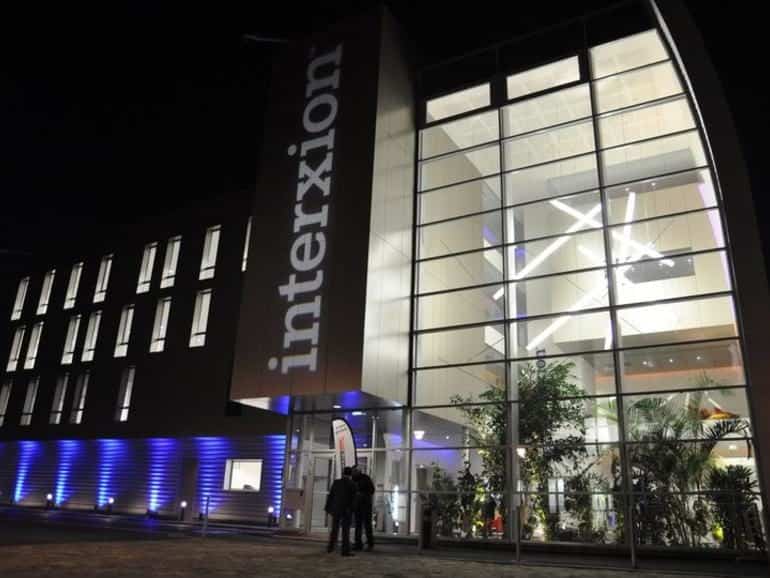
The environment of Sant Adrià de Besòs is gaining weight on the European data center map with the opening of BCN1, Digital Realty’s first data center in Barcelona. Located in the Sant Adrià innovation area, the facility strengthens the Catalan capital’s position as a strategic market for connectivity, cloud, and artificial intelligence in Southern Europe.
The project arrives at a time of strong demand for digital infrastructure. AI workloads, the growth of cloud services, and the need to reduce latencies are driving major operators to deploy capacity near key urban centers and international interconnection points. Digital Realty has presented BCN1 as a facility with 14 MW of total planned capacity and neutral connectivity for operators, designed to connect Barcelona with major digital routes between Europe, America, North Africa, the Middle East, and Asia.
Sant Adrià shifts from industrial enclave to digital infrastructure
For decades, Sant Adrià de Besòs was associated with large energy and industrial infrastructures. The Tres Chimeneas, a symbol of the former thermal power plant, continue to define the skyline of the metropolitan coast and are part of a broader process of urban, economic, and technological transformation.
The arrival of an internationally scaled data center fits with this new phase. These projects seek sites with reliable electricity, connectivity, suitable land, and proximity to large digital consumption areas. Sant Adrià meets several of these factors and is situated next to Barcelona, one of the most promising markets in the Mediterranean.
BCN1 is located at Avenida del Maresme, 43, within the municipality of Sant Adrià de Besòs. Digital Realty describes it as a neutral colocation center, with approximately 15,000 square meters of space, and access to high-capacity submarine cable systems that reach the Barcelona area.
The value of such infrastructure is not only in hosting servers. An interconnection data center enables companies, operators, cloud providers, and digital platforms to exchange traffic with lower latency and greater resilience. In practice, this can enhance financial services, streaming platforms, enterprise applications, AI deployments, corporate networks, or business continuity solutions.
Barcelona strengthens its role in the digital Mediterranean
Barcelona has been increasing its appeal for data center operators due to its geographic location, international connectivity, and proximity to submarine routes. Compared to more saturated European markets like Frankfurt, London, Amsterdam, Paris, or Dublin, Southern Europe offers growth potential and an interesting position for connecting Europe with Africa and the Middle East.
Digital Realty already has a significant presence in Madrid and a well-established campus in Marseille. The opening of Barcelona complements this Mediterranean network and offers more route diversity for clients seeking redundancy, lower latency, and alternative connectivity options. The company states that BCN1 enhances its regional platform and improves network resilience in the area.
The project also has a territorial perspective. Digitalization is not limited to offices, startups, or online services. It requires land, energy, fiber, cooling, physical security, and urban planning. Therefore, deploying data centers in former industrial environments is becoming increasingly common to reuse spaces with existing infrastructure and good metropolitan connectivity.
The Tres Chimeneas and the new centrality of Besòs
The transformation of the Tres Chimeneas area goes far beyond a single data center. Sant Adrià de Besòs has presented various urban and economic projects to reinforce its role within the metropolitan area, from the future Catalunya Media City to new spaces for activity, housing, and facilities. The area aims to shed its image as an industrial periphery to become a new centrality of Besòs.
In this context, Digital Realty’s presence provides a critical infrastructure component. The digital economy needs data centers close to users, connected with global networks, and capable of handling increasingly intensive workloads. AI accelerates this need because it demands more computing power, storage, and better connections between clouds, companies, and end users.
The challenge will be balancing digital growth, urban integration, energy consumption, and local benefits. Data centers generate economic activity and enhance connectivity but also require careful planning regarding energy, water, sustainability, employment, and environmental impact.
Sant Adrià is entering a key phase. The opening of BCN1 confirms that the municipality is now part of the new digital infrastructure geography of Europe. Where energy was once produced to power industry, now facilities supporting data, cloud services, and AI are beginning to cluster.
Frequently Asked Questions
What is BCN1 by Digital Realty?
It is Digital Realty’s first data center in Barcelona, located in Sant Adrià de Besòs, with a planned total capacity of 14 MW and colocation and connectivity services.
Why is Sant Adrià important for data centers?
Due to its proximity to Barcelona, its connectivity, available infrastructure, and its role in transforming the Besòs and Tres Chimeneas area.
What is the relation between this project and artificial intelligence?
AI increases demand for computing, storage, and low-latency connectivity. Centers like BCN1 help host and connect these workloads close to companies, operators, and users.
