
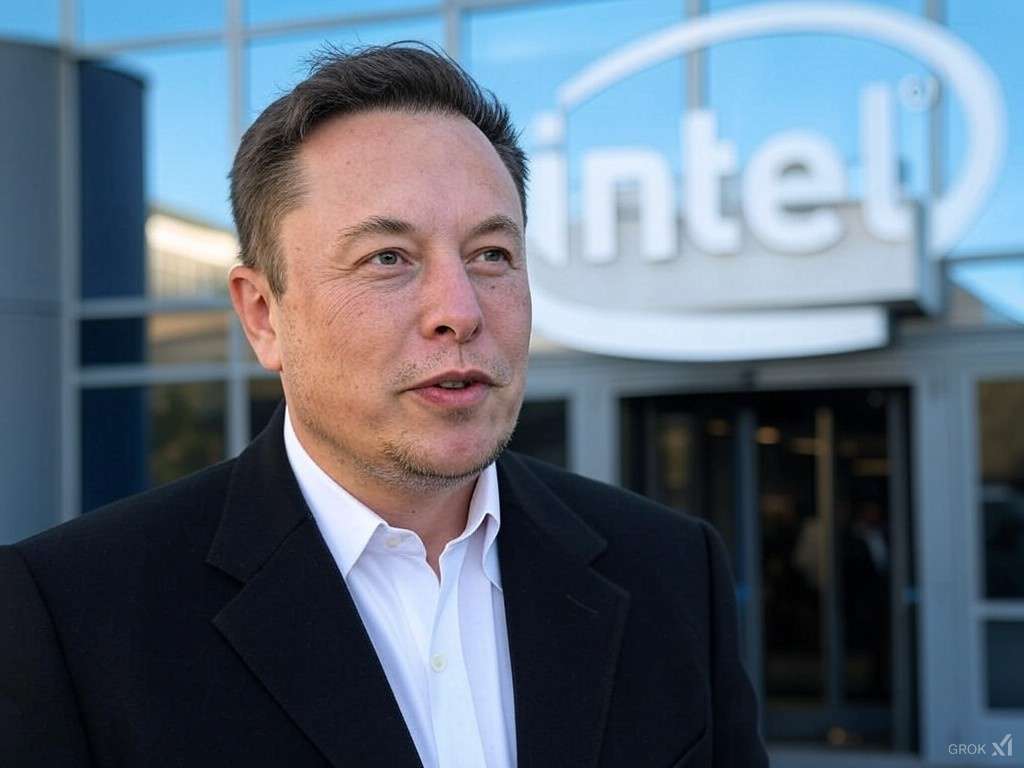
Elon Musk is no longer just a tech figure. He has become a category of his own within industrial capitalism: founder, operator, provocator, investor, product engineer, and a public figure capable of moving markets with a single phrase. In June 2026, several financial estimates ranked him above a trillion dollars in net worth before the decline of Tesla and SpaceX lowered that figure again. The photo changes with the market, but the key fact remains: a large part of his wealth depends on companies that were built not only with software, but with factories, rockets, supply chains, and years of operational pressure.
Musk’s public image typically oscillates between two extremes. Some see him as the entrepreneur who accelerated electric cars, reusable rockets, and satellite internet. Others view him as an unpredictable executive, with a tough style and a tense relationship with regulators, employees, investors, and the media. Both narratives coexist. But there’s a part of his journey that helps explain why Tesla and SpaceX survived when they once seemed like impossible projects: Musk turned industrial execution into the core of his leadership approach.
From Childhood Coding to Early Internet Companies
His story started far from Tesla factories and SpaceX launch pads. Musk was born in South Africa and from a young age showed a strong connection to technology. At 12, he programmed Blastar, a BASIC-written video game that he sold for $500 to PC and Office Technology magazine. Looking back today, the game is a simple, almost archaeological curiosity, but it foreshadowed something important: Musk approached technology not just as a consumer, but as someone eager to create things.
His first major success came with Zip2, a software company for online city guides he founded with his brother Kimbal Musk and Greg Kouri in the 1990s. Compaq bought the company in 1999 for $307 million, and Musk received about $22 million. Later, came X.com, which eventually merged with Confinity to form PayPal. When eBay bought PayPal in 2002 for $1.5 billion, Musk received a sum that could have allowed him to retire or invest peacefully. But he chose the opposite.
That point is often lost amid headlines about wealth. Musk didn’t build Tesla and SpaceX from the safety of an established multinational; he did it from high-risk bets. SpaceX aimed to drastically reduce the cost of space access. Tesla sought to demonstrate that electric vehicles could compete outside the niche. Neither idea seemed comfortable in the early years.
2008: The Year Almost Everything Fell Apart
The decisive moment arrived in 2008. SpaceX had failed its first three attempts with Falcon 1. Meanwhile, Tesla was hampered by delays, manufacturing issues, and a liquidity crunch amid the financial crisis. Musk has recounted multiple times that he had to stretch his capital across both companies when neither had room for error.
The fourth Falcon 1 launch, on September 28, 2008, changed the story. The rocket reached orbit, making SpaceX the first private company to do so with a privately developed liquid-fuel launcher. A few months later, NASA awarded SpaceX a commercial resupply contract valued at $1.6 billion for 12 missions to the International Space Station. While this contract didn’t eliminate risk, it provided the company with an industrial and commercial foundation it previously lacked.
Tesla’s survival also hinged on manufacturing. The company couldn’t just design an attractive car; it had to produce it with quality, volume, and controlled costs. That tension exploded years later with the Model 3, when Tesla tried to shift from a low-volume, premium car maker to a mass producer capable of hundreds of thousands of vehicles.
Musk called that phase “production hell.” During the Model 3 ramp-up, he moved his presence to the Fremont factory, slept on Tesla premises, and focused heavily on resolving production bottlenecks. The company achieved its goal of making 5,000 Model 3s per week by the end of Q2 2018, but the market’s concern was not only about reaching that milestone once, but sustaining that pace without breaking costs, quality, or cash flow.
The Technology Lesson: Execution Matters More Than Presentation
The most insightful lesson for the tech sector isn’t that a founder should sleep in the factory. Turning exhaustion into virtue can lead to unhealthy work cultures and decisions made under excessive pressure. The true lesson is this: when a tech company interacts with the physical world, its advantage isn’t just in the product but in the ability to produce, deliver, repair, and improve at scale.
Tesla transformed the market not only by selling electric cars. It changed because it integrated software, batteries, industrial design, charging networks, manufacturing, and branding. SpaceX didn’t revolutionize space business only by launching rockets; it did so by reusing them, increasing launch cadence, and connecting that learning to Starlink—a satellite network demanding continuous manufacturing, launching, and operation of infrastructure.
There Musk understood, earlier than many investors, a fundamental difference: software scales quickly, but industry scales painfully. An assembly line doesn’t forgive bad hypotheses. Neither does a rocket. Every delay burns cash, every quality failure sends parts back to the workshop, and a weak supplier can halt an entire factory.
This approach partly explains the market’s valuation of his companies. In 2026, SpaceX reached historic valuations—with market references close to $1.75 trillion at IPO, and later movements pushing above $2 trillion before corrections. These numbers are hard to justify with traditional metrics, but they reflect a clear expectation: SpaceX isn’t just a launch company; it’s an industrial platform that combines rockets, satellites, connectivity, defense, data, and artificial intelligence.
Musk’s story also shouldn’t be told as an overly neat fable. His leadership style has faced criticism for internal pressure, aggressive deadlines, sudden changes, and public communication that sometimes complicated things for his companies. Resilience doesn’t justify all costs, and operational intensity can burn out teams if not supported by processes, strong middle management, and a culture that doesn’t always depend solely on the founder.
However, the least debatable part of his career is this: Musk has treated the factory as a product in itself. Not as a boring phase after the presentation, but as the place where a technological idea is truly judged on whether it deserves to exist. Before the trillions, before the impossible valuations, and before becoming a global figure, Musk stood in the space where promises are turned into units produced.
And perhaps that is the most uncomfortable lesson for many startups: an ambitious vision is of little use if you lack the capacity to bring it into the real world. Epic stories sell headlines. Factories decide who survives.
Frequently Asked Questions
Has Elon Musk really been the world’s first trillionaire?
In June 2026, some financial estimates temporarily placed his net worth above a trillion dollars, driven by Tesla and SpaceX. Days later, the market correction brought that figure down again.
What was Blastar?
Blastar was a video game Musk programmed as a kid and sold for $500 to a specialized magazine. It’s one of his earliest documented interests in creating technology.
Why was the fourth Falcon 1 launch so important?
Because after three failures, Falcon 1 reached orbit in September 2008. That success helped sustain SpaceX’s credibility before receiving major NASA contracts.
What does “production hell” mean at Tesla?
It was the intense phase during the Model 3 ramp-up when Tesla moved to mass production and Musk directly tackled factory issues.
