
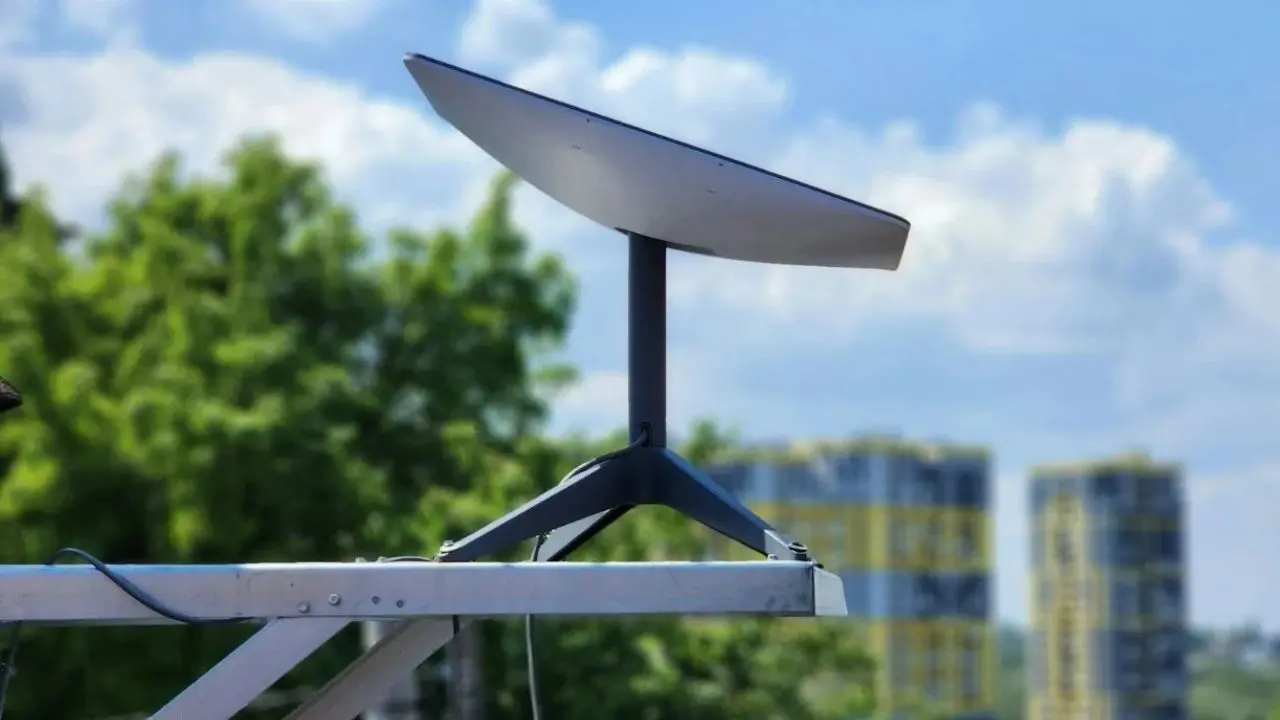
SpaceX’s major battle in telecommunications doesn’t depend on Elon Musk launching an AI-powered phone, nor on Starlink manufacturing a thinner device than an iPhone. That part remains a disproven rumor. The real struggle is elsewhere: spectrum, agreements with carriers, direct mobile connectivity, and the ability to turn satellite coverage into a natural extension of terrestrial networks.
In the United States, the upcoming auction of the upper C-band could become an important piece of this movement. The FCC will vote on July 22 on a proposal to auction 160 MHz between 3.98 and 4.14 GHz in 2027, a highly valuable spectrum band for 5G due to its balance of coverage and capacity. The agency aims to create a kind of “superband” C of 440 MHz by harmonizing this new portion with the already used lower C-band by mobile operators.
For AT&T, Verizon, and T-Mobile, this auction is another round of 5G capacity reinforcement. For SpaceX, it may be more: a way to accumulate terrestrial spectrum, gain strategic space, and force traditional operators to take seriously that Starlink is no longer just a satellite network for rural homes, ships, airplanes, or areas without fiber.
The C-band matters, but it doesn’t instantly turn Starlink into a mobile operator
The temptation is to tell this story as if SpaceX would buy C-band and immediately become the fourth U.S. mobile carrier. It’s not that simple. The upper C-band is very useful for terrestrial 5G networks, but alone it doesn’t solve the challenge of connecting satellites directly to ordinary phones anywhere — inside buildings or with an experience similar to dense urban networks.
What’s important is assembling the pieces. SpaceX has already purchased licenses from EchoStar for AWS-4 and H-band, investing about $17 billion to develop a new generation of Starlink Direct-to-Cell, and in May 2026, the FCC approved transferring around 65 MHz of spectrum to SpaceX for its next-gen D2D network.
That spectrum aligns more directly with the goal of connecting mobile devices from satellites. Conversely, the C-band could be better suited as terrestrial reinforcement, as a negotiating asset, or as part of a future hybrid network. SpaceX doesn’t need to replicate the entire infrastructure of large operators all at once; it can start with gaps: rural areas, highways, emergencies, natural parks, maritime zones, logistics, industry, and clients requiring continuity when terrestrial networks fall short.
This is the most realistic vision. Starlink doesn’t need to gain market share by attacking the core from day one. It can grow from the edges.
| Market | How Starlink can enter |
|---|---|
| Remote areas without mobile coverage | Supplementary satellite coverage |
| Emergencies and civil protection | Communication when terrestrial networks fail |
| Transport and logistics | Connectivity in routes, ports, ships, and fleets |
| Businesses | Backup communications and operational continuity |
| Rural areas | Complement to fiber, FWA, and mobile networks |
| Mobile operators | Integrated wholesale service under their brand |
| Industrial IoT | Coverage for sensors in remote zones |
This strategy is less sensational than launching a phone, but much more credible. First basic SMS and data. Then specific applications. Later, voice, higher-capacity data, and enterprise services. The mobile market isn’t won solely with a device; it’s won by being present when the user has no other network available.
Europe won’t copy the U.S.
The impact could be similar in Europe, but the approach will differ. In the U.S., the battle is better understood through spectrum, auctions, the FCC, and relations with big operators. In Europe, regulation, tech sovereignty, country fragmentation, and national agreements with operators will weigh more heavily.
The European Commission has already signaled it doesn’t want the future of direct-to-device to be in the hands of foreign actors. In May 2026, it proposed reserving most of the valuable satellite mobile spectrum for European companies and for governmental or security uses, reducing the scope available to non-European operators like Starlink. Reuters reported this as a measure to reduce dependency on large non-European tech firms and to foster capacity within European satellite communications.
Le Monde later reported Starlink’s response to those restrictions, with SpaceX arguing that such allocations would limit their ability to provide quality services in Europe. According to that coverage, the European proposal would significantly narrow Starlink’s margin in certain bands, while Brussels emphasizes sovereignty and dependency reduction.
This context shifts the game. In Europe, SpaceX cannot operate solely as a satellite, rocket, and capital actor. It will need local partners, regulatory compliance, country-specific agreements, interoperability with operators, and a narrative aligned with European digital sovereignty.
At the same time, Europe shouldn’t ignore Starlink’s advantage. The company already has scale, deployed satellites, commercial experience, and a recognizable brand. The European challenge will be avoiding over-dependence without hindering services that can improve coverage, resilience, and security where terrestrial networks fall short.
Spain is already a testing ground
Spain is not on the sidelines. In fact, it could become one of Europe’s most interesting markets to test the integration of terrestrial mobile and satellite.
MasOrange signed in February 2026 an agreement with Starlink for a pilot Direct to Cell service in Valladolid, the first of its kind in Spain with Starlink. The pilot aims to complement MasOrange’s mobile network with Starlink satellites, without requiring additional hardware when terrestrial coverage is lost.
This agreement offers a clear pathway for SpaceX: not to replace the operator, but to become its extended coverage. MasOrange retains the customer relationship, spectrum, and mobile service; Starlink provides the satellite layer. For the user, ideal would be no technical decision — when terrestrial isn’t available, the phone connects to the compatible satellite network and continues working with limited services.
Vodafone Spain has also moved, but via a different route. They signed an agreement with Satellite Connect Europe, a joint venture between Vodafone Group and AST SpaceMobile, to offer direct satellite connectivity for devices in Spain. The plan is to launch Vodafone SAT in 2027, depending on regulatory conditions, focusing on rural, maritime, remote, emergency, and strategic sectors.
Telefónica is working in another segment. Its partnership with Sateliot focuses on integrating 5G Non-Terrestrial Networks (NTN) with terrestrial networks for strategic sectors, including security, defense, industry, maritime, and critical infrastructure. It’s more aimed at IoT and professional uses than transforming any smartphone into a satellite broadband terminal immediately.
The Spanish landscape clearly shows: MasOrange tests with Starlink; Vodafone goes with AST SpaceMobile via Satellite Connect Europe; and Telefónica works with Sateliot on 5G NTN for strategic uses. There’s no single model—several coexist and compete simultaneously.
European competitors: AST, Vodafone, Orange, Sateliot, and IRIS²
Starlink has scale, but it doesn’t operate alone. In Europe, its primary competitor in consumer and enterprise satellite mobile is AST SpaceMobile, especially through its partnership with Vodafone. In 2025, Vodafone conducted a satellite call using a standard smartphone in a remote area of Wales—a demonstration to show their service can do more than emergency messaging.
In February 2026, Satellite Connect Europe launched as an open European provider of direct satellite-to-device connectivity for mobile operators. The initiative’s significance lies in protecting what European operators value: control over customer relationships, service experience, and data.
Orange also joined this multi-vendor approach. It partnered with AST SpaceMobile and Satellite Connect Europe to test voice, SMS, and data services in Romania by late 2026. Reuters highlighted that Orange maintains a portfolio including Eutelsat, SES, Starlink, and Telesat satellite partners.
There’s also Sateliot, based in Barcelona, pursuing a different but highly relevant path for Spain: 5G NTN and IoT connectivity from satellites, based on 3GPP standards. It’s not about competing with Starlink for internet or video services from mobile, but connecting sensors, industrial devices, defense, security, agriculture, maritime, and critical infrastructure in areas lacking terrestrial networks.
And above all, IRIS² represents Europe’s flagship sovereign constellation for secure communications. It’s not a “European Starlink” for consumers, as its main mission is government, critical, and resilient communications. Yet, it is part of the same debate: Europe aims to avoid dependency solely on U.S. constellations for strategic connectivity. Reuters reported a budget of €10.6 billion, with European operators warning it must meet expectations on price and performance to stay competitive.
In Spain, Starlink won’t replace fiber or urban 5G
Spain differs from the U.S. already—fiber coverage is widespread, mobile competition is fierce, and prices for fixed and mobile services are aggressive. These factors limit Starlink’s potential as a massive substitute for residential access in cities or well-covered areas.
Its real opportunity lies elsewhere. As a premium supplement and a backup solution, especially for rural homes, farms, remote offices, construction sites, emergencies, transportation, ships, secondary roads, events, security agencies, civil protection, and clients who can’t afford to be disconnected.
For mobile, the approach will be even more gradual. Initial direct-to-cell services won’t compete with dense urban 5G in capacity. They’ll focus on messages, basic data, emergency use, and outdoor applications. These already have value if they activate when there’s no coverage: users don’t need 1 Gbps in the field, they need communication, maps, emergency calls, and critical app connectivity to continue functioning.
The risk for operators isn’t losing city customers overnight; it’s that Starlink becomes an essential “last coverage” layer, gradually climbing the value chain.
How can Starlink gradually gain market share
Starlink’s winning strategy isn’t to fight head-on from day one. It’s to take a patient five-phase approach to entry.
First, act as a supplementary coverage layer for mobile providers. The customer remains with MasOrange, Telekom, or another carrier, but Starlink appears at critical moments: when terrestrial signals are missing. This adds value without forcing users to change providers.
Second, turn satellite connectivity into a value-added service. Just as today operators sell additional data, roaming, mobile insurance, or cloud services, they could offer “satellite coverage” as part of premium plans, professional packages, or security bundles.
Third, target verticals where satellite makes economic sense: transportation, energy, agriculture, maritime, emergencies, defense, logistics, rural tourism, and business continuity. In these markets, the comparison isn’t a cheap mobile plan but the cost of being disconnected.
Fourth, use pilots to build regulation and trust. In Europe, Starlink needs to demonstrate compliance with local standards, spectrum regulations, interoperability, and safety guarantees. The battle will include institutional aspects, not just technical.
Fifth, expand capacity. With more satellites, spectrum, antennas, and agreements, services can evolve from basic messages and data to richer experiences. The market isn’t won solely on promises of global coverage but on incremental improvements that users notice year after year.
The realistic path is not to displace existing operators, but to become indispensable to them. Not to replace the mobile network, but to fill its gaps. Not to sell a phone, but to be everywhere.
Threats for European operators and providers
The impact for AT&T, Verizon, and T-Mobile will first show in spectrum prices and competitive pressure. In Europe and Spain, the effect might be less visible but equally strategic: operators will need to decide whether to integrate Starlink, compete with European alternatives, or combine options to avoid dependence on a single provider.
Vodafone seems to have chosen a European route with AST. MasOrange is testing Starlink. Telefónica is exploring Sateliot and NTN solutions for strategic sectors. Orange collaborates with multiple partners. Deutsche Telekom announced an upcoming satellite-to-mobile collaboration with Starlink scheduled for 2028.
This landscape suggests a hybrid market. No serious operator will want to be without satellite coverage. But none will hand over the entire satellite layer to a potential future competitor. The likely solution will be a mix of partners, use cases, and geographies.
Starlink has execution advantage; Europe has regulatory leverage and a customer base. AST has strong mobile alliances. Sateliot is positioned well in 5G NTN and IoT from Spain. IRIS² offers sovereignty, although on a longer timetable. Amazon Kuiper will add pressure as it scales.
Direct satellite-to-phone connectivity will not replace terrestrial networks but extend them. This nuance changes everything: whoever controls that extension will command an increasingly valuable part of the mobile promise — being connected even where nothing else reaches.
Frequently Asked Questions
Can SpaceX become a mobile operator?
They can approach the mobile market, but quick replacement of AT&T, Verizon, T-Mobile, or European operators isn’t realistic. The most probable model is a hybrid network with wholesale agreements, own spectrum, and complementary satellite coverage.
What role does the C-band auction play in the U.S.?
It could grant more terrestrial spectrum to license winners and reinforce 5G capacity. For SpaceX, it would be a strategic asset, though it doesn’t alone resolve direct satellite-to-phone connectivity.
What is Starlink doing in Spain?
MasOrange and Starlink signed an agreement for a Valladolid pilot of Direct to Cell, Spain’s first of its kind with Starlink.
Who is competing with Starlink in Europe?
AST SpaceMobile, alongside Vodafone and Satellite Connect Europe, is a primary rival in direct-to-device. Others include Sateliot in 5G NTN and IoT, Eutelsat OneWeb, IRIS², and future options like Amazon Kuiper.
Will Starlink replace fiber or urban 5G in Spain?
Not in well-covered urban areas. Its main role is as a supplementary backup, emergency option, and coverage enhancement for rural, maritime, industrial, IoT, and operational continuity needs.
