
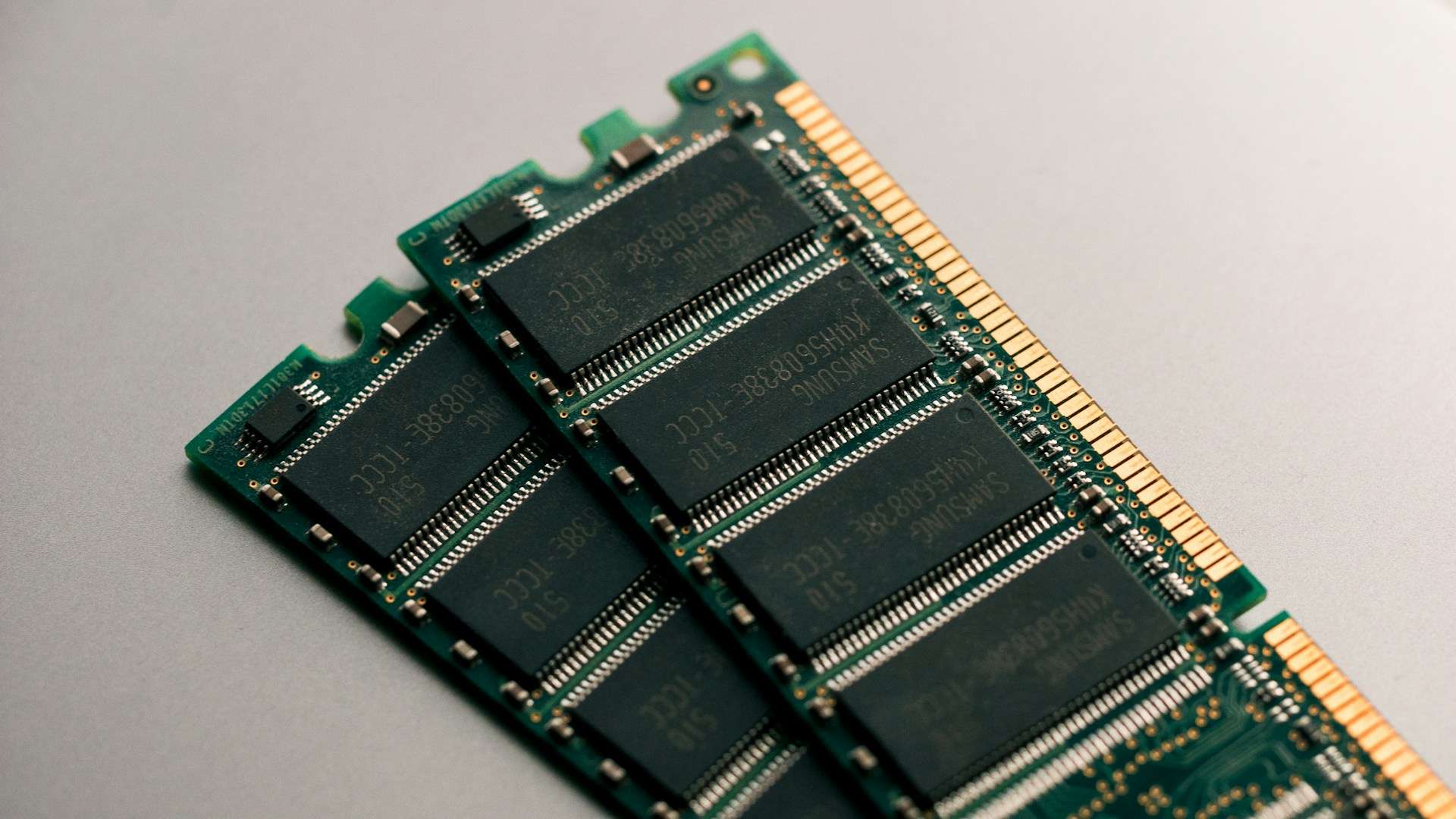
The memory crisis has not reached its peak. After months of increases in DRAM and NAND, Jefferies Equity Research anticipates further strong rises during the second half of 2026 and warns that real relief might not happen until 2028. The forecast depicts a market where AI data centers absorb capacity, manufacturers sign long-term contracts with major clients, and consumer products become increasingly exposed to higher prices.
According to estimates gathered from various sources, memory prices could surge between 40% and 50% quarter-over-quarter in Q3 2026, with an additional 30% to 40% increase in Q4. By 2027, Jefferies projects year-over-year increases of 40% to 45%. Only in 2028 might there be some correction in average selling prices, and even then, it would depend on whether new production capacity, estimated between 15% and 20%, reaches the market without being absorbed by AI demand.
This read is uncomfortable for consumers and companies alike. Cheap memory, which for years allowed for near-incremental increases in RAM and storage in PCs, servers, mobile devices, and consoles, has become a strategic part. It is no longer purchased solely at the end of the build. Now, it influences product design, final price, and infrastructure upgrade timelines.
AI is capturing capacity before it reaches the market
The most profound change is not just in price hikes, but in how production is being reserved. Major cloud providers, accelerator manufacturers, AI companies, and enterprise clients are securing long-term supply agreements with memory makers. This reduces volatility for Samsung, SK Hynix, Micron, and others but also leaves less volume available for traditional markets.
Micron has already signed 16 strategic supply agreements. In its latest investor documentation, the company indicated that these agreements account for about 20% of its DRAM volume and a third of its NAND volume during the covered period. It also noted that once completed, it expects that roughly half or more of its revenue could be under such agreements.
| Forecast cited by Jefferies | Estimation |
|---|---|
| Memory prices in Q3 2026 | +40% to +50% quarter-over-quarter |
| Memory prices in Q4 2026 | +30% to +40% quarter-over-quarter |
| Prices in 2027 | +40% to +45% year-over-year |
| Possible relief in 2028 | Drop in ASP if new capacity enters |
| Expected new capacity | +15% to +20% | Major risk | AI demand absorbing available supply |
The clear consequence: even with new factories, that capacity could already be committed. In such a market, early signing and larger purchases give companies an advantage. PC, smartphone, console, or consumer device manufacturers may find themselves at a disadvantage compared to hyperscalers that need memory to sustain AI clusters and are willing to pay more to secure supply.
The myth of cheap Chinese memory losing strength
Part of the market expected China to act as an outlet. The simple idea was: if CXMT in DRAM and YMTC in NAND increased production, then more Chinese supply could press prices downward. According to the published information, Jefferies does not see that happening in the short term.
The argument is that Chinese manufacturers are not necessarily selling at prices significantly lower than others, and much of their capacity is aimed at the domestic market. Furthermore, geopolitical tensions, blacklists, and U.S. controls limit the role of these providers in sensitive global supply chains. Apple, for example, would be trying to gain political clarity to purchase memory from CXMT, precisely because it needs more options beyond Samsung, SK Hynix, and Micron.
| Actor | Current situation |
| Samsung | Prioritizes higher-margin memory and strategic clients |
| SK Hynix | Highly exposed to HBM and AI demand |
| Micron | Signing long-term strategic supply agreements |
| CXMT | Increasing capacity but not yet disrupting global prices |
| YMTC | Potential to gain weight in NAND, with geopolitical restrictions |
| Apple and consumer manufacturers | Seeking alternatives to contain costs |
Chinese expansion might have more influence around 2028 when new factories and production lines reach sufficient scale. However, in 2026 and 2027, it does not seem that the global balance will change significantly. Chinese memory can add supply but is unlikely to trigger a new era of low prices.
PCs, smartphones, and consoles will feel the impact
The rising cost of memory affects products differently. In AI servers, customers usually accept high prices because the memory is part of an infrastructure that generates direct revenue. In consumer devices, margins are much thinner. A cheap laptop, a console, or a mid-range phone cannot simply absorb a sharp increase in DRAM and NAND without issue.
Manufacturers have several options, none ideal: raising prices, reducing base memory, cutting storage, limiting promotions, extending launch cycles, or sacrificing margins. In the PC market, this might make entry-level configurations with 16 GB of RAM and 512 GB SSD less accessible. In smartphones, it could pressure higher storage versions and widen the gap between base and premium models.
| Product | Potential impact |
| Entry-level laptops | Fewer aggressive offers and more tailored configurations |
| Gaming PCs | Higher costs for DDR5 and SSDs increase overall price |
| Smartphones | More pressure on base RAM and storage options |
| Consoles | Increased manufacturing costs |
| Enterprise servers | More expensive and slower upgrades |
| NAS and home storage | Less affordable SSDs and RAM |
| Workstations | Much more costly professional configurations |
Apple is one of the most visible examples. The company reportedly increased prices on some of its Mac and iPad lines due to memory and storage pressures, and the upcoming iPhone 18 Pro’s cost could become more exposed to DRAM and NAND. Although external estimates of material costs vary, the message remains consistent: memory is no longer a silent component within the final price.
Businesses: reconsider architecture before buying more RAM
For companies, the answer is not just to budget more. If memory remains expensive through 2026 and 2027, infrastructure design will need to be reconsidered. Densely virtualized environments, in-memory databases, analytics platforms, VDI setups, oversized caches, and container clusters with reserved resources will need to justify each gigabyte more thoroughly.
This doesn’t mean indiscriminate cuts. It involves measuring actual usage, adjusting reservations, reviewing overcommitment, separating workloads that require low latency from those that can operate in secondary memory, using fast storage when appropriate, and exploring technologies like CXL, memory compression, tiering, or GPU-accelerated architectures for specific workloads.
| Technical decision | Question now more relevant |
| Increasing RAM in servers | Is the workload consistently using that memory? |
| Upgrading CPU platform | Does the cost of populating DDR channels justify the upgrade? |
| Virtualization | Are there inflated reservations that could be optimized? |
| Databases | Which data truly needs to reside in memory? |
| AI and inference | Would GPUs, HBM, CXL, or local DRAM be better? | Equipment procurement | Is it better to buy now or wait until 2028? |
Shortages can also favor managed models and providers with pre-purchased capacity. Smaller companies will have less negotiating power than large buyers, making planning more critical. Waiting until the last minute to upgrade could be costly if the market remains tight.
The end of cheap memory as a component
Jefferies’ projection should not be read as an absolute certainty. The memory market has repeatedly surprised with cycles of oversupply and sharp declines. But this time, there are significant differences. Demand driven by AI is structural, long-term agreements lock capacity, and manufacturers are trying to avoid falling back into loss-making cycles like those of previous periods.
If the scenario unfolds as forecasted, 2028 will not necessarily see a return to early-2025 prices. It might bring some moderation, but starting from a higher baseline. Memory will become more strategic, more negotiated, and more tied to large infrastructure buyers.
For consumers, this could mean more expensive devices or less RAM and storage. For businesses, more cautious upgrades and more efficient designs. For manufacturers, a new reality: simply adding more memory is no longer enough to make a product attractive. Each gigabyte must be better justified.
Artificial intelligence has already changed the prices of GPUs, energy, and data centers. Now, it’s also reshaping the cost of everyday memory. The effect will take time to stabilize, but one thing is clear: buying RAM by inertia is becoming a thing of the past.
Frequently Asked Questions
How much could memory prices increase in 2026?
Jefferies forecasts rises of 40% to 50% quarter-over-quarter in Q3 2026, with another 30% to 40% increase in Q4.
When could relief arrive?
The report points to 2028 as the earliest possible time for relief, due to new capacity entering the market, although AI demand might absorb much of that supply.
Why don’t prices fall if China produces more memory?
Because CXMT and YMTC still lack sufficient capacity to significantly impact the global market in the short term, and much of their production is aimed at the Chinese market.
Which products will be most affected?
PCs, laptops, smartphones, consoles, servers, workstations, and devices heavily dependent on DRAM or NAND.
