
Micron Technology has reported record results for their third fiscal quarter of 2026 and sent a clear message to the market: memory has become one of the most profitable segments in the artificial intelligence race. The company closed the quarter ending May 28 with revenues of $41.456 billion, compared to $23.860 billion in the previous quarter and $9.301 billion in the same period last year.
The jump is hard to overlook. Micron more than quadrupled its year-over-year revenue, raised GAAP gross margin to 84.6%, and posted a GAAP net profit of $28.243 billion, equivalent to $24.67 per diluted share. On a non-GAAP basis, net income was $28.857 billion, with an earnings per share of $25.11. Cash flow also improved: operating cash flow reached $25.388 billion, and adjusted free cash flow was $18.304 billion.
This financial figure is impressive, but the industrial explanation is even more so. Micron is capturing an increasing slice of spending on advanced memory for data centers, AI, servers, mobile devices, storage, and automotive markets. The company highlighted that their multi-year strategic agreements with customers can improve visibility and result stability—something especially important in a traditionally cyclical sector.
AI is Scaling the Memory Business
For years, memory was one of the most volatile segments of the semiconductor industry. Oversupply cycles, price drops, inventory adjustments, and recoveries dictated the results of companies like Micron, Samsung, and SK Hynix. AI has not eliminated this cyclicality but has shifted the strategic importance of advanced DRAM, HBM, and high-performance storage.
High Bandwidth Memory (HBM) is critical for powering GPUs and AI accelerators. Simply having increasingly powerful compute chips isn’t enough if memory can’t move data fast enough. Training and inference of large models require bandwidth, capacity, energy efficiency, and physical proximity between memory and accelerators.
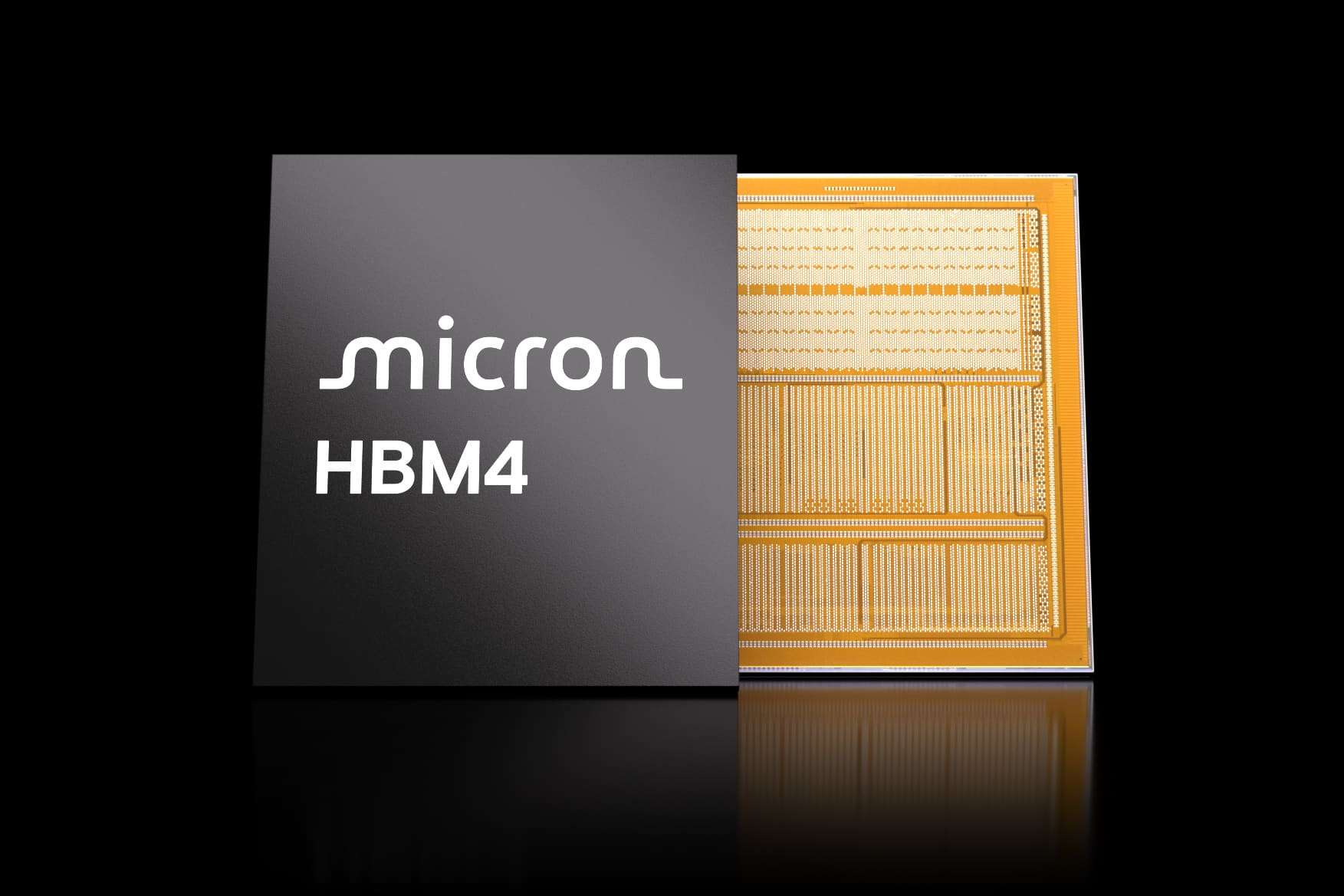
Micron has indicated that HBM4, built on its DRAM 1-beta technology, is already in high-volume shipments for its main customer platform, while qualification samples have reached multiple end customers. They also confirmed that development of HBM4E, based on DRAM 1-gamma, is progressing with volume production expected in 2027.
| Financial Metric | Q3 2026 | Q2 2026 | Q3 2025 |
|---|---|---|---|
| Revenues | $41.456B | $23.860B | $9.301B |
| GAAP Gross Margin | 84.6% | 74.4% | 37.7% |
| GAAP Operating Income | $33.318B | $16.135B | $2.169B |
| GAAP Operating Margin | 80.4% | 67.6% | 23.3% |
| GAAP Net Income | $28.243B | $13.785B | $1.885B |
| Diluted EPS GAAP | $24.67 | $12.07 | $1.68 |
| Non-GAAP Diluted EPS | $25.11 | $12.20 | $1.91 |
The margin expansion is one of the most eye-catching aspects. An 84.6% gross margin is unusual for a traditional memory company and reflects a very strong demand environment, favorable product mix, and the ability to capture premium prices in segments tied to AI and data centers.
Data Centers, Cloud, and Mobile Drive the Quarter
The Cloud Memory division generated $13.769 billion in revenue, with an 83% gross margin and 78% operating margin. Core Data Center revenue was $11.524 billion, with an 87% gross margin and 83% operating margin. These two units demonstrate how data centers have become Micron’s main growth driver.
Mobile and Client contributed $11.521 billion, with an 87% gross margin and 86% operating margin. Automotive and Embedded, although smaller, reached $4.634 billion, with a 79% gross margin and 75% operating margin. The improvement isn’t limited to a single business segment, but the overarching narrative is clearly dominated by AI and compute-intensive applications.
| Business Unit | Revenues Q3 2026 | Gross Margin | Operating Margin |
| Cloud Memory | $13.769B | 83% | 78% |
| Core Data Center | $11.524B | 87% | 83% |
| Mobile and Client | $11.521B | 87% | 86% |
| Automotive and Embedded | $4.634B | 79% | 75% |
Micron has also confirmed significant product advancements beyond HBM4. They have shipped DDR5 RDIMM modules of 256 GB based on 1-gamma technology and advanced 3D stacking to key server ecosystem players. Their LP5X SOCAMM2 products are in high-volume production. In storage, their high-performance PCIe Gen6 SSD based on G9 is now in production, and they have begun shipments of their 245 TB QLC SSD.
These product launches illustrate a broad strategy. Micron aims not only to sell HBM for AI accelerators but to be involved along the entire memory and storage chain surrounding the modern data center: server DRAM, low-power memory, high-capacity SSDs, QLC storage, automotive, and mobile devices.
Q4 Guidance Raises the Bar
The outlook for the fourth fiscal quarter further raises expectations. Micron expects revenues of $50 billion, with a variance of plus or minus $1 billion. They anticipate an approximate gross margin of 86%, GAAP operating expenses of $1.86 billion, and a GAAP diluted EPS of $30.73, with a dollar variance. On a non-GAAP basis, expected EPS is $31.
| Q4 2026 Guidance | GAAP Estimate | Non-GAAP Estimate |
| Revenues | $50B ± $1B | $50B ± $1B |
| Gross Margin | Approximately 86% | Approximately 86% |
| Operating Expenses | About $1.86B | About $1.65B |
| Diluted EPS | $30.73 ± $1.00 | $31.00 ± $1.00 |
The guidance confirms that Micron does not view this quarter as an isolated peak. The company sees ongoing demand and considers its strategic customer agreements as a way to reduce volatility. If these contracts guarantee volumes, prices, or multi-year commitments, they can alter market perceptions of predictability.
This point will be crucial for valuation. The big question for Micron isn’t just whether they’ve posted an extraordinary quarter but how much of this revenue and margin level can be maintained over time. The history of memory teaches caution: when prices are very high, industry investing increases; when capacity overshoots, margins can correct. The difference now is that AI-driven demand is pushing data center investments to an unprecedented scale.
Record Investment, Solid Cash Position, and Reduced Debt
Micron is investing aggressively. In Q3, net capital expenditures were $7.1 billion. In the first nine months of the fiscal year, spending on property, plant, and equipment reached $19.602 billion, up from $10.199 billion in the same period last year. The company is leveraging the favorable cycle to expand capacity and develop next-generation products.
Its cash position is also strengthening. Micron ended the quarter with $30.2 billion in cash, negotiable investments, and restricted cash. In the balance sheet, cash and equivalents rose to $24.995 billion, compared to $13.908 billion three months earlier and $9.642 billion at the fiscal year-end 2025. Long-term debt decreased to $5.140 billion from $9.557 billion in the previous quarter and $14.017 billion at the August 2025 close.
The company also declared a quarterly dividend of $0.15 per share, payable on July 21, 2026, to shareholders of record as of July 6. The dividend is modest relative to profits but signals shareholder return while maintaining focus on funding industrial growth.
Adjusted free cash flow of $18.304 billion enables Micron to balance high investment, debt reduction, growing cash reserves, and dividends. This is an uncommon position in a sector that often faces the choice between reinvesting for the next cycle or protecting the balance sheet.
What Investors Should Watch
First, the sustainability of margins. An almost 85% gross margin puts Micron in exceptional territory. If demand for HBM, server DRAM, and AI storage remains strong, the company could extend this cycle. If customers adjust their purchases, new capacities emerge, or investment urgency in data centers diminishes, markets may start to price in normalization.
Second, competition. SK Hynix and Samsung are accelerating HBM4, HBM4E, advanced packaging, and large customer deals. Micron has gained relevance in HBM and data center products, but the market will be highly competitive. In memory, technological execution and customer certification can move billions.
Third, multi-year strategic agreements. If these contracts provide greater demand and price visibility, Micron might appear less as a purely cyclical memory company and more as a strategic AI infrastructure provider. The market will need details to assess how much risk profile changes.
Fourth, investment trajectory. Micron is increasing capital spending to meet future demand. This makes sense if AI continues to absorb capacity, but it could be risky if multiple companies invest simultaneously and the market balances faster than expected.
Fifth, product mix. HBM4, HBM4E, 256 GB DDR5 RDIMM, SOCAMM2, PCIe Gen6 SSD, and 245 TB QLC point to a high-value portfolio. The more these differentiated products weigh against more generic memories, the better margins Micron can defend.
Memory Is No Longer the Invisible Component
Micron’s quarter reinforces a recurring idea across the AI supply chain: memory is no longer a secondary component. In large models, agents, training, inference, and massive databases, data movement is just as important as processing. GPUs attract attention, but without adequate memory, performance declines, costs increase, and infrastructure becomes inefficient.
Micron is capitalizing on this new reality with strong demand, advanced products, and strategic agreements. The Q4 guidance suggests the cycle still has room to grow. But it also raises expectations: after an all-time high quarter, the market won’t ask if AI benefits Micron but how long that benefit can last and how much capital will be needed to sustain it.
The company has entered a phase where its financial performance increasingly depends on becoming a critical provider of AI infrastructure. If successful, the memory market could enter a more profitable and less volatile phase. If supply outpaces demand or prices normalize, history will remind us that even the best memory cycles are cyclical.
For now, the numbers are compelling. Micron has surged from $9.301 billion last year to $41.456 billion, with expectations of reaching $50 billion next quarter. This acceleration succinctly illustrates how AI is reshaping the semiconductor economy more effectively than any words could.
Frequently Asked Questions
How much did Micron earn in Q3 2026?
Micron reported $41.456 billion in revenue, up from $23.860 billion in the previous quarter and $9.301 billion in the same period last year.
What profit did the company record?
GAAP net profit was $28.243 billion, or $24.67 per diluted share. On a non-GAAP basis, net income was $28.857 billion.
Why are HBM4 and HBM4E important?
Because they are generations of high bandwidth memory designed for AI accelerators and advanced data centers. Micron is already shipping HBM4 at high volume for its main customer and expects to produce HBM4E in volume in 2027.
What does Micron expect for Q4 2026?
The company forecasts revenues around $50 billion with about 86% gross margin, a GAAP diluted EPS of approximately $30.73 (plus or minus $1), and a non-GAAP EPS of about $31.
via: investors.micron
