
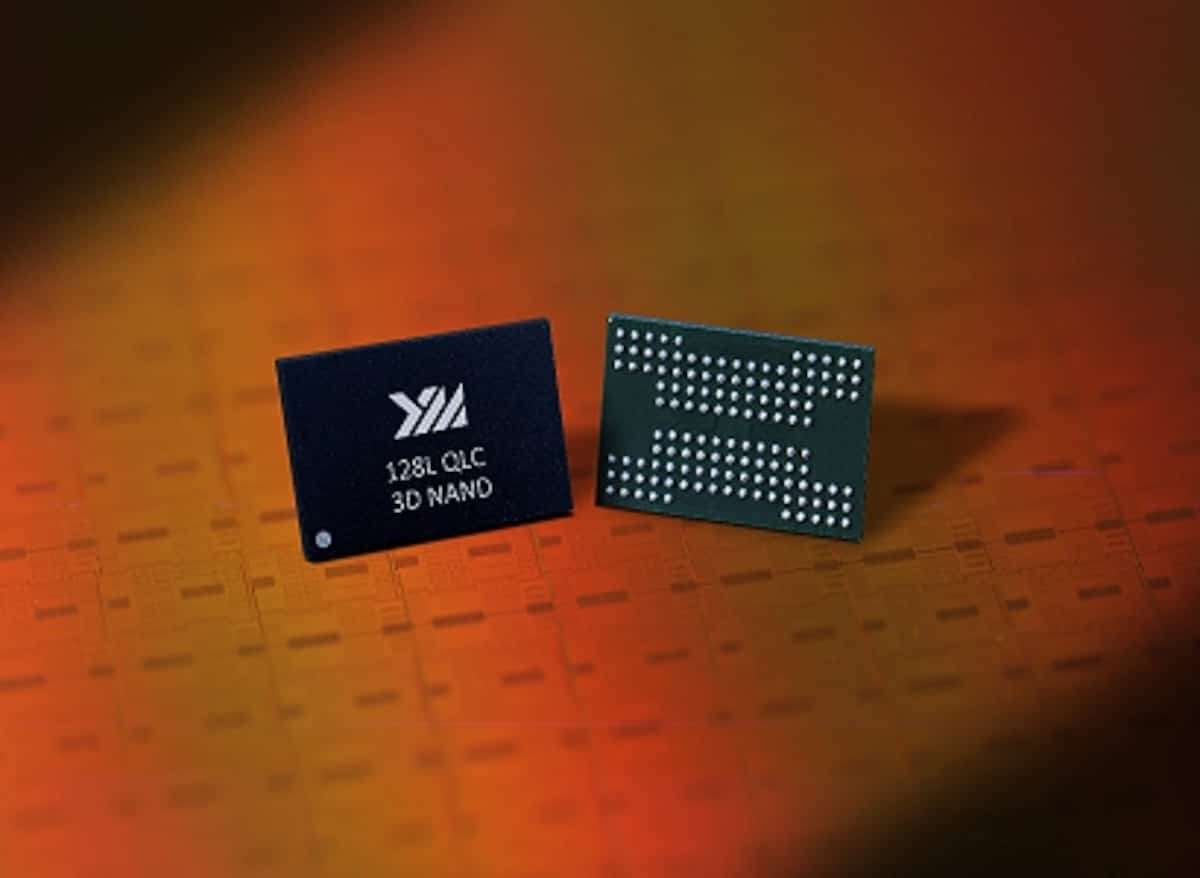
The Chinese semiconductor industry is once again shifting in a direction that blends public capital, stock market preparations, and geopolitical pressure. Yangtze Memory Technologies, better known as YMTC, plans to sell a 39% stake in Wuhan Xinxin Semiconductor Manufacturing Co. Ltd. (XMC) to Wuhan Optics Valley Semiconductor Industry Investment Co., a local state-backed investment platform. The transaction reduces YMTC’s direct ownership in XMC and effectively transfers control to a public actor linked to Wuhan’s tech ecosystem.
This move is significant. XMC is not just any subsidiary within China’s chip landscape. Founded in Wuhan in 2006, it became part of YMTC’s orbit in 2016, right when China accelerated its efforts to develop a national NAND memory industry. Now, a decade later, the separation reflects a more nuanced reorganization: YMTC is focusing on its own path toward a major domestic IPO, while XMC remains under a more local and state-controlled framework.
A 39% sale that shifts actual control
According to information published by Caixin and other financial services, YMTC will sell its 39% stake in Wuhan Xinxin Semiconductor Manufacturing to Wuhan Optics Valley Semiconductor Industry Investment. Before the transaction, Yangtze Memory Holdings held around 68.19% or 68.2% of XMC and exercised exclusive control. After the deal closes, Optics Valley Semiconductor will control close to 47.88% or 47.9% of XMC directly and indirectly, along with other parties acting in concert.
The figure may seem paradoxical: the buyer owns less than 50%, but gains control through the combined sum of direct and indirect shares and concerted agreements. Practically, YMTC no longer controls XMC, and decision-making power shifts to a local public investment platform.
| Element | Before the transaction | After the transaction |
|---|---|---|
| YMTC/Yangtze Memory Holdings’ stake in XMC | Approximately 68.2% | Reduced after the 39% sale |
| Sold stake | 39% | Transferred to Wuhan Optics Valley Semiconductor Industry Investment |
| New controller | YMTC/Yangtze Memory Holdings | Optics Valley Semiconductor and concerted parties |
| Control of the new buyer group | Not applicable | Approximately 47.9% direct and indirect |
| Strategic interpretation | XMC integrated within YMTC’s perimeter | XMC under local government control in Wuhan |
| Context | Internal reorganization of the group | YMTC preparing for its own domestic IPO |
Additionally, this move comes after XMC withdrew its IPO application in the STAR Market in Shanghai last May, according to Dealroom. This suggests the company is shifting its corporate strategy before reconsidering its future financial or industrial trajectory.
YMTC preparing for a cleaner listing
The most straightforward explanation is corporate: YMTC aims to simplify its structure ahead of a major domestic listing. The company has become China’s leading NAND memory name and one of its most sensitive assets within Beijing’s tech strategy. In an environment where demand for storage for AI, data centers, and electronics continues to grow, China wants its national champions to go to capital markets with clearer, more defendable structures.
The separation of XMC can help position YMTC as a more focused NAND and storage group, less entangled with foundry or specialized manufacturing activities that may have different industrial and regulatory dynamics. This type of corporate cleaning-up is common before a significant IPO, especially when subsidiaries have distinct financial, technological, or risk profiles.
There is also an industrial perspective. Wuhan has made semiconductors a regional priority. Digitimes reported in April that the city had announced a major project plan for 2026, with 355 initiatives and total investments exceeding 260 billion yuan (about $38.1 billion), with YMTC and XMC as key parts of Wuhan’s local efforts in memory and manufacturing.
In this context, XMC coming under a structure controlled by Optics Valley doesn’t mean a retreat by the state, but rather a reallocation of control within China’s own public-industrial framework. YMTC becomes more focused, and XMC re-enters a more direct orbit tied to Wuhan’s local capital and industrial strategy.
Semiconductors, sanctions, and public capital
The geopolitical backdrop weighs heavily. In December 2024, XMC was added to the U.S. Department of Commerce’s Entity List, which imposes export restrictions and a presumption of denial for items subject to U.S. export controls. The Federal Register cited national security and foreign policy concerns about involvement in activities contrary to U.S. interests.
Meanwhile, YMTC has faced U.S. pressure for years. The U.S. added it to their trade restrictions list in 2022, and YMTC has argued that its products are commercial-grade and not related to military purposes. In 2025, Reuters reported YMTC had sued the U.S. government to challenge its designation as a Chinese military company and its inclusion on export control lists.
While the XMC sale doesn’t eliminate these risks, it allows for perimeter separation. For China, this reorganization facilitates grouping sensitive assets under structures capable of receiving state support, local funding, and industrial coordination. For YMTC, it can reduce complexity ahead of going to market. For XMC, it means being more directly integrated into Wuhan’s regional strategy, where semiconductor development is a priority.
The move also reflects broader trends in China’s memory industry. Digitimes has noted in recent weeks that YMTC and CXMT (another major Chinese NAND and DRAM player) are progressing toward capital markets at a time when AI demand is stressing capacity, performance, supply chains, and tool localization.
The message for international markets is clear: China isn’t withdrawing from memory development but reorganizing it. U.S. restrictions have increased costs and complexity but have also motivated Beijing to bolster domestic funding, ownership, and control structures.
Implications for the memory industry
In the short term, this sale does not immediately change global NAND, HBM, or specialized memory supply. It’s not an announcement of new capacity, technological enhancement, or direct entry into advanced manufacturing. It’s a change in ownership. But in the semiconductor sector, ownership matters because it influences access to capital, investment priorities, risk management, and resilience to long cycles.
For YMTC, this could mean arriving at its future IPO with a clearer profile. For XMC, new control might translate into a closer fit with Wuhan’s industrial plans. For the Chinese government, this operation helps organize two assets with shared history but potentially different strategic paths.
It also underscores that success in memory isn’t just about NAND layers, lithography, or wafer performance. It’s about funding, supply chain capacity, tool access, engineering, customers, and resilience against sanctions. China is adjusting these pieces ahead of the next phase.
Selling 39% of XMC isn’t an isolated move. It’s another sign that China’s chip industry is entering a more mature stage—less focused on announcing giant projects and more on building companies capable of self-finance, surviving external controls, and competing in segments where AI is sharply increasing demand for memory and storage.
Frequently Asked Questions
What exactly has YMTC sold?
YMTC plans to sell a 39% stake in Wuhan Xinxin Semiconductor Manufacturing Co. Ltd. (XMC) to Wuhan Optics Valley Semiconductor Industry Investment, a local state-backed platform.
Who will control XMC after the transaction?
According to published reports, Optics Valley Semiconductor will control around 47.9% of XMC directly and indirectly, acting as the controlling shareholder.
Why is XMC important within China’s chip sector?
XMC is a historic company in Wuhan’s semiconductor ecosystem and has been linked to YMTC since 2016. Its role is significant for China’s memory and manufacturing strategies.
Does this transaction affect YMTC’s IPO?
It is seen as a way to simplify YMTC’s structure ahead of a potential major domestic IPO. XMC also withdrew its IPO application in the STAR Market last May.
via: caixinglobal
