
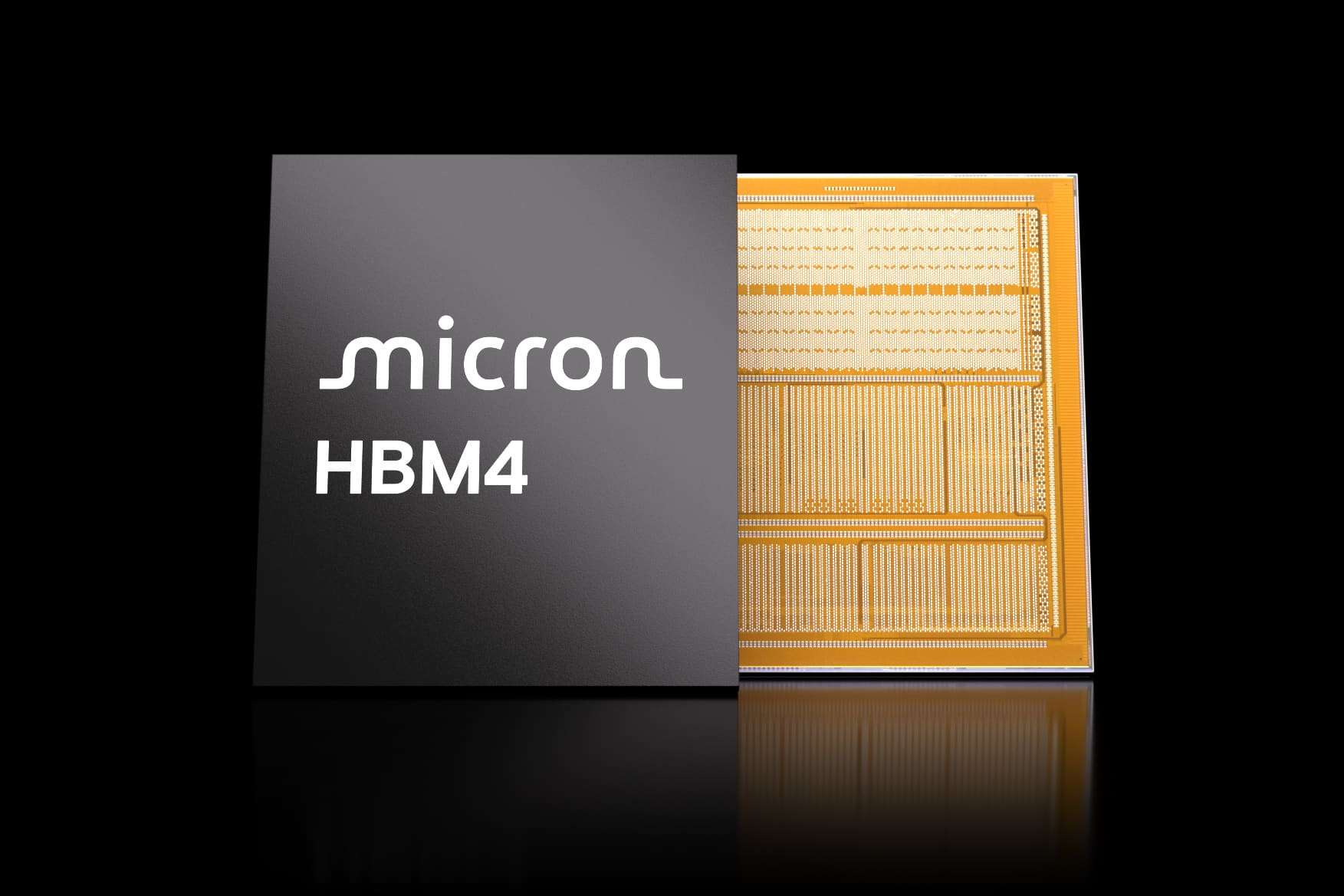
The race for artificial intelligence is no longer solely explained by GPUs, data centers, and electrical consumption. Memory has taken center stage. The financial firm Aletheia Capital warns that the prices of HBM memory could double by 2027, while conventional DRAM remains strained by demand from servers, accelerators, and AI platforms. This impact is already noticeable in the consumer market: in Germany, DDR5 is selling at an average 419% of its July 2025 price level, according to the 3DCenter price index.
That figure is striking and deserves proper interpretation. An index of 419% does not mean a 419% increase; it indicates that the current price is 4.19 times the starting point. In cumulative terms, the rise is around 319%. For anyone building a PC, expanding memory, or buying workstations, the same conclusion applies: RAM is no longer a relatively cheap component but a line item that can significantly impact the overall budget.
The broader issue extends beyond the German retail market. AI has dramatically increased demand for high-bandwidth memory, known as HBM, essential for powering accelerators like those from NVIDIA, AMD, or Google. As models grow larger, so do the capacity, bandwidth, and energy efficiency needs. Memory no longer just accompanies the processor; it now dictates performance limits.
DDR5: A visible symptom of a larger crisis
The 3DCenter index shows how DDR5 memory prices surged abruptly between fall 2025 and early 2026. In July 2025, the index was set at 100%. By November, it had risen to 179%. In December, it jumped to 345%, and in January, it reached 440%. After a slight correction in March, prices resumed rising to 419% in June.
| Month | DDR5 Index | Monthly Change |
|---|---|---|
| July 2025 | 100 % | — |
| October 2025 | 119 % | +15.8 % |
| November 2025 | 179 % | +49.5 % |
| December 2025 | 345 % | +93.0 % |
| January 2026 | 440 % | +27.6 % |
| February 2026 | 440 % | 0 % |
| March 2026 | 408 % | -7.2 % |
| April 2026 | 410 % | +0.3 % |
| May 2026 | 414 % | +1.1 % |
| June 2026 | 419 % | +1.0 % |
The market appears to have moved past the large monthly jumps but has not returned to normal. Prices remain at very high levels with few signs of relief. Some kits remain stable, others drop slightly, and some accelerate upwards again.
The most evident case is the kit of 2 x 32 GB DDR5-6000 CL28, which in July 2025 cost €208 in Germany. By May 2026, it was €819, and in June, it hit €1,000—a 22% monthly increase. Other products, like 2 x 32 GB DDR5-6400 CL32 kits, also increased in June, but more modestly.
| DDR5 Product | July 2025 | May 2026 | June 2026 | May–June Increase | Increase Since July |
|---|---|---|---|---|---|
| 16 GB DDR5-5600 | 39 € | 192 € | 192 € | 0 % | +392 % |
| 2 x 16 GB DDR5-6000 | 75 € | 363 € | 369 € | +2 % | +392 % |
| 2 x 32 GB DDR5-6000 | 158 € | 648 € | 650 € | 0 % | +311 % |
| 2 x 32 GB DDR5-6000 CL28 | 208 € | 819 € | 1,000 € | +22 % | +381 % |
| 2 x 48 GB DDR5-6400 | 304 € | 1,478 € | 1,478 € | 0 % | +386 % |
The message for consumers is clear: even when the average price increases by just about 1% per month, the market is still far above pre-crisis levels. Purchasing 64 GB or 96 GB of DDR5 for a PC used for creative work, development, or advanced gaming has become significantly more expensive than a year ago.
Aletheia sees more pressure on DRAM and HBM
Aletheia Capital believes there is still room for further increases. According to the report cited by Wccftech, the firm expects the average selling price (ASP) of DRAM to rise by 30% in the third quarter of 2026, up from an earlier forecast of 10-15%. For the fourth quarter, it maintains an estimate of an additional 10-15% increase.
The most critical point is HBM. Aletheia predicts that the ASP for this memory could double year-over-year in 2027. The firm argues that memory devices are becoming the most critical hardware components for AI systems, with their combined share in system value potentially exceeding 70% by 2027, compared to around half of the cost in 2025.
| Aletheia Forecast | Data |
|---|---|
| DRAM, Q3 2026 | Expected ASP increase of 30% |
| DRAM, Q4 2026 | Additional 10–15% |
| HBM in 2027 | Possible year-over-year doubling of ASP |
| Memory’s share in AI hardware | Over 70% by 2027, per the firm | Impact on Vera racks | Up to $26 million in reference configurations, according to Aletheia |
These forecasts are estimates from a financial firm and not guaranteed figures. They depend on actual AI demand, capacities of manufacturers like Micron, Samsung, SK Hynix, deployment speed of new plants, contracts with hyperscalers, and potential architecture changes reducing memory pressure.
However, the economic reasoning is sound. HBM is not just any memory. It is integrated very close to accelerators, offers much higher bandwidth than conventional DRAM, and is essential for training and inference of large models. Without sufficient HBM, an AI GPU loses much of its utility, as it cannot feed its compute units at the required pace.
Micron, SK Hynix, and Samsung gain bargaining power
The memory crisis is shifting the balance within the supply chain. For years, investors and clients focused on accelerator designers. Now, memory manufacturers are gaining prominence because they control a scarce resource. Micron, SK Hynix, and Samsung are benefiting from demand that cannot be immediately met.
Micron has acknowledged in investor documents that demand exceeds its available capacity across various segments and is accelerating investments to expand supply. The company has increased capital expenditure, is working on new HBM capacities, and expects its first Idaho fab to start producing wafers by mid-2027. It also plans for its advanced HBM packaging facility in Singapore to contribute to supply during 2027.
| Manufacturer | Role in the Memory Crisis |
|---|---|
| Micron | Enhancing HBM, advanced DRAM, and AI packaging |
| SK Hynix | Main supplier of HBM across multiple generations of accelerators |
| Samsung | Competing for HBM contracts and advanced DRAM capacity |
| NVIDIA | Major consumer of HBM for Blackwell, Rubin, and future platforms |
| Google and other hyperscalers | Large-scale memory use in TPUs, GPUs, and AI servers |
Capacity expansion takes years, requiring investments, specialized equipment, materials, skilled personnel, and process validation. Moreover, memory manufacturers are well aware of the cycles of oversupply and price collapses—they often hesitate to expand capacity aggressively if they foresee a potential market correction.
This prudence, combined with soaring AI demand, explains why normalization might take longer. Despite expansion plans, much of the market could remain tight through 2026 and 2027. If HBM continues to absorb increased capacity and margin, conventional DRAM for PCs, laptops, and non-AI servers could come under pressure.
Vera Rubin and the true cost of AI
NVIDIA has already explained that its Vera Rubin platform will incorporate HBM4, with memory playing a crucial role in performance. The company states that Rubin will use a new generation of HBM with wider interfaces and nearly three times the bandwidth of Blackwell. This leap is necessary because AI models, especially in advanced inference and long-context agents, move enormous volumes of data.
The forecast by Aletheia of racks costing up to $26 million should be seen as a market estimate, not an official NVIDIA price. Nonetheless, it illustrates the issue: the overall cost of AI systems depends not only on the main chip but increasingly on memory, advanced packaging, modules, power, networking, and cooling.
| Critical AI Component | Why It Matters |
|---|---|
| HBM | Feeds accelerators with very high bandwidth |
| Server DRAM | Supports CPU loads, inference, virtualization, and analytics |
| Advanced SOCs/SO-DIMMs | Provides system memory in compact platforms |
| Advanced Packaging | Integrates memory and compute with low latency |
| Power and Cooling | Enables dense AI rack configurations |
| Networking and Interconnects | Transfers data between nodes and accelerators |
Rising memory costs can have several effects: raising the expense of building AI clusters, favoring existing suppliers with locked-in contracts, incentivizing model designers to seek more memory-efficient architectures, and shifting some cost burdens onto consumers and companies that buy components not exclusively destined for AI.
The consumer market foots the bill
The German DDR5 example demonstrates how a crisis originating in data centers can eventually impact PC buyers. Manufacturers prioritize products with higher margins and strategic demand. If HBM and server memory capture more capacity, consumer memory becomes less prioritized or more expensive.
This situation also affects laptop, motherboard, workstation, NAS, and entry-level server manufacturers. A sustained increase in DRAM prices can raise the base configuration costs, reduce default memory, or turn upgrades into luxury options. In price-sensitive markets, this can delay upgrade cycles.
For professional users, decisions become more complex. Those engaged in video editing, virtual machines, development, local databases, or small AI models need genuine memory. Cutting corners on RAM can significantly degrade performance. However, paying 400%, 500%, or more over previous levels greatly affects cost-effectiveness of any upgrade.
The practical advice is to avoid impulsive purchases and carefully balance capacity, speed, and latency. In today’s environment, it may be smarter to opt for a less extreme DDR5 kit, upgrade only what’s necessary, or reuse DDR4 platforms when performance suffices. For enterprises, detailed planning and supply agreements have gained renewed importance after years of low prices.
Memory is no longer the silent component of computing. In the AI era, it has become a strategic resource. When this resource is scarce, its impact spreads throughout the chain—from racks worth millions to the desktop PC someone assembles at home.
Frequently Asked Questions
Why is memory prices rising so much?
AI demand is absorbing large quantities of HBM, server DRAM, and manufacturing capacity, reducing margins in other segments and pushing prices upward.
What is HBM?
High Bandwidth Memory (HBM) is a high-speed memory used alongside AI accelerators and advanced GPUs to move data much faster than conventional DRAM.
What did Aletheia Capital say?
According to the note cited by Wccftech, Aletheia expects a 30% increase in DRAM ASP during Q3 2026 and predicts that HBM ASP could double year-over-year in 2027.
Will DDR5 remain expensive?
There are no clear signs of immediate normalization. In Germany, the DDR5 index from 3DCenter remains at 419% of July 2025 levels, with prices still well above pre-crisis levels.
Sources: Aletheia Capital
