
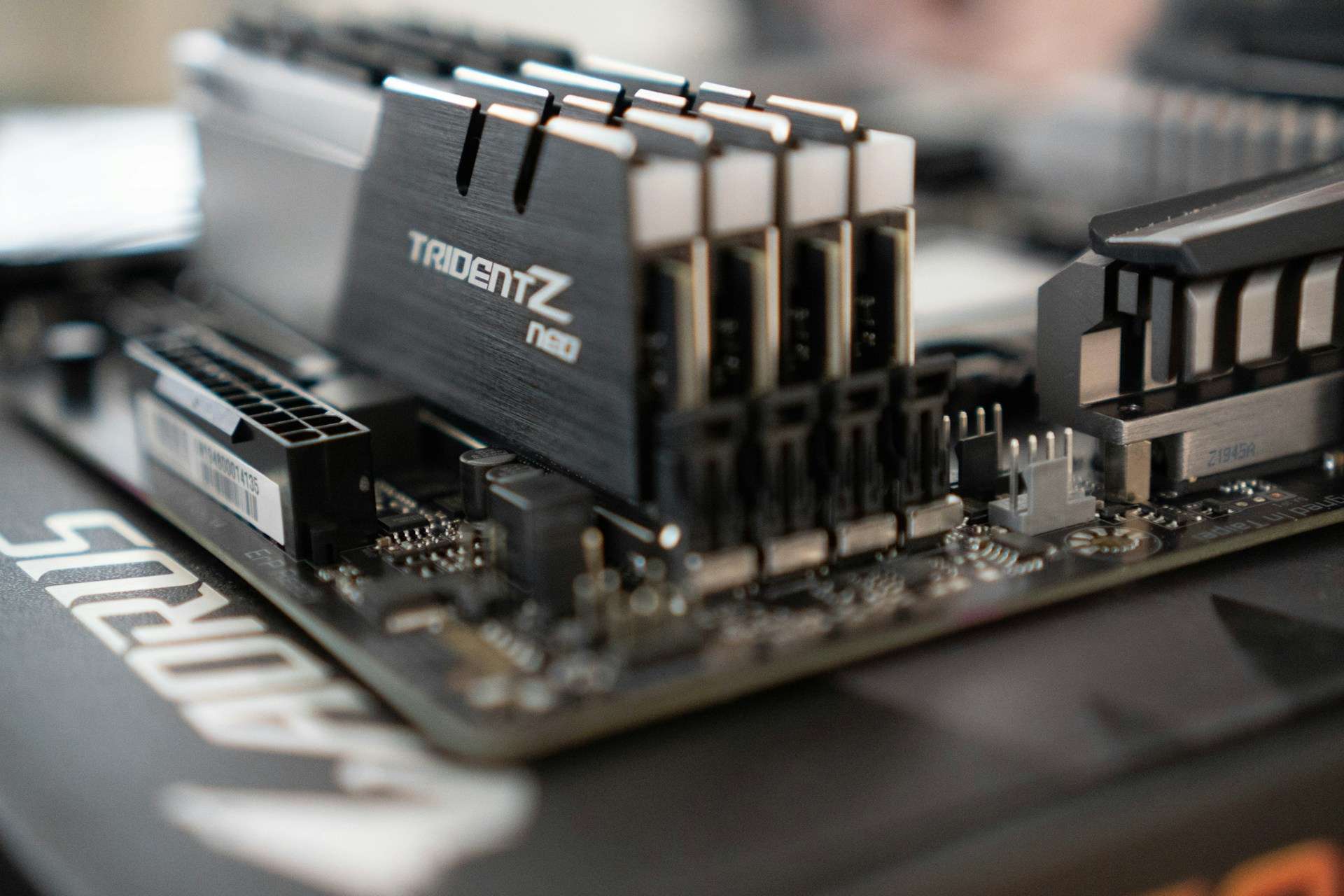
DDR5 memory will remain expensive for at least the next two years. This is the forecast shared by David McAfee, Global Vice President and General Manager of AMD’s Client Channel Business, during an interview with the Taiwanese media 4Gamers at Computex 2026. According to the executive, the market will take about two years to reach a more normal balance between supply and demand, with prices expected to normalize around 2028.
The explanation points again to the same phenomenon that’s straining much of the tech industry: the demand for infrastructure for artificial intelligence. Large data centers, training servers, inference systems, accelerators, and cloud platforms are consuming massive volumes of memory. At the same time, manufacturers have shifted capacity from DDR4 to DDR5, reducing the availability of older modules and driving up their prices.
AI is grabbing a large portion of available memory
The rise in DDR5 prices isn’t caused by a single factor. McAfee highlighted that the AI supercycle has significantly contributed to the increase, as leading manufacturers attempt to expand capacity. Samsung and Micron are reportedly increasing production, and the Chinese company CXMT is also expanding its DDR5 capacity, according to information from 4Gamers and VideoCardz.
The issue is that ramping up memory production doesn’t happen overnight. Factories require investment, equipment, validation, raw materials, and time to reach meaningful volume. For this reason, the market can remain tight even as manufacturers begin to react.
This situation directly affects consumers. Building a new PC with DDR5 is more expensive than a few months ago, and the increases have reached levels where, in some markets, prices are multiple times higher than previous rates. For home users, gamers, content creators, and small businesses, RAM cost once again influences platform buying decisions.
| Factor | Market Impact |
|---|---|
| AI demand | Absorbs large volumes of memory for servers and data centers |
| Transition from DDR4 to DDR5 | Reduces capacity for DDR4 and increases costs of older modules |
| Factory expansions | Will help but won’t resolve the problem immediately |
| DDR5 prices | Expected to remain high, according to AMD, for around two years |
| PC market | Users and builders delay purchases or seek cheaper alternatives |
| DDR4 | Continues to have demand for older platforms and remains cheaper compared to DDR5 |
| Future platforms | AMD will consider socket changes based on DDR6, PCIe 6.0, and other standards |
DDR4 persists due to platform availability and cost
An unexpected consequence of the rising DDR5 prices is renewed interest in DDR4 platforms. Although DDR4 no longer represents the latest technology, it remains sufficient for many users and allows for extending the life of existing systems or building more affordable configurations.
According to information released after the interview, DDR4 capacity has been decreasing over the past one or two years because manufacturers have prioritized investments in DDR5. This transition was logical from an industrial perspective, but the AI boom has complicated timelines. DDR5 has become more expensive, DDR4 has also increased in price due to reduced available capacity, and consumers find themselves caught between two tight markets.
Some motherboard manufacturers are reportedly increasing production of DDR4-compatible models precisely because demand still exists. In AMD’s case, the longevity of the AM4 platform has resulted in a large installed base that can still be upgraded with processors like the Ryzen with 3D V-Cache. For many users, improving an existing DDR4 setup might make more sense than switching to a costly DDR5 platform.
This does not mean DDR4 is becoming the future. DDR5 will continue gaining ground in bandwidth, density, efficiency, and platform support. However, the transition may be messier than initially expected. Memory, which for years was a relatively predictable part of PC budgets, is once again a critical variable.
AM5, DDR6, and PCIe 6.0: AMD aims to avoid hasty socket changes
The interview also addressed AMD’s platform strategy. McAfee acknowledged that deciding when to change sockets is a complex decision, especially since launching a new platform entails higher initial costs for users, motherboard manufacturers, integrators, and the ecosystem as a whole.
AMD has extended support for AM5 until 2029, providing more time for those who bought motherboards for Ryzen 7000, Ryzen 8000G, or Ryzen 9000. The company has not announced an AM6 socket yet, and for now, AM5 remains the active platform for its current and upcoming desktop processors.
Whether to change sockets will depend, according to McAfee, on whether AM5 can support future standards like DDR6 or PCIe 6.0. This is important because a platform isn’t replaced only by a new CPU generation; it’s changed when electrical, physical, or connectivity limitations make adopting new memory types, buses, power delivery, or expansion technologies difficult.
The executive also highlighted another factor: user experience. Not all technical jumps translate into perceptible improvements. For example, moving from PCIe 4.0 to PCIe 5.0 SSDs has significantly increased sequential performance, but many users don’t perceive a clear difference in everyday use. AMD seems cautious about socket changes that would raise platform costs if the practical benefits don’t justify the expense.
Buy now or wait: the decision becomes more complex
For those planning to build a PC in 2026, the current situation requires careful consideration. Waiting for DDR5 prices to drop might make sense if your current system still meets your needs. However, if you need to upgrade for work, gaming, content creation, or productivity, postponing for two years might not always be reasonable.
In high-end builds, DDR5 will remain the natural choice. Modern platforms, the latest processors, and future upgrades rely on it. In mid-range or budget setups, it could make sense to consider DDR4 platforms if the overall system cost drops significantly and performance is adequate.
It’s also important to view memory as part of the total cost, not just a standalone component. A costly motherboard, CPU, and DDR5 kit can substantially increase the total budget compared to upgrading an existing platform. Conversely, for those starting from scratch and seeking long-term usability, investing in DDR5 might still be more logical despite the premium.
AMD’s forecast aligns with a broader trend: artificial intelligence is shifting costs towards the consumer. Server demand isn’t just affecting GPUs or accelerators. It also pressures memory, storage, networking, power, data centers, and supply chains. What happens in large AI clusters ultimately impacts component prices for desktop PCs.
DDR5 normalization will happen, but it doesn’t seem imminent. If McAfee’s prediction holds, 2026 and 2027 will be years of high prices and more cautious buying decisions. For the PC industry, this presents another hurdle just as it tries to convince users to upgrade for new workloads, gaming, content creation, and local AI tasks.
Frequently Asked Questions
Why has DDR5 memory increased so much?
The rise is primarily related to the strong demand for memory in AI infrastructure, servers, and data centers, along with an industrial shift from DDR4 to DDR5.
When will DDR5 return to normal prices?
David McAfee from AMD predicts that it will take roughly two years for the market to stabilize, aiming for a normalization around 2028.
Is it still worth buying DDR4?
It can be reasonable for budget-conscious users or those looking to upgrade existing platforms. DDR5 is the market’s direction, but DDR4 remains sufficient for many setups and workloads.
Will AMD release a socket AM6 soon?
AMD has not announced AM6. The company continues to support AM5, extending its support until 2029, while evaluating future standards like DDR6 and PCIe 6.0.
via: 4gamers
