
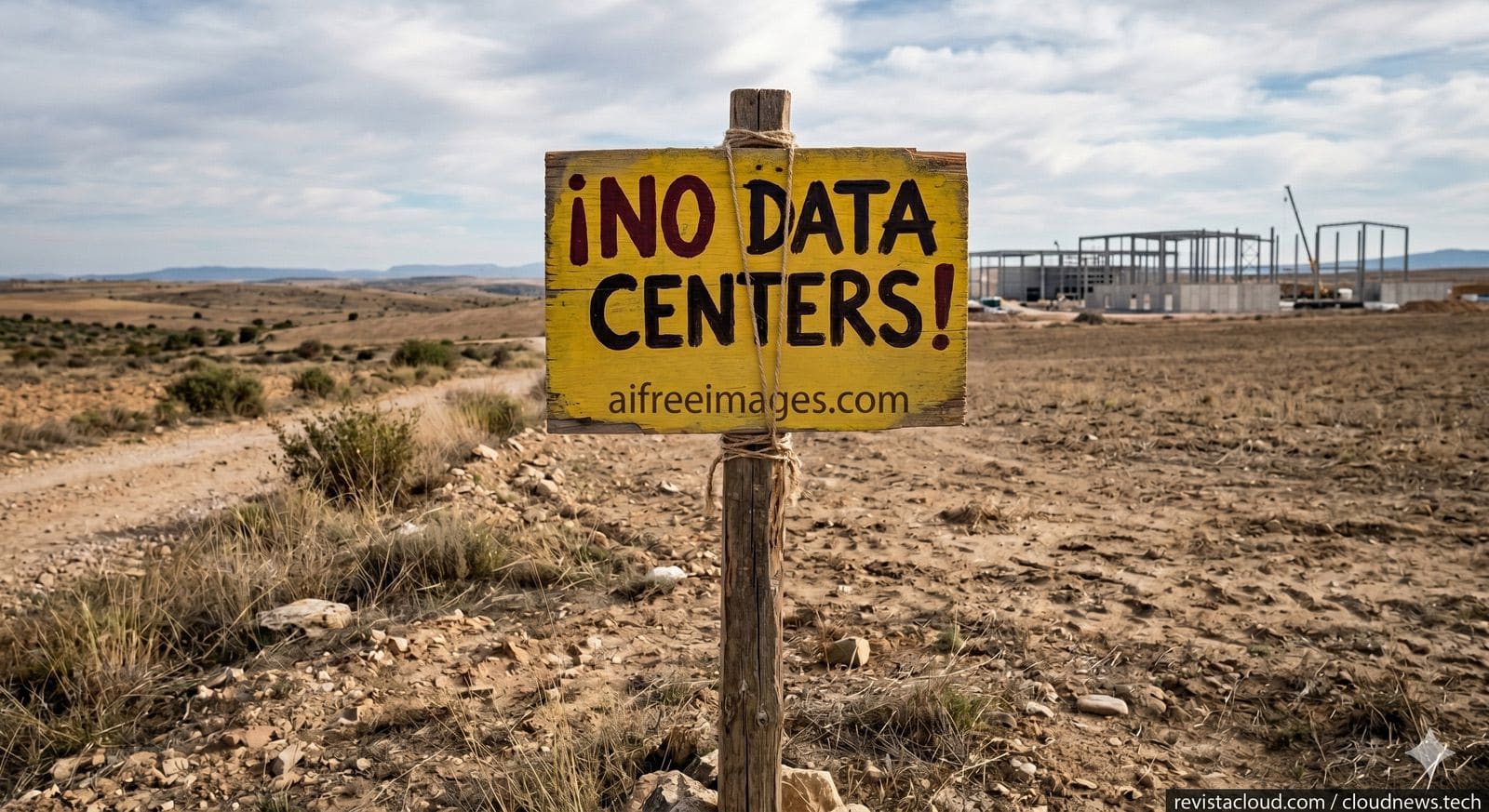
One of the largest planned data center projects in the United States has been forced to scale back its scope after strong community opposition in Box Elder County, Utah. The plan, spearheaded by Kevin O’Leary, president of O’Leary Digital and well-known investor on Shark Tank, initially proposed occupying about 40,000 acres—roughly three times the size of Manhattan. After weeks of public pressure, the developer announced a reduction to approximately 20,000 acres, with around 10,000 acres remaining undeveloped.
This decision does not cancel the Stratos project but confirms that the expansion of data centers for artificial intelligence (AI) is beginning to face increasingly organized local resistance. The conflict is not solely about technology but also involves water, energy, noise, land impact, tax incentives, and the perception that decisions with decades-long effects are being made too quickly and with little transparency.
Water: the most sensitive point of the conflict
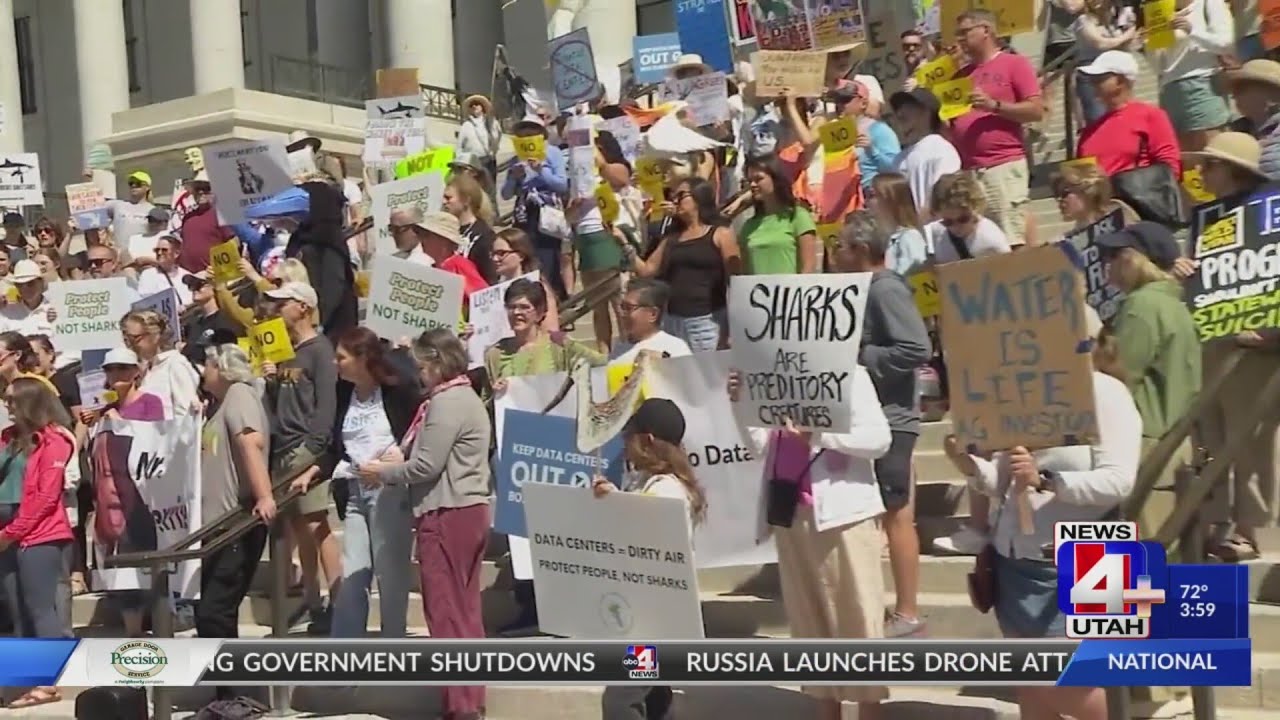
Local opposition focused mainly on water use. Many residents paid a $15 fee to submit comments against the transfer of 1,900 acre-feet of water from a ranch to the future data center. This amount is roughly equivalent to 2.3 million cubic meters, or over 2.3 billion liters—a significant figure in a region where the vulnerability of the Great Salt Lake is part of the public debate.
The concern is not trivial. Large-scale data centers can consume significant amounts of water when using evaporative cooling systems or when indirectly reliant on water-intensive electricity generation. Although not all designs have the same water impact, the lack of detailed information often fuels distrust. In Utah, this distrust has translated into mobilization.
Neighbors also expressed worries about potential increases in electricity bills, air quality, local wildlife, land use, traffic, noise, and generators. These issues are becoming increasingly common in the debate over data centers in the U.S. The surge in AI demand has increased the need for computing capacity, which in turn requires land, energy, water, power lines, substations, cooling systems, and permits.
Kevin O’Leary publicly acknowledged that the project was poorly managed from the start. In an interview with a local media outlet cited by Ars Technica, he stated he did not expect such intense public reactions and admitted that both he and state officials made “huge mistakes” by not involving the public earlier.
| Element of the Stratos Project | Communicated Situation |
|---|---|
| Location | Box Elder County, Utah |
| Promoter | O’Leary Digital, led by Kevin O’Leary |
| Initial projected area | 40,000 acres |
| Reduced area | 20,000 acres |
| Undeveloped area remaining | 10,000 acres | Estimated effective development area | 25% of the original plan |
| Water in dispute | 1,900 acre-feet |
| Approximate equivalent | 2.3 million m³ |
| Total capacity mentioned | Up to 9 GW, with no definitive public clarification on the reduction |
A partial victory for residents
The project reduction was celebrated by Stuart Adams, Utah Senate President, who had called on O’Leary to cut the scope by 75%. Adams argued that any development must include written commitments, transparency, public participation, and thorough environmental review. His stance also comes amid a delicate political context, with Republican primaries in the state and growing local opposition to new data centers.
The industry’s interpretation is that the reduction shows a willingness to listen. O’Leary stated he will personally handle project communication and pledged transparency regarding plans, designs, permits, and environmental impacts. According to him, some opposition was fueled by incorrect or exaggerated information.
However, some community members do not buy this explanation. Brenna Williams, a member of Box Elder Accountability Referendum, called the deal “performance art” and suggested the region was never suitable for a hyperscale data center due to its water restrictions. Local criticism is not limited to the project’s size but extends to the process. For some community members, the main problem was that the conversation came too late, when decisions already seemed to be underway.
This point is important because the reduction does not clear all doubts. According to NBC, cited by Ars Technica, it was not immediately clear whether the total capacity of nine gigawatts would change with the reduction in land area. If the planned electrical output remains the same, part of the impact could still be significant despite the smaller physical footprint.
AI clashes with local politics
The Utah case highlights a tension that will likely recur more frequently. Governments, tech companies, and investors present data centers as strategic infrastructure for competing in AI. Conversely, local residents evaluate them from a much more tangible perspective: what happens to their water, electric grid, taxes, landscape, and quality of life.
In Washington, the focus is on technological leadership. In a rural county, it’s about wells, electric bills, and permits. This scale difference explains why projects that seem inevitable from an economic standpoint can turn into local political conflicts.
Opposition is not limited to Utah. Ars Technica reports that, according to HeatMap Pro data, at least 20 data center projects were canceled after strong public opposition in the first quarter of the year—more than double the previous quarter. Rejection extends to electoral and fiscal debates as well. In Illinois, Governor J.B. Pritzker has proposed temporarily pausing tax incentives for data centers until a legal framework for responsible development is in place.
The phenomenon has a straightforward explanation. Data centers are no longer discreet buildings within tech parks. Modern AI campuses measure in hundreds or thousands of megawatts, with some plans reaching scales comparable to national energy infrastructures. They require transmission lines, energy reserves, water agreements, roads, security, environmental permits, and often tax exemptions or incentives.
The industry argues these projects generate investment, employment, network modernization, and digital capacity. Critics respond that local benefits do not always outweigh resource consumption and pressure on public infrastructure. As always, the reality depends on design, location, transparency, and the fair distribution of costs and benefits.
AI infrastructure can no longer grow without social license
The reduction of the Stratos project does not mean the U.S. will halt data center development. Demand for AI, cloud, storage, and digital services continues to grow. However, it sends a clear message to promoters and regulators: social license is becoming as important as technical approval.
Until now, many projects have been sold with language emphasizing investment, innovation, and competitiveness. That narrative works in formal presentations but falls short when communities realize their resources are at stake without sufficient information. Water is the most visible concern, but energy will likely be the next major battleground.
For tech companies, this means changing how projects are pitched. It’s not enough to announce billions in investment. They must explain how much energy will be used, its source, the impact on the grid, water consumption, cooling technologies, emissions, noise levels, tax benefits, and what the community will receive in return.
Better site selection is also crucial. Not all regions have the same water, electrical, or social conditions. Legally, placing a hyperscale campus in a water-vulnerable area may be permissible, but politically unviable. The resistance seen in Utah demonstrates that a project can be technically feasible but still lose community trust before construction begins.
AI needs data centers, but data centers need territory. And territory involves neighbors, finite resources, and political memory. The partial victory in Box Elder County does not stop the AI race but reminds us that its physical infrastructure will no longer expand quietly.
Frequently Asked Questions
What happened with the Stratos project in Utah?
The developer announced a scale-back after strong community opposition. The original plan involved 40,000 acres, which now is reduced to around 20,000, with about 10,000 acres remaining undeveloped.
Why were residents protesting?
Mainly due to water use concerns, especially regarding potential impacts on local resources and the Great Salt Lake. There were also worries about electricity, noise, air quality, wildlife, traffic, and transparency issues.
Has the data center been canceled?
No. The project has not been canceled; its planned footprint has decreased. It still needs approvals and environmental reviews before construction can begin.
Why is this relevant for the AI industry?
Because it shows that hyperscale data centers can face political and social resistance if their impacts on water, energy, land, and local communities are not properly addressed.
via: arstechnica
