
Motorola Solutions has announced a definitive agreement to acquire D-Fend Solutions for $1.5 billion, a deal that positions the American company at the forefront of one of the fastest-growing security markets: protection against unauthorized drones. The transaction, still subject to regulatory approvals and usual closing conditions, is expected to finalize in the fourth quarter of 2026.
D-Fend Solutions specializes in counter-drone systems, or C-UAS, based on radio frequency cyber control. Unlike kinetic solutions, which physically bring down drones, or traditional jammers, which can interfere with other communications, D-Fend’s technology aims to identify, take control, and redirect unauthorized drones in a controlled manner. The goal is to neutralize the threat without collateral damage or the need to shut down entire areas.
This acquisition comes at a time when commercial and consumer drones have transitioned from useful tools for inspection, logistics, videography, or security to potential risks at airports, mass events, prisons, critical infrastructure, military facilities, energy plants, and sensitive urban spaces. Detection alone is no longer enough. The new question is how to act when a drone enters a protected area.
From Detecting Drones to Taking Control
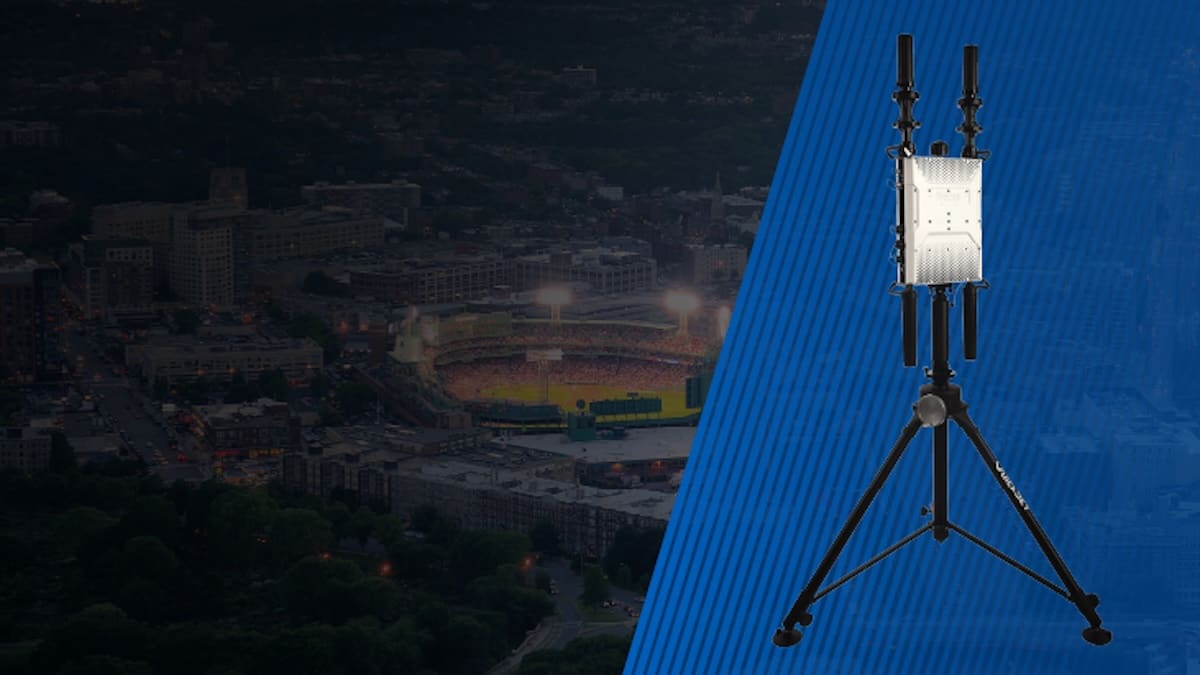
D-Fend’s solution is based on EnforceAir, its drone detection and mitigation platform. The system is designed to detect, locate, and identify unauthorized drones, and when necessary, execute radio frequency control to bring them to a safe zone or land them in a controlled manner.
This approach is crucial because many organizations cannot afford indiscriminate responses. An airport, stadium, power plant, or hospital cannot broadly disable wireless communications without other issues arising. Also, it isn’t always feasible to shoot down a drone, as it could fall on people, vehicles, or sensitive facilities.
Non-kinetic technology aims to bridge that gap: mitigating the threat without turning the response into another risk. According to Motorola Solutions, D-Fend has thousands of deployments across more than 30 countries and has reported annual revenue growth exceeding 50% over the past three years. The company forecasts revenues of $185 million in 2026.
| Operation Element | Key Data |
|---|---|
| Buyer | Motorola Solutions |
| Acquired Company | D-Fend Solutions |
| Deal Value | $1.5 billion |
| Core Technology | Radio frequency cyber control |
| Deployments | Thousands across over 30 countries |
| Annual Revenue Growth | Over 50% in the last three years |
| Projected Revenue 2026 | $185 million |
| Expected Closure | Q4 2026 |
Why Motorola Solutions Is Interested in This Market
Motorola Solutions has been positioning itself for years as a provider of public safety technologies, critical communications, video, access control, command centers, and protection of individuals, properties, and spaces. The acquisition of D-Fend aligns with this strategy: adding an aerial layer to an existing platform that already combines communications, analytics, cameras, command software, and emergency solutions.
The purchase also responds to regulatory changes. In the U.S., the Safer Skies Act, enacted within the Fiscal Defense Law of 2026, authorizes certain state and local agencies—provided they are trained and certified—to detect, track, and when permitted, mitigate drones posing a threat to public safety. This is a significant shift because for years, many active counter-drone capabilities were reserved for federal authorities or specific scenarios.
This new framework opens the door for solutions that not only monitor the sky but also enable safe intervention. Motorola Solutions summarizes it clearly: unauthorized drones have turned the airspace below into a zone of unpredictable risk, and detection alone is no longer sufficient.
D-Fend provides precisely that intervention capability. Its approach aims to maintain the operation of authorized drones while isolating and removing unauthorized drones from the airspace. This distinction could be increasingly important in cities, airports, and industrial environments where legitimate security, inspection, or logistics drones coexist with unknown devices.
Airports, Events, Prisons, and Critical Infrastructure
The counter-drone market is growing because the threat is no longer hypothetical. Drones can be used to smuggle objects into prisons, spy on facilities, disrupt airport operations, approach mass events, observe critical infrastructure, or carry small dangerous loads. They can also trigger preemptive closures if there is no safe way to identify and remove them.
At an airport, an unauthorized drone can force the suspension of takeoffs and landings. At a refinery or power plant, it can activate costly security protocols. At a large event, it poses risks to attendees, authorities, or performers. In prisons, it can be used for smuggling. In all these cases, the cost of inaction can be high, but aggressive responses can also cause damage.
This underscores the importance of control-taking technologies. The ideal approach is to detect early, identify accurately, differentiate between authorized and unauthorized drones, and neutralize only the problematic target. Counter-drone defense is moving toward more selective and less disruptive models.
Radio frequency control is not the only solution. Protecting the airspace usually involves multiple layers: RF sensors, radar, electro-optical cameras, signal analysis, remote identification, geofencing, integration with command centers, and in some cases, jamming or physical measures. But D-Fend occupies a particularly attractive niche: controlled mitigation.
A Purchase Connecting Physical Security and Cybersecurity
The deal also reflects a broader trend: physical security and cybersecurity are converging. A drone is a physical object but also a connected system. It involves communications, firmware, protocols, command links, navigation, telemetry, and software. Neutralizing it may require understanding its digital behavior as well as its position in the air.
The term “RF cyber-takeover” encapsulates this convergence. It’s not just about spotting a flying object but intervening in its communication channel to redirect it in a controlled way. For a company like Motorola Solutions, which already works with critical communications and security software, this line between physical and digital domains could become a significant business opportunity.
Furthermore, the growth in legitimate drone use complicates responses. Future airspaces will see more authorized drones in security, inspection, logistics, emergency response, agriculture, construction, and maintenance. Counter-drone solutions cannot rely on blocking everything; they must allow legitimate operations and respond only to threats. Precision will be a key factor in the market’s maturity.
The Challenge: Integrating a Sensitive Technology
The D-Fend acquisition is still not finalized and must pass regulatory reviews. It’s not a trivial operation because counter-drone technologies touch on public safety, defense, privacy, spectrum regulation, and legal authority over mitigation actions. In many countries, not just any actor can interfere with, control, or neutralize drones—even if technically possible.
Motorola Solutions will need to incorporate D-Fend without diluting its specialization. Also, it will have to adapt deployment to different regulations depending on the country, client, and use case. A European airport, a U.S. local police, a military installation, or a private company all operate under different rules and permissions.
Despite these challenges, the opportunity is clear. If drones have expanded the risk into low-altitude airspace, organizations will need a dedicated security layer for that environment. Motorola Solutions aims for D-Fend to be a key piece within its broader security and critical communication platform.
The acquisition confirms that the counter-drone market has evolved from an emerging category into a core security infrastructure component. Until recently, protecting low-altitude airspace seemed a military or airport concern. Today, it’s becoming a necessity for cities, corporations, large events, critical operators, and law enforcement agencies.
Drones have democratized access to the sky. Motorola Solutions’ purchase of D-Fend demonstrates that the security industry is already building the next layer: controlling which drones occupy the airspace and what happens when an unauthorized drone appears.
Frequently Asked Questions
What has Motorola Solutions announced?
Motorola Solutions has entered into a definitive agreement to acquire D-Fend Solutions for $1.5 billion.
What does D-Fend do?
D-Fend develops counter-drone technology based on radio frequency cyber control, designed to detect, identify, and safely neutralize unauthorized drones.
Why is this acquisition important?
It reinforces Motorola Solutions’ position in public safety and infrastructure protection, adding a specific layer against low-altitude aerial threats.
Is the deal already finalized?
No. The completion depends on regulatory approvals and other standard conditions. Motorola Solutions expects to close in Q4 2026.
via: motorolasolutions
