
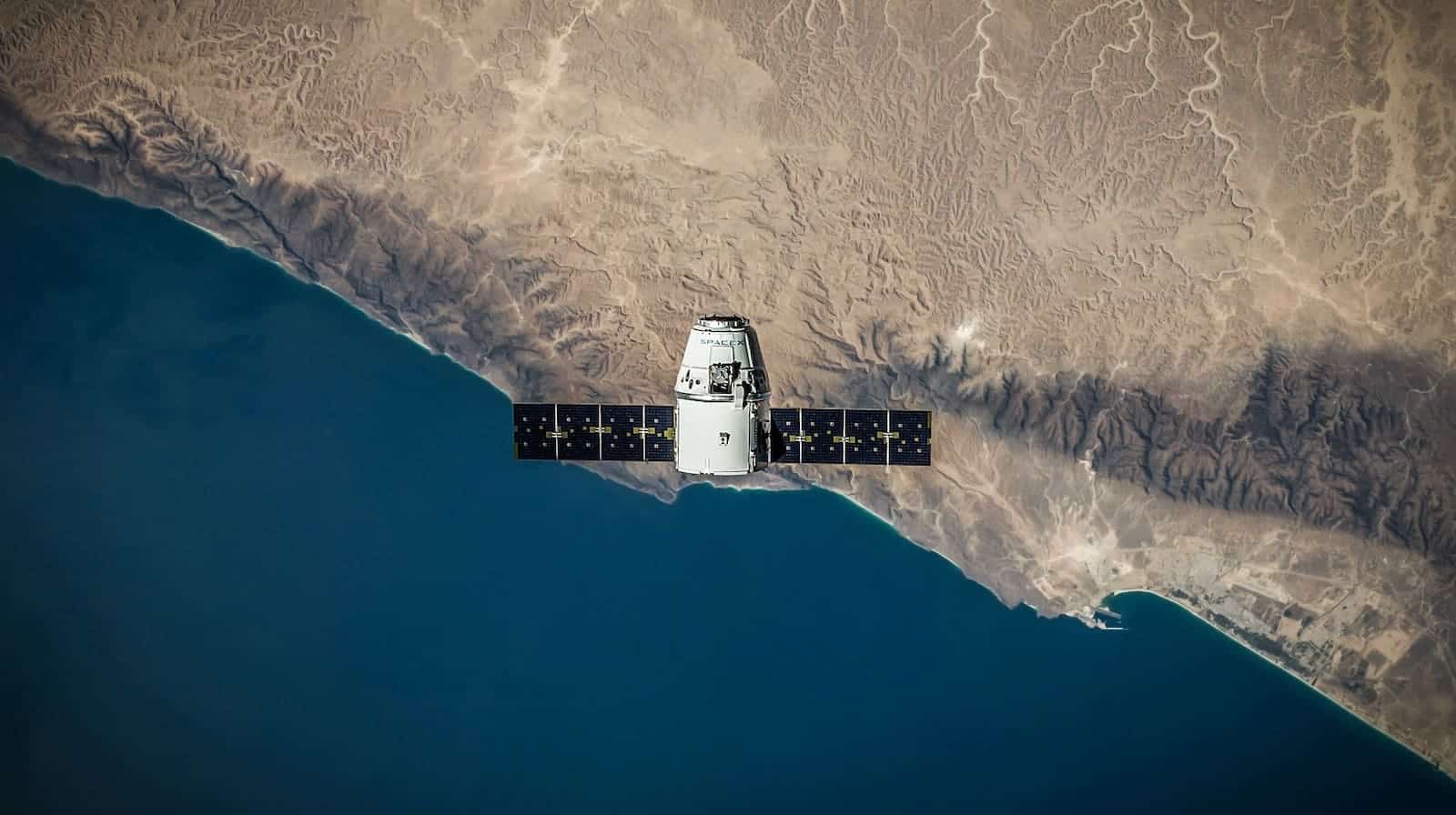
Satellite communications are no longer just a matter for operators, space agencies, and major teleport operators. Every week, new announcements about LEO constellations, Direct-to-Cell services, 5G backhaul, inter-satellite links, connectivity for airplanes, rural broadband, or satellite-supported private networks appear. But behind almost all those announcements lies a technical question that shouldn’t be overlooked: which frequency band does the system operate in?
Frequency plays a key role in the design. It’s not just a hidden detail on the datasheet; it’s a variable that affects signal propagation, available capacity, antenna size, rain sensitivity, link availability, and the type of service that can be reliably provided. Understanding the bands L, S, C, X, Ku, Ka, Q/V, or W helps better interpret the satellite market and distinguish between a reasonable commercial promise and an overly ambitious expectation.
Why does frequency band matter so much?
Generally speaking, lower frequencies offer better propagation and higher rain tolerance. That’s why bands L and S remain highly relevant for services where the priority isn’t downloading large data volumes but maintaining an available link in difficult conditions. Satellite navigation, maritime communications, satellite telephony, telemetry, space operations, or certain mobile services are well suited for these bands.
As frequency increases, potential capacity rises, but new requirements emerge. Bands C, X, and Ku are part of the operational history of modern satellites. They’ve supported TV, radio, teleport services, VSAT networks, defense, radar, Earth observation, and connectivity for maritime or aerial mobility for years. These are mature bands with well-known equipment and a broad installed base, though each has its own limitations.
Ka band and higher frequencies are under current pressure to increase capacity. Many high-performance satellites, broadband services, LEO constellations, and denser architectures rely on them. The advantage is clear: more bandwidth available and smaller terminals. The trade-offs include increased sensitivity to atmospheric phenomena, greater dependence on link design, and more delicate operation in heavy rain zones.
| Band | Range (approximate) | Main advantage | Typical limitation | Common uses |
|---|---|---|---|---|
| L | 1-2 GHz | Very good propagation and high availability | Lower capacity compared to higher bands | GPS/GNSS, satellite telephony, maritime and aeronautical communications |
| S | 2-4 GHz | Good balance between coverage and reliability | Limited capacity for mass broadband | Telemetry, tracking, weather satellites, space operations |
| C | 4-8 GHz | Good rain resistance | Larger antennas and lower capacity than Ku or Ka | Teleports, TV, radio, trunk links, backhaul |
| X | 8-12 GHz | Reliability for critical uses | Highly regulated and linked to institutional uses | Defense, government, radar, Earth observation |
| Ku | 12-18 GHz | Higher capacity and smaller antennas | More rain-sensitive than C band | Satellite TV, VSAT, maritime and aerial connectivity |
| Ka | 26.5-40 GHz | High capacity and compact terminals | More pronounced atmospheric attenuation | Satellite broadband, HTS, LEO constellations, 5G backhaul |
| Q/V | 33-75 GHz, depending on allocation | Large potential capacity | Complex design and strong atmospheric dependence | Gateways, advanced links, future high-capacity networks |
| W | 75-110 GHz | Very high capacity in specific scenarios | Still more experimental and demanding | R&D, next-gen links, specialized communications |
From LEO constellations to Direct-to-Cell
The rise of LEO constellations has changed the conversation. Being much closer to Earth than geostationary satellites, they can reduce latency and offer experiences more similar to terrestrial connectivity. However, this architecture requires deploying many satellites, managing continuous handovers, coordinating beams, ground stations, gateways, and inter-satellite links.
The frequency band is just one element within this system. It’s not enough to say a constellation operates in Ka, Ku, or higher bands. You must look at the entire architecture: orbit, power, terminal, spectrum availability, satellite density, beam capacity, ground stations, regulation, and operator agreements. Two networks using similar bands can yield very different results if their orbital and ground designs are not equally mature.
Direct-to-Cell exemplifies the tension between marketing promises and physical realities. The idea of connecting conventional mobile phones directly to satellites is very attractive, especially for emergencies, rural areas, maritime coverage, or regions without terrestrial infrastructure. But the technical challenges are immense. Phones have small antennas, limited power, and are designed to talk to nearby base stations, not to moving space platforms.
That’s why initial Direct-to-Cell deployments are often gradual: messaging, emergency alerts, basic data, and later more demanding services. The chosen frequency, compatibility with existing mobile networks, coordination with operators, and interference management will be as crucial as the satellite constellation used.
More capacity requires more engineering
Market trends point toward higher frequency bands because capacity demand keeps growing. Artificial intelligence, video, distributed cloud, mobile connectivity, private networks, and edge computing increase pressure on all communication infrastructures, including satellites.
However, more spectrum doesn’t automatically mean better service. A Ka-band link may offer high capacity but needs margins for rain, dynamic modulation and coding adaptation, power control, diverse gateways, and careful planning. In tropical regions or heavy precipitation episodes, these factors determine whether a network is commercially viable or irregular.
Lower bands, on the other hand, retain value in applications where robustness outweighs maximum speed. Navigation, security, emergency response, telemetry, or critical mobile communications prioritize reliable links over peak throughput. That’s why the satellite market doesn’t just shift from L or S to Ka or Q/V but combines bands based on service requirements.
Regulatory considerations are also crucial. Spectrum is a finite, internationally coordinated resource. Each band has designated uses, restrictions, priorities, incumbent services, and interference risks. Engineering determines what’s feasible, but regulation controls where, how, and under what conditions a system can operate.
In conclusion: lower bands favor coverage and robustness; higher bands enable more capacity and smaller terminals but demand better design. As satellite networks expand rapidly, understanding this difference helps explain why not all announcements mean the same—and why space connectivity will continue to depend as much on physics as on commercial deployment.
Frequently Asked Questions
What satellite band is best for broadband?
Ku and especially Ka are common for satellite broadband, with Ka offering higher capacity. They allow more bandwidth and smaller antennas, but require careful management of rain and link availability.
Why do L and S bands remain important?
Because they offer good propagation and high resilience to atmospheric conditions. They are useful in navigation, satellite telephony, telemetry, maritime and aeronautical communications, and services where continuity is more critical than speed.
What’s the difference between Ku and Ka?
Ku is widely used for satellite TV, VSAT, and mobile connectivity. Ka provides higher potential capacity and more compact terminals but is more sensitive to rain and requires a more precise network design.
Will LEO constellations eliminate the need for GEO satellites?
Not entirely. LEO offers lower latency and new coverage possibilities, but GEO remains useful for broadcasting, broad coverage, regional services, and applications where latency isn’t the main concern. Both architectures will coexist.
