
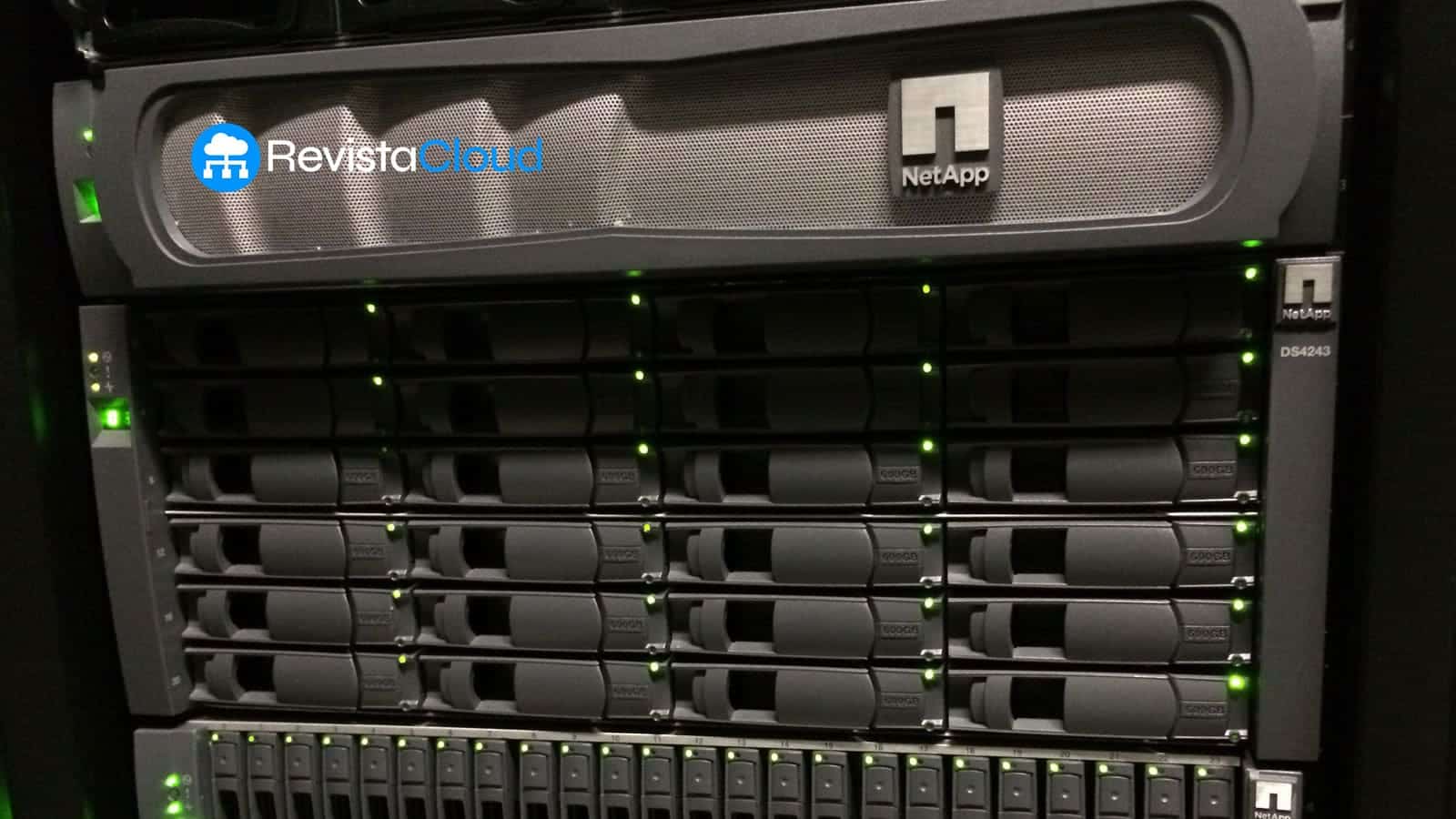
Not everything sold as “unified storage” is truly unified. In many cases, the term is used to describe platforms capable of supporting multiple protocols but with separate components, added layers, external services, or design choices that force the customer to decide too early how they will use their data. The difference may seem semantic, but in production, it’s noticeable: more complexity, more silos, more operations, and less flexibility when workloads change.
Real unified storage isn’t just about ticking boxes for SAN, NAS, and object storage on a datasheet. It means that block, file, and, when applicable, object share a coherent architecture, a single data operating system, common services for protection, security, efficiency, and management, and an operational model that doesn’t require redesigning the platform every time a new need arises.
That’s why NetApp ONTAP continues to be relevant in this conversation. Not because unified storage is a recent trend, but because it’s a concept with over two decades of history. NetApp launched its first unified SAN and NAS appliances back in 2002, a milestone that enabled file and block access within the same architecture. Since then, ONTAP has incorporated new capabilities without breaking the core principle: a shared data management layer.
What does “unified” really mean?
In traditional architectures, SAN and NAS are often treated as separate worlds. Block storage serves databases, virtualization, or critical applications via FC, iSCSI, or NVMe-oF. File storage handles NFS or SMB for users, applications, shared directories, or analytics workloads. Object storage, with S3-compatible APIs, is used for data lakes, backups, cloud-native repositories, or AI workflows.
The problem arises when each protocol lives in its own silo. There might be one console for block, another for file, another for object, a different engine for snapshots, a separate service for replication, and yet another layer for multi-tenancy. On paper, the system “supports everything.” In practice, the infrastructure team ends up managing several patched-together platforms.
True unification requires more: data services must be built into the foundation. Snapshots, clones, replication, QoS, encryption, security, volume mobility, automation, and business continuity should be applied consistently—not as partial add-ons. This is where a single operating system makes the difference.
| Criteria | Partial Integration | True Unification |
|---|---|---|
| Protocols | Multiple added services on a platform | SAN, NAS, and object integrated within the same architecture |
| Management | Separate consoles or layers | Common operational model |
| Data protection | Different functions depending on protocol | Consistent snapshot, replication, and recovery services |
| Multi-tenancy | Limited or added afterwards | Native logical separation using entities like SVMs |
| Scalability | Dependent on specific controllers or services | Horizontal growth and non-disruptive mobility |
| Operations | More exceptions and dependencies | Fewer silos and irreversible decisions during deployment |
NetApp sustains ONTAP as a unified platform with simultaneous access and management for protocols such as NFS, CIFS/SMB, iSCSI, FC, FCoE, and FC-NVMe. ONTAP also offers S3 support from version 9.8 onward, enabling object support for production environments. As with any enterprise storage system, nuances depend on version, platform, license, and design, but the core idea remains: data is governed from a single software layer.
The evolution of ONTAP demonstrates why architecture matters
The history of ONTAP helps explain why some decisions made decades ago continue to have an impact today. Storage evolves in protocol, physical medium, and workload type, but companies want to maintain a consistent operational logic. Twenty years ago, the debate was SAN versus NAS. Today, it’s SAN, NAS, object storage, hybrid cloud, AI, ransomware, Kubernetes, and data lakes. The pattern repeats: more protocols, more data, and increased pressure on infrastructure teams.
| Year | Milestone | Why it matters |
|---|---|---|
| 1992 | Foundation of NetApp and origin of ONTAP | Birth of a vision focused on efficient data management |
| 2002 | Unified SAN and NAS appliances | File and block storage coexist in the same architecture |
| 2004 | Thin provisioning and FlexClone | Efficiency shifts from capacity to operational agility |
| 2018 | ONTAP 9.4 introduces NVMe/FC | Platform adapts to low latency and next-generation flash |
| 2020 | ONTAP 9.8 supports S3 in production | Object storage becomes part of the ONTAP architecture in a supported way |
| 2025-2026 | ONTAP positions for hybrid cloud and AI | The challenge becomes governing data across edge, core, cloud, and AI workloads |
This table highlights an important point: the value of a unified platform isn’t in adopting the latest fashionable protocol but in doing so without creating additional silos. NVMe-oF should not require managing a separate SAN. S3 should not become a parallel platform without consistent controls. AI workflows shouldn’t force moving all data into a silo just to process it.
Why this matters in AI, cloud, and virtualization environments
Artificial intelligence is bringing storage back to the forefront. For months, much of the debate focused on GPUs, HBM, networking, and power. But models need data: training datasets, documentation repositories, images, logs, histories, embeddings, checkpoints, and inference results. When this data is scattered across silos, operational costs rise.
In AI and analytics environments, a unified platform can simplify multiple issues: NFS access for training clusters, block for databases or virtualization, object for modern pipelines, snapshots for testing, clones for temporary environments, and replication for resilience. The goal isn’t to use all protocols all the time but to be able to combine them freely without redesigning infrastructure.
The same logic applies to VMware, Proxmox, databases, Kubernetes, or hybrid environments. A company might start with block storage for virtualization and end up needing NFS for repositories, object storage for backups, or replication between sites. If the platform forces deploying separate products for each need, the hidden costs show up in operations, training, support, and risk.
An example is Stackscale (Aire). The European private cloud, bare-metal, and infrastructure provider has relied for years on NetApp technology for its networked storage services. Their product pages describe storage based on NetApp AFF and FAS systems, with multi-40G/100G networking, snapshots, geo-replication, and non-disruptive migration capabilities between service levels. They also highlight ONTAP features like QoS, FlexClone, and clustering to adapt volumes to changing customer needs. In a success story published by NetApp, Stackscale explained that ONTAP provided the maturity, stability, and flexibility to serve different client profiles.
Business continuity and daily operations
Unified storage should also be measured by its ability to support service continuity. It’s not enough to support multiple protocols; data must be protected, moved, replicated, isolated for tenants, governed by policies, and recoverable when something fails.
ONTAP integrates technologies like SnapMirror, SnapMirror active sync, and MetroCluster for replication, high availability, and disaster recovery scenarios, with varying protection levels depending on the design. In enterprise environments, this enables architectures with disaster recovery, failover, and business continuity between data centers. Not all protocols or functions have the same limitations across versions, but the advantage of a common architecture is that protection is embedded into the data system, not managed through external scripts.
| Business Need | What a unified architecture offers |
|---|---|
| Virtualization | Block or file with snapshots, clones, and mobility |
| Databases | Performance, QoS, controlled replication, and recovery |
| Data lakes and AI | Multi-protocol access and better data governance |
| Hybrid cloud | More consistent operational model on-premises and in the cloud |
| Service providers | Multi-tenancy, service levels, and automation |
| Business continuity | Replication, failover, and coherent protection |
Daily operations benefit most from this coherence. Moving volumes between tiers, expanding capacity, applying snapshots, creating clones, or adjusting policies without downtime reduces the load on technical teams. In a world where data grows faster than IT templates, operational simplicity is no longer a luxury.
An old concept made current again
Unified storage isn’t new, but it’s increasingly relevant as companies manage more diverse workloads. An organization might run ERP, Kubernetes, VMware, Proxmox VE, immutable backups, data lakes, generative AI, shared files, databases, S3 repositories, and data sovereignty requirements all within a single environment.
The question is no longer whether a storage array supports multiple protocols, but whether those protocols are integrated into a single, layered design or merely layered on top of each other, increasing complexity. In critical infrastructures, this difference significantly impacts the total cost of storage over the years.
NetApp ONTAP isn’t the only solution to this challenge, but it’s one of the clearest examples of a long-term commitment to storage unification through the operating system itself. That’s why it continues to be a benchmark among service providers, enterprises with hybrid cloud, and environments where data cannot be trapped in silos.
The lesson is simple: unification isn’t improvised. When built into the architecture, it allows evolution. When added later, it often leads to compromises.
Frequently Asked Questions
What is unified storage?
It’s an architecture capable of providing access via block, file, and sometimes object, from a common platform, with shared management, protection, and security services.
Why does having a single data operating system matter?
Because it reduces silos, avoids separate tools for each protocol, and enables consistent policies for snapshots, replication, QoS, security, and mobility.
What’s the difference between integrated and unified?
An integrated platform may assemble different pieces to offer multiple protocols. A unified platform incorporates them natively within a single operational architecture.
Why is this still relevant for AI and hybrid cloud?
Because AI and hybrid cloud environments need to access large volumes of data across various protocols and locations without multiplying silos or complicating operations.
