
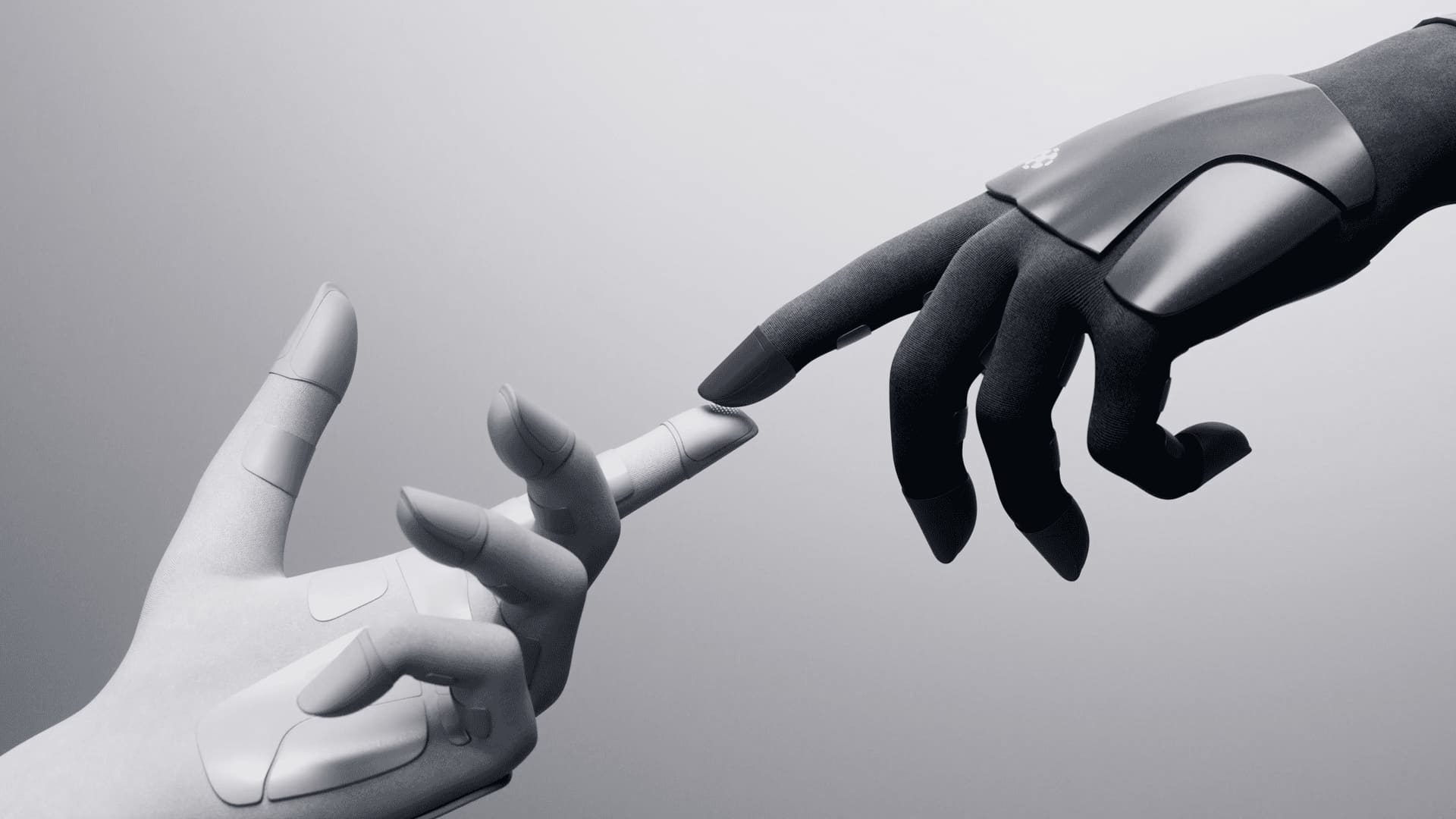
The craze for humanoid robots in China is no longer focused solely on legs, balance, or flashy stage demonstrations. Money is increasingly turning its attention to a much smaller, more challenging part: the hands. The ability to grasp, manipulate, sense force, adapt to different objects, and execute fine movements has become one of the major bottlenecks in humanoid robotics.
The latest signal comes from Xynova, a Hangzhou-based startup specializing in dexterous robotic hands. The company has completed a Series A funding round with investors such as Li Auto, Xiaomi, CSC Financial Capital, and other funds, raising its total funding to nearly 1 billion yuan, about $148 million. This deal comes just two months after a previous round and confirms how quickly this segment is being financed in China.
The explanation is simple: without useful hands, many humanoids will remain more eye-catching than practical. Walking, greeting, or dancing help attract attention, but industrial value appears when a robot can pick up parts, use tools, sort objects, handle delicate materials, or collaborate on a production line without damaging what it touches.
The hand, the most difficult piece of the robot
The human hand is an extraordinarily complex biological machine. It combines strength, precision, sensitivity, speed, and adaptability. It can hold a box, screw in a bolt, pick a grape without crushing it, handle a needle, open a door, or switch grips in a split second. Replicating this versatility in robotic hardware is much more challenging than designing an industrial gripper for repetitive tasks.
That’s why investors are starting to treat robotic hands as a strategic component. In many cases, a complete humanoid robot can be too expensive or immature for widespread deployment, but a dexterous hand can be integrated into existing robotic arms and provide value earlier. This approach reduces commercial risk: there’s no need to wait for a fully functional humanoid to be perfect if the component can be sold to factories, labs, integrators, and robot manufacturers.
Xynova aims to position itself precisely in this space. Its product, Flex 2, is presented as a second-generation robotic hand designed for precise manipulation and adaptive gripping. Specifications shared by the company and reported by specialized media mention 23 degrees of freedom, an approximate weight of 400 grams, a repeatability of ±0.1 mm, force control up to 0.05 N, and the ability to detect slipping and adjust the grip accordingly. While these numbers need to be validated in real-world applications, they indicate the direction where competition is headed: less brute force and more fine control.
| Company or Product | Key Data | Industrial Implication |
|---|---|---|
| Xynova | Total funding close to 1 billion yuan | Strong early-stage interest in dexterous hands |
| Xynova Flex 2 | 23 degrees of freedom and about 400 g | Focus on lightweight design and fine manipulation |
| LinkerBot | Target valuation of $6 billion | Industrial scale and high investor demand |
| LinkerBot | Planned production of up to 10,000 hands per month | Robotic hand is increasingly seen as a volume component |
| Chinese Market | Entry of Xiaomi, Li Auto, Ant Group, HongShan, and state funds | Convergence of industrial, financial, and public capital |
Xynova and LinkerBot demonstrate a race for capital
Xynova’s case is not isolated. Reuters reported in May that LinkerBot, a Chinese startup founded in 2023 and specializing in high-dexterity robotic hands for humanoids, is aiming for a valuation of $6 billion in its next funding round—double what it achieved previously. The company claims it controls over 80% of the global high-degree-of-freedom robotic hand market and plans to scale its production from around 5,000 units monthly to 10,000.
These figures should be interpreted with caution, as they partly originate from the companies’ own statements and the market is still young. However, the trend is clear: capital is not only targeting full robots like Unitree, AgiBot, or UBTech. It’s also flowing into providers of critical components that can underpin many different robots.
A helpful analogy is the electric car industry. Initially, the focus was on vehicle manufacturers. Later, the value shifted to batteries, sensors, motors, power electronics, and software. Similarly, in humanoid robotics, hands, actuators, gearboxes, tactile sensors, control models, and manipulation datasets could be as valuable as the final robot itself.
Xiaomi and Li Auto are not investing out of tech curiosity. Both are interested in automation, mobility, advanced manufacturing, consumer electronics, and future robotic systems. For an electric car maker, a dexterous robotic hand can be relevant in production, logistics, inspection, or even services. For a company like Xiaomi, connections to smart devices, home automation, and consumer robotics make natural sense.
Manual skills, data, and cost: the real battle
The robotic hand isn’t just hardware; it requires sensors, controllers, actuators, lightweight materials, grip software, perception models, and manipulation data. Moving fingers is not enough. The system must understand what it’s touching, how much force to apply, when an object begins to slip, and how to change strategy if something isn’t aligning.
Another less visible race is for data. For example, LinkerBot has highlighted its LinkerSkillNet platform, designed to transfer human skills into reusable capabilities for robotic hands. The idea is to build a library of dexterities that can be applied to various tasks: screwing, handling deformable objects, manipulating small parts, or executing precise movements.
This approach is linked to physical AI. Robots need models capable of integrating vision, touch, force, and movement. For years, many industrial systems operated in highly controlled environments: same parts, same positions, same trajectories. The new generation aims to work with more variability, which demands more adaptable hands.
Cost will also be crucial. If a dexterous hand remains too expensive, its adoption will be limited to labs or high-value applications. But if China can scale production of functional robotic hands at lower prices, it could accelerate adoption in factories, logistics, and services. This is one of the reasons the market is paying close attention to Chinese manufacturers.
The risk of a robotics bubble
The pace of funding also brings risks. Valuations may get ahead of actual demand, particularly in a sector where demonstration videos don’t always translate into profitable industrial deployments. A hand capable of precise movements in a demo might fail in dusty environments, with vibrations, changing temperatures, irregular objects, or cycles of thousands of hours.
Companies will need to prove durability, easy maintenance, spare parts availability, integration with arms and controllers, safety, and consistent performance. Industrial robotics buyers do not invest based on promises; they buy reliable systems that operate daily with minimal downtime and predictable costs.
Nonetheless, interest in robotic hands is justified. It’s one of the key components that separates a humanoid from a truly useful robot. Legs enable movement in spaces designed for humans, but hands are what allow working in those spaces. If a robot cannot manipulate objects reliably, its usefulness drops dramatically.
China seems determined not to wait. It’s funding startups, integrating industrial capital, supporting local supply chains, and accelerating key components. Xynova exemplifies this race, but it’s not the only one. LinkerBot, Huiling Technology, and others are pursuing the same goal: turning manual dexterity into an industrial advantage.
The next phase of robotics will be decided not just by who makes the most impressive humanoid but by who makes their hands work better, last longer, and cost less. In that race, China is moving capital at a speed that compels the rest of the world to look beyond complete robots and focus on their fingers.
Frequently Asked Questions
Why are robotic hands so important?
Because they enable robots to manipulate objects, use tools, adapt to different parts, and perform useful tasks in factories, labs, logistics, or services.
What has Xynova announced?
Xynova has closed a Series A round, bringing its total funding to nearly 1 billion yuan, with investors like Xiaomi and Li Auto.
What is Xynova Flex 2?
It’s a second-generation dexterous robotic hand with 23 degrees of freedom, around 400 grams in weight, and adaptive gripping functions, according to the company’s disclosures.
Is there a bubble risk in Chinese humanoid robotics?
Yes. Investor interest is very strong, and some valuations could outpace actual demand. Companies will need to demonstrate reliability, cost competitiveness, and sustained industrial use.
