
NVIDIA and Microsoft have raised expectations ahead of COMPUTEX 2026 with a coordinated message on social media: “A new era of PC.” The phrase, along with the coordinates of Taipei Music Center, points directly to the presentation Jensen Huang will give in Taipei during GTC Taipei 2026, fueling speculation about a possible joint announcement related to Windows-based laptops with Arm architecture.
This move comes at a particularly sensitive moment for the PC industry. Microsoft has been trying for years to make Windows on Arm more than just a niche alternative, while NVIDIA seeks to expand its dominance in artificial intelligence beyond data centers and graphics cards. If both companies eventually introduce a platform like the N1X for laptops, the message will be clear: the local AI-powered PC still has significant room for growth.
The N1X rumor gains more momentum
The strongest hypothesis is the arrival of NVIDIA’s anticipated N1 and N1X chips for laptops. According to The Verge, NVIDIA, Microsoft, and Arm have posted coordinated messages with the same phrase, fueling the idea of an announcement related to Arm processors for Windows. No official confirmation of the product exists yet, so it’s wise to treat this as a highly plausible leak rather than an official launch.
The focus is on architecture. For years, the Windows laptop market has been dominated by Intel and AMD in x86 architecture. Qualcomm has been the main driver of Windows on Arm with its Snapdragon X series, especially since the introduction of Copilot+ PCs. However, NVIDIA’s entry could shift the balance: it wouldn’t just be another Arm CPU provider, but a company with a considerable advantage in GPUs, AI acceleration, developer software, and deep ties with Microsoft.
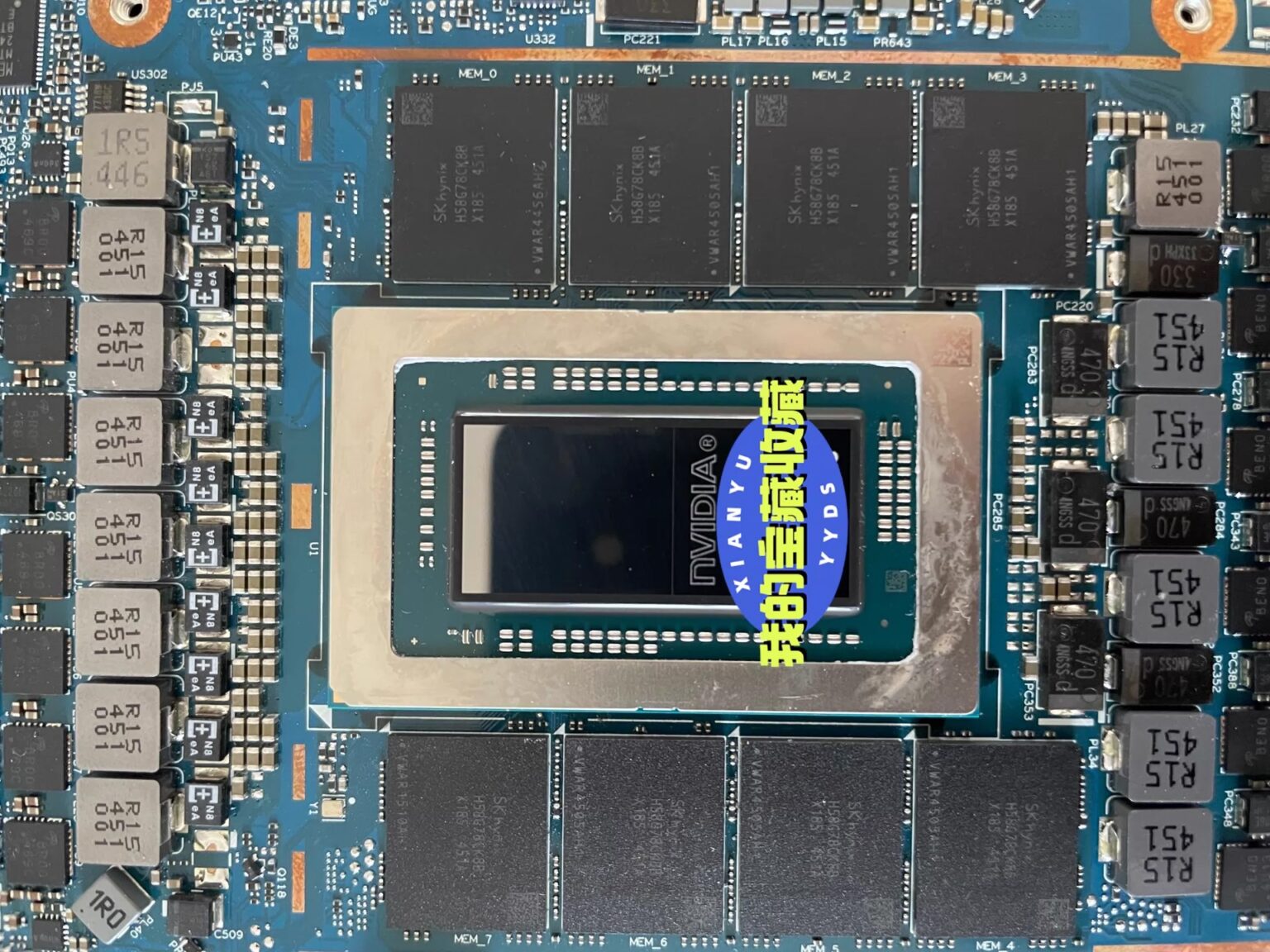
Tom’s Hardware links the N1X rumors to the GB10 Superchip used in NVIDIA DGX Spark, a mini-PC aimed at AI development. This reference is significant because the GB10 isn’t a conventional laptop chip: it combines an Arm CPU, Blackwell GPU, and unified memory on a platform designed for local AI workloads.
The official specs of DGX Spark help illustrate the potential starting point. NVIDIA describes this system as a compact unit with Grace Blackwell architecture, a 20-core Arm processor, 128 GB of unified LPDDR5x memory, and 273 GB/s memory bandwidth. It also includes 4 TB of NVMe storage and is targeted at large-scale AI models running locally.
| Element | Known or Rumored Details |
|---|---|
| Published message | “A new era of PC” |
| Companies involved in teaser | NVIDIA, Microsoft, and Arm |
| Location indicated | Taipei Music Center |
| Event | GTC Taipei 2026 / COMPUTEX 2026 |
| Expected product | N1/N1X chips for laptops |
| Likely architecture | Arm | Expected OS | Windows on Arm |
| Technical reference (rumored) | GB10 / Grace Blackwell |
| Memory in DGX Spark | 128 GB unified LPDDR5x |
| Bandwidth in DGX Spark | 273 GB/s |
A local AI PC, not just another laptop
The appeal of an N1X platform would go beyond competing with Intel, AMD, or Qualcomm in power and performance. The key would be local AI capabilities. Microsoft has been promoting Copilot+ PCs for some time, but the ability to run AI locally remains limited by the current NPU power, available memory, and the types of models that can operate without cloud reliance.
A NVIDIA platform based on unified memory and Blackwell GPU could open new pathways. Instead of seeing the laptop as a machine with a small NPU for specific tasks, the device could function as a compact AI station capable of executing larger models, supporting local development workflows, inference, agents, advanced creative tools, and productivity loads that today depend on external servers.
This would represent a true shift for Microsoft. Windows on Arm has improved significantly, but it still needs a compelling reason for professionals, developers, and manufacturers to adopt it. Qualcomm provided autonomy and efficiency, while NVIDIA could contribute GPU acceleration, local AI, and a more attractive story for creators, programmers, and businesses aiming to run models directly on the device.
The challenge is that not everything fits easily. The GB10 in DGX Spark is powerful for AI, but its unified memory architecture isn’t necessarily designed to compete with a traditional gaming laptop equipped with dedicated GDDR memory and discrete GPU. Tom’s Hardware notes that the 273 GB/s memory bandwidth of the GB10 lags behind many discrete GPUs with dedicated memory.
This suggests an N1X wouldn’t have to be sold solely as a gaming laptop. Its strongest argument could be another: local AI, development, creative work, inference, professional tools, and new Windows experiences leveraging an integrated NVIDIA GPU within a more efficient Arm architecture.
Price and ecosystem challenges
Cost will be another obstacle. DGX Spark systems are positioned in the high-end segment and aren’t designed for mass consumers. While an N1X laptop might omit some high-end data center components, features like extensive LPDDR5X memory and large-capacity SSDs remain expensive amid current semiconductor and memory shortages.
To reach a broader market, NVIDIA and its partners would need to offer a more scaled product range. An entry model with 128 GB of unified memory could appeal to AI developers and professionals, but likely won’t be suitable for most laptop buyers. Variants with less memory, fewer CPU/GPU resources, and lower prices closer to premium mobile workstations might be necessary.
Compatibility will also be crucial. Windows on Arm has improved emulation and native support, but doubts persist among users reliant on specialized software, specific drivers, professional tools, or legacy peripherals. If Microsoft commits fully to this platform, it must ensure the experience doesn’t feel experimental.
The Verge notes that NVIDIA’s arrival could disrupt Qualcomm’s dominant position as the main provider of Arm chips for Windows. This could benefit the ecosystem through increased competition, performance improvements, and more options for manufacturers like Dell, Lenovo, ASUS, HP, or Microsoft Surface.
COMPUTEX as the ideal stage
COMPUTEX 2026 is the perfect venue for such an announcement. Taipei’s fair has become a showcase for the new AI infrastructure—from accelerated servers to robotics, edge AI, and PCs with local capabilities. NVIDIA has already confirmed Jensen Huang will deliver the keynote at Taipei Music Center, focusing on AI, accelerated computing, and next-generation technologies.
If the announcement happens, it would be more than just a product reveal. It would signal a new phase for the PC. Apple demonstrated with its M chips how a well-integrated Arm architecture can transform battery life, performance, and design. Microsoft has been trying to replicate some of that with Windows. NVIDIA might be the missing piece—a platform with enough graphics and AI muscle to truly stand out.
The real question is whether this “new era of the PC” will arrive as a mass-market category or as an initial high-priced generation aimed at developers and professionals. It’s likely to be the latter at first. But even then, the impact could be substantial. Many technologies that start in workstations eventually trickle down to more accessible devices over time.
The PC industry needs a new story. For years, it has sold incremental gains in performance, better screens, and longer-lasting batteries. Local AI could be that story—if it offers functions that justify the cost and don’t always rely on the cloud. NVIDIA and Microsoft seem committed to trying this with Windows on Arm. COMPUTEX will reveal whether this is a promise or the first real step toward a new class of laptops.
Frequently Asked Questions
What have NVIDIA and Microsoft announced?
They haven’t announced a specific product yet. They’ve posted a coordinated teaser with the message “A new era of PC,” linked to NVIDIA’s event at COMPUTEX 2026.
What is the rumored NVIDIA N1X?
It’s said to be a NVIDIA Arm platform for laptops, possibly inspired by the GB10 Grace Blackwell chip used in DGX Spark.
Will it be a Windows on Arm laptop?
Signs point to yes, especially given Microsoft and Arm’s involvement in the teaser, but there’s no official product confirmation yet.
Why would this be significant for the PC market?
Because NVIDIA could combine Arm CPU, advanced GPU, and local AI in a Windows platform, creating new competition for Intel, AMD, and Qualcomm.
via: tomshardware
