
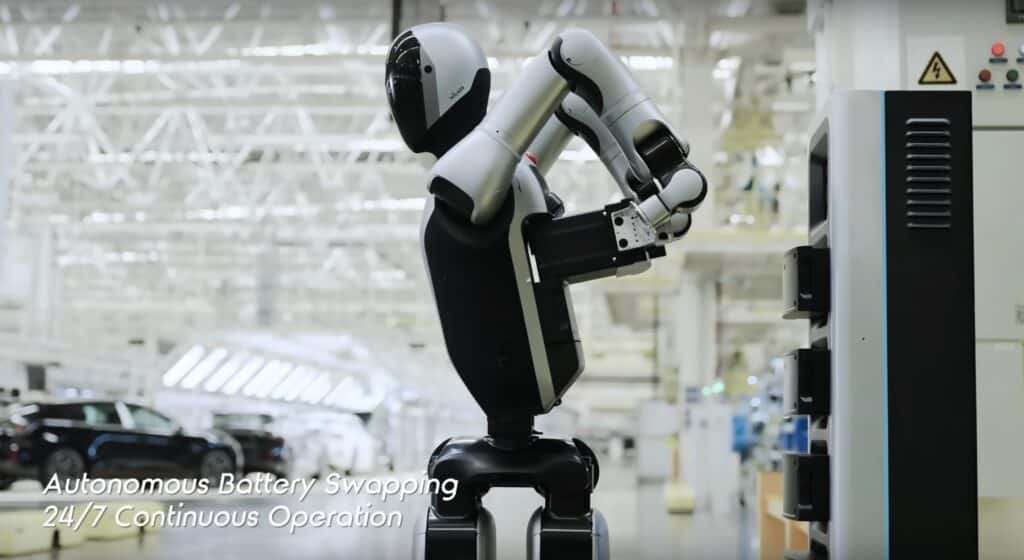
Domestic humanoid robots have been caught between the futuristic promise and the limited reality of prototypes, demonstrations, and niche products for years. But the market is starting to gain momentum. According to Valuates Reports, the global home humanoid robot market was valued at $1.292 billion in 2024 and is projected to reach $8.564 billion by 2031, with an average annual growth rate of 31.2% over the forecast period.
This figure doesn’t mean that homes will be filled with androids in just a few years. It should be interpreted with caution. The market remains small compared to other consumer electronics categories, and many products still fall short of offering the autonomy, safety, price point, and utility required for mass adoption. However, it signals a shift: humanoid robots are beginning to move away from perceptions solely as technological curiosities and are starting to position themselves as assistance, learning, companionship, and home automation devices.
From advanced toy to household assistant
Valuates’ report identifies several reasons behind the expected growth. The first is the demand for automation at home. Families seek devices that reduce repetitive tasks, coordinate routines, and integrate with smart home systems. In this context, the humanoid form has a conceptual advantage: it is designed to move and interact in spaces built for people, not in industrial settings adapted for machines.
The second major driver is education. Educational robots are gaining interest as learning companions for children and students. They can assist with language learning, basic programming, storytelling, guided problem-solving, or interactive activities. For some parents, they offer a more engaging alternative to passive screens, though the key will be providing genuine educational value rather than mere entertainment with a technological appearance.
Interest in companion robots is also growing. In households with elderly people, single occupants, or busy families, these devices can offer reminders, conversation, basic companionship, and routine tracking. They do not replace human care nor should they be presented as such, but they can serve as a more accessible interface than an app or smart speaker for certain tasks.
| Segment | Main Use | Potential at Home |
|---|---|---|
| Companion Robots | Conversation, reminders, presence | Support for seniors, individuals living alone, and family routines |
| Educational Robots | Languages, coding, storytelling, exercises | More interactive child and family learning |
| Cleaning Robots | Assistance with household chores | Evolution of the automation already seen in vacuum cleaners |
| Other Forms | Security, entertainment, or light assistance | Still dependent on price and technological maturity |
Adoption will not rely solely on AI. Better actuators, more reliable sensors, batteries with longer autonomy, secure software, simple interfaces, and affordable prices are also necessary. A humanoid robot for the home must move around children, pets, furniture, and elderly people. This raises the bar significantly compared to a fixed device or an industrial robot confined to a controlled area.
Population aging creates an opportunity
One of the most cited areas in the report is elderly care. Population aging in many developed economies puts pressure on families, caregivers, and healthcare systems. In this context, domestic robots can assist with medication reminders, emergency alerts, mobility prompts, routine checks, and basic interaction to reduce isolation.
The opportunity is clear but delicate. Making a robot part of home care requires trust, privacy, robustness, and ease of use. Elderly users should not depend on complex interfaces or difficult configurations. Additionally, any functions related to health, safety, or home monitoring must handle data with special care.
The report also highlights emotional well-being as a market factor. Robots capable of conversation, greetings, reminders, or expressive behavior can create a sense of companionship in some homes. It’s an attractive product line but must avoid exaggerations. Robots can accompany, entertain, or assist with routines; they are not substitutes for human relationships or professional care.
Physical stores are regaining importance
Interestingly, Valuates emphasizes the role of offline sales. In a market dominated by e-commerce, humanoid robots require hands-on demonstrations. Consumers want to see how the robot moves, how it responds, its size, whether it appears safe, if it recognizes voices well, and if it fits in their home.
This is especially true for high-priced products. Unlike smart speakers or security cameras, a humanoid robot raises more questions before purchase. retail locations, showrooms, experience centers, and in-store demonstrations help turn curiosity into a genuine purchase intent. They also provide opportunities to explain maintenance, warranties, technical support, and use cases.
| Buying Factor | Why It Matters |
|---|---|
| Hands-on Demonstration | Assists in evaluating movement, safety, and interaction |
| Post-sale Service | Key for complex and high-priced products |
| Family Trust | Allows assessment of suitability for children or elderly |
| Smart Home Integration | Determines whether the robot will be useful or isolated |
| Privacy | Increasingly important with cameras, microphones, and home data |
Asia-Pacific appears as a region with strong potential due to consumer interest in robotics, compact urban homes, pressure for elderly care, and highly active electronics markets. North America, on the other hand, relies on the adoption of premium smart home devices, domestic assistance, and educational or companionship products.
A sector with many names, but no dominant product yet
Companies mentioned by Valuates include 1X Technologies, Unitree Robotics, SoftBank Robotics, ROBOTIS, KAWADA Robotics, Honda, Ubtech Robotics, Hanson Robotics, PAL Robotics, Toyota, and Engineered Arts. This list reflects the sector’s diversity: some focus on service robots, others on education, some on social humanoids, and others on research platforms or mobility solutions.
There is yet to be a clear equivalent of the “iPhone” of home humanoid robots. There are eye-catching prototypes, educational robots, social assistants, development platforms, and demonstration or research products. The leap to mass-market homes will require the product to be useful daily, not just impressive for five minutes.
Generative AI and agents can speed up this process. A robot that understands natural instructions, maintains context, learns routines, and connects with other home devices can be much more useful than a machine limited to rigid commands. However, this intelligence must be accompanied by physical and digital security. If a robot has cameras, microphones, access to connected home systems, and mobility, data protection and cybersecurity are not optional details.
The domestic humanoid robot market appears to be entering a phase of high expectations. The growth forecast is strong, but the industry will need to prove it can turn labs, trade shows, and viral videos into reliable products. Homes do not adopt technology just because it’s new; they adopt it when it solves everyday problems without adding excessive complexity.
The big question is not whether there will be robots at home, but how many will truly be humanoid, what their costs will be, which tasks they will perform better than other devices, and whether users will trust them enough to let them into their daily lives.
Frequently Asked Questions
How much can the domestic humanoid robot market grow?
According to Valuates Reports, it could grow from $1.292 billion in 2024 to $8.564 billion in 2031, with an average annual growth rate of 31.2%.
What are humanoid robots used for at home?
They can be aimed at companionship, education, reminders, support for the elderly, entertainment, basic security, or small household tasks, depending on the model and capabilities.
Will they replace caregivers or teachers?
They should not be viewed that way. They can support certain routines, accompany, or reinforce learning, but they do not replace human care or professional education.
What is holding back mass adoption?
Price, autonomy, safety, reliability, privacy, maintenance, and the need to demonstrate real usefulness beyond novelty effects.
via: prnewswire
