
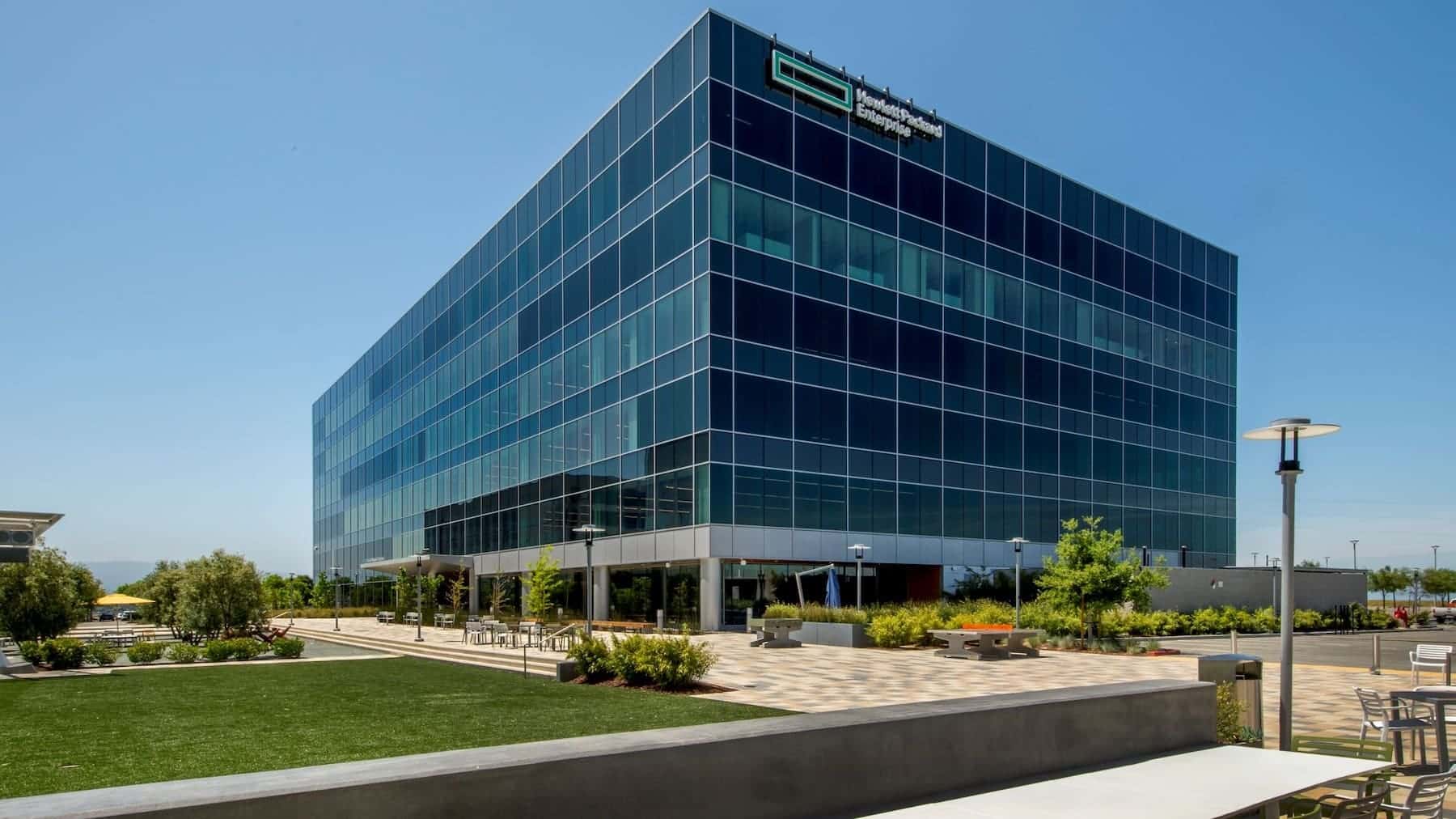
Hewlett Packard Enterprise has chosen Ingram Micro and TD SYNNEX as its two global distributors, a move aimed at simplifying its channel, increasing operational consistency among partners, and strengthening cross-selling of its portfolio after the Juniper Networks acquisition. This decision does not eliminate the role of regional and specialized distributors but marks a new phase in how HPE intends to organize its market approach.
The company presents this change as an evolution toward a more unified global model. In practice, this means HPE wants its partners to be able to sell, deploy, and support networking, cloud, and AI solutions with less administrative complexity, more training resources, and more consistent processes across countries. The announcement comes at a time when the tech channel is experiencing multiple simultaneous transitions: AI, edge computing, hybrid cloud, more automated enterprise networks, and increasing pressure to deliver comprehensive solutions, not just isolated products.
A simpler channel after Juniper acquisition
This move is clearly tied to the acquisition of Juniper Networks, completed by HPE in July 2025. The purchase significantly strengthened HPE’s networking business and added cloud-native networking, security, automation, and AIOps technologies with Mist to its portfolio. It also brought along its own distribution channels, relationships with wholesalers, and routes-to-market, which now need to be integrated with HPE’s traditional model.
With Ingram Micro and TD SYNNEX as major global distributors, HPE aims to reduce fragmentation and help its partners operate within a more predictable structure. This is about more than logistics: in a market where many opportunities involve infrastructure, connectivity, security, private cloud, edge, and AI, distributors also help train partners, finance operations, support pre-sales, manage availability, and expedite moving from opportunity to revenue.
Simon Ewington, Senior Vice President of Channel and Partner Ecosystem at HPE, explained that the new model aims to be “simpler and scalable,” supported by a mix of large global distributors and regional, specialized ones. This is important because it avoids an overly radical interpretation: HPE is not saying that all channel activity will be funneled solely through two companies in every country, but rather that these two will form the global backbone of the model.
Ingram Micro will bring scale, financing, procurement services, and its Xvantage platform, while TD SYNNEX combines global logistics, partner services, and digital capabilities. For HPE, both can help accelerate the dissemination of the full portfolio, especially HPE Networking, cloud, and AI.
| Key Announcement | Implication for the Channel |
|---|---|
| Two global distributors | Ingram Micro and TD SYNNEX become the global distribution core |
| Unified model | HPE seeks more operational consistency across regions |
| Focus on HPE Networking | Juniper integration highlights cross-selling opportunities |
| Cloud and AI | Wholesalers and partners will need to sell more comprehensive solutions |
| Regional distributors | Will remain where they offer specialization or local proximity |
| Country-specific decisions | HPE will announce local alignments in the coming months |
Networking, cloud, and AI driving cross-selling
HPE’s commercial message emphasizes that its portfolio makes more sense when sold as an integrated solution. A customer might start with networking, expand into hybrid cloud, add storage services, modernize the edge, or deploy infrastructure for AI workloads. In this journey, distribution roles have grown more complex than in previous years.
The Juniper acquisition reinforces this logic. HPE not only added more products but also gained a networking platform with a strong narrative around AI operations and automation. For partners, this creates more opportunities but also demands greater technical expertise. Selling switches, enterprise Wi-Fi, network security, campus, data center networking, HPE GreenLake, or AI infrastructure is not just about moving boxes; it requires certifications, design, support, integration, and ongoing assistance.
This is where the focus on globally present distributors comes into play. HPE wants Ingram Micro and TD SYNNEX to invest in dedicated resources, training, operational support, and capabilities to enable more partners to cover larger portions of the portfolio. Theoretically, this can benefit mid-sized integrators that lack large pre-sales teams but need access to specialists, financing, and configuration tools.
It could also offer a competitive edge over players like Cisco, Dell Technologies, Lenovo, NetApp, Nutanix, VMware by Broadcom, Arista, or hyperscalers, depending on the project. In the channel, ease of quoting, financing, delivery, and support can influence decisions—especially when margins are tight and customers expect quick turnarounds.
However, this move also introduces some risks. Distributors outside the global top tier might see their influence diminish unless HPE maintains them for their specialization, local coverage, or relationships with specific segments. The company has made clear it will work country by country to determine the right mix, which is crucial since channel dynamics differ across the US, Spain, France, Germany, the UK, Latin America, and Asia-Pacific.
A transition that must protect local partners
The main risk of unifying distribution is the potential loss of local flexibility. Large wholesalers provide scale, financial strength, and coverage, but regional distributors often offer close market knowledge, specialized support, and strong relationships with local partners. HPE will need to balance both to prevent the transition from being perceived as a concentration that favors only the biggest players.
The company stresses that regional and specialized distributors will remain part of the ecosystem. This continuity is especially vital in areas like advanced networking, public sector, managed services, cloud providers, security, education, defense, or other segments where local certifications and relationships of trust are critical.
For partners, practical concerns include what changes will occur in daily operations: through which wholesaler they will buy, what tools they will use, how rebates and incentives will be managed, what technical support they will receive, how HPE and Juniper lines will be integrated, and whether there will be shifts in availability, pricing, or training programs. HPE has announced that it will provide country-specific updates in upcoming months, so the full picture is not final yet.
The move also reflects broader industry trends. Distribution is no longer just a volume channel. Vendors need their wholesalers to help activate complex opportunities involving AI, hybrid cloud, cybersecurity, networks, and managed services. Partners, in turn, require support to sell solutions combining hardware, software, subscriptions, professional services, and ongoing support.
HPE is attempting to organize this layer now that its portfolio is more extensive and complex. If the integration succeeds, Ingram Micro and TD SYNNEX could become accelerators, allowing more partners to access HPE Networking, GreenLake, servers, storage, and AI infrastructure with fewer barriers. However, a poorly managed transition could lead partners to perceive increased dependency, fewer options, or less proximity to the vendor.
Ultimately, this decision is more than just channel news; it’s a vital component in HPE’s post-Juniper strategy. The company aims to make its expanded portfolio easier to adopt, sell, and operate. To do so, it needs a distribution platform that is unified and cohesive enough to support increasingly integrated projects.
Frequently Asked Questions
What has HPE announced?
HPE has designated Ingram Micro and TD SYNNEX as its two global distributors within a more unified distribution model for its networking, cloud, AI, servers, storage, and services portfolio.
Are regional distributors disappearing?
Not necessarily. HPE states that the global model will be complemented by regional and specialized distributors. Country-specific alignments will be announced in the coming months.
Why is the Juniper acquisition important?
The Juniper integration expands HPE’s networking business and creates new cross-selling opportunities. It also requires reorganizing distribution channels and partner programs that previously operated separately.
What changes for partners?
Partners can expect simplified processes, increased operational support, more training resources, and greater capacity to sell comprehensive HPE solutions. Specific changes will vary by country.
via: hpe
