
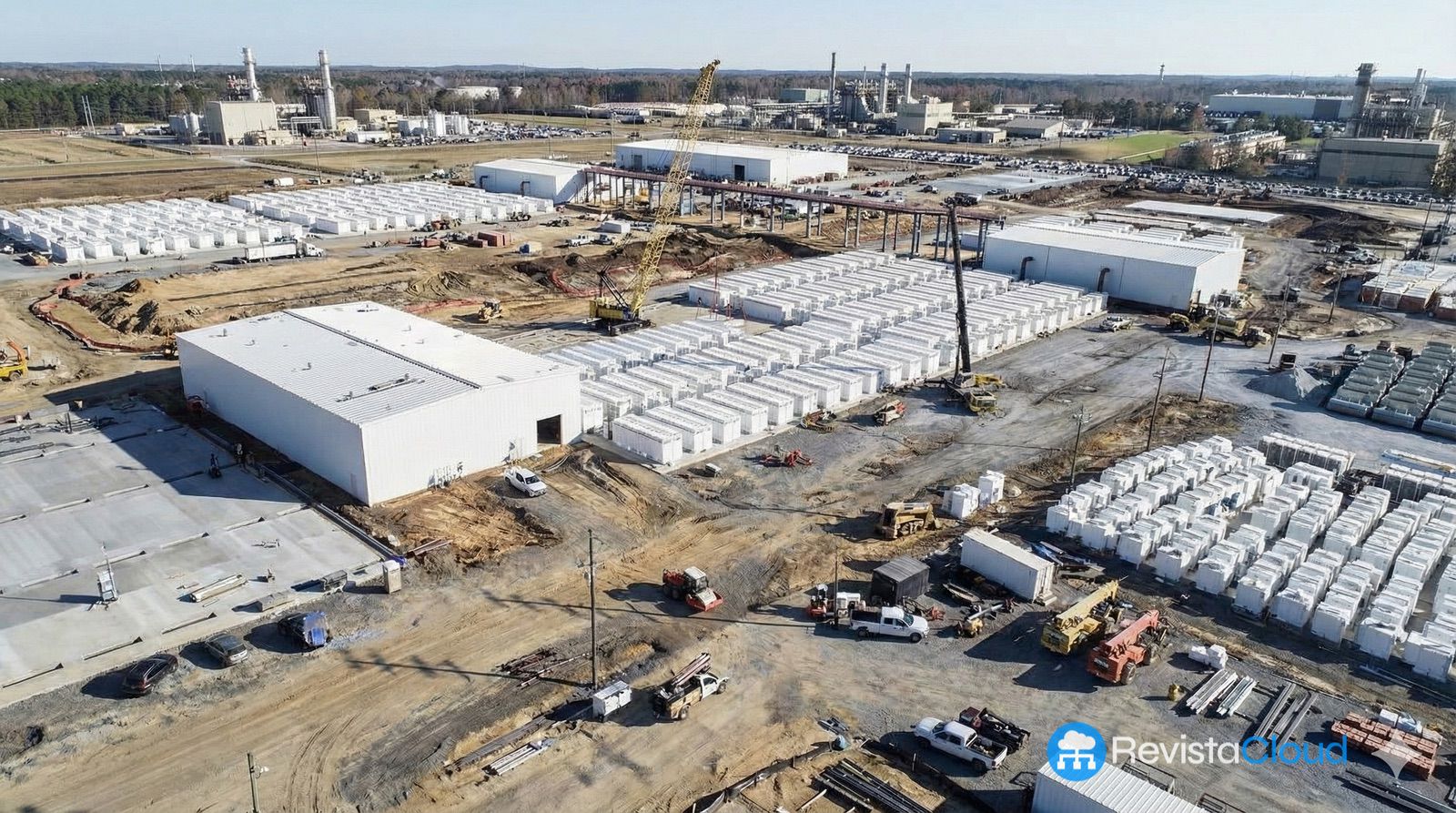
The expansion of artificial intelligence faces a problem that can’t be solved simply by buying more GPUs or training more efficient models. Each new AI service requires data centers, electricity, water, cooling, land, and network connections. And that’s where the less comfortable part of the debate begins: many people want to use these tools, but they don’t want the infrastructure that makes them possible to be nearby.
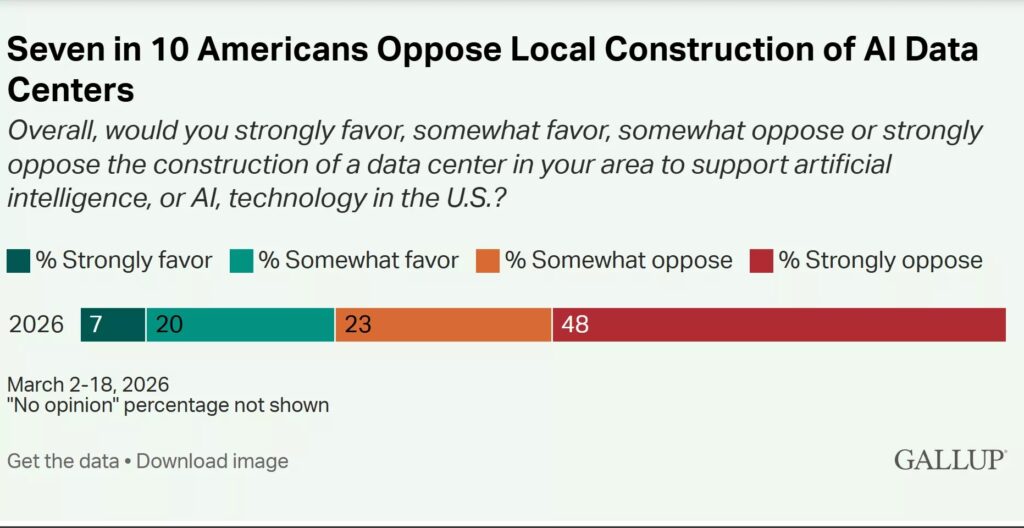
A Gallup poll released on May 13, 2026, shows that seven out of ten Americans oppose the construction of an AI data center in their area. This is especially notable because the opposition exceeds even that toward nuclear power plants: 53% oppose a nuclear plant near their home, compared to 71% who oppose an AI data center.
The Gallup graph summarizes well the political and social issue facing big tech companies. Only 7% of respondents are strongly in favor of having an AI data center in their area, while 20% are somewhat supportive. On the other side, 23% oppose it to some extent and 48% firmly reject it. Therefore, the strength of the opposition is key: it’s not just moderate doubts but a strong resistance from almost half of those surveyed.
Water, Energy, and Quality of Life
The main reason for opposition isn’t an abstract anti-technology stance. Gallup asked about the specific motives and found that opposers mainly focus on environmental impact and resource consumption. Half cited excessive resource use, especially water and electricity. Sixteen percent mentioned pollution issues, including noise, air, and water pollution.
This concern aligns with a visible trend across many parts of the United States. Next-generation data centers are large buildings with high energy demands and significant cooling needs. For AI-related projects, densities are even higher than traditional facilities due to the concentration of many servers accelerated with GPUs and high-performance networks.
Gallup also highlights concerns about quality of life: increased traffic, land use changes, pressure on local infrastructure, and doubts about whether the economic benefits outweigh the impact. The survey notes that around one-fifth of opponents mention these effects, while a similar proportion refer to potential economic drawbacks, such as higher electricity bills or increased living costs.
For those who support data center construction, the primary argument is economic. Two-thirds cite local benefits, and 55% specifically mention job creation. Fears of increased tax revenues and infrastructure development also play a role. However, these arguments have not yet offset, at least for now, the concerns over resource consumption and local impact.
The AI Paradox
The survey reveals an increasingly clear contradiction. AI is being integrated into search engines, office applications, personal assistants, customer service, programming, education, healthcare, cybersecurity, and data analytics. Yet, its physical growth depends on infrastructure that faces rejection when brought into specific communities.
This isn’t a new phenomenon. Critical infrastructure often encounters the “not in my backyard” effect: its general usefulness is accepted, but local installation is opposed. The difference now is that AI data centers are appearing rapidly and with promises of large investments, which heightens tension among local governments, tech companies, and residents.
The comparison with nuclear energy is revealing. For decades, nuclear plants were among the most sensitive infrastructure topics for public opinion. But Gallup notes that since it started asking about local nuclear plant proposals in 2001, the highest opposition recorded was 63%. Currently, opposition to AI data centers exceeds that level.
This doesn’t mean Americans mostly want to live beside a nuclear plant. Most also oppose nuclear facilities. However, it shows that public perception of data centers has worsened quickly. TechSpot and other tech outlets have highlighted this point: the physical infrastructure of AI is increasingly seen by many communities as an environmental and territorial problem, not just a technological opportunity.
A Political Barrier to AI Expansion
The International Energy Agency estimates that the global electricity consumption of data centers could double to around 945 TWh by 2030, slightly exceeding Japan’s current electricity use. AI will be a key driver of this growth, alongside other digital services. In the U.S., data centers could account for nearly half of the electricity demand increase through the decade’s end.
This rise turns local opposition into a strategic challenge. Large tech companies may announce multi-billion dollar investments, sign power purchase agreements, or design more efficient chips, but they need permits, land, electrical connections, and political acceptance. If communities stage public hearings, impose local moratoriums, or file lawsuits, expansion timelines can be delayed.
Gallup warns that intense opposition can fuel local activism and legal battles, making data centers a key electoral issue in municipalities and states. This is particularly relevant this year, as AI-related debates intersect with issues on employment, energy, electricity rates, sustainability, and the influence of big tech companies.
The industry’s response cannot simply promise jobs during construction. Many data centers generate economic activity, tax revenues, and specialized jobs, but they typically employ less permanent staff than other similarly sized industrial facilities. To persuade skeptical communities, companies will need to better explain water use, electricity sources, efficiency measures, noise impact, tax benefits, and tangible compensation for the local environment.
Gallup’s data does not suggest that data center expansion will stop. AI demand continues to grow, and governments are competing to attract tech investment. But it does mark a turning point. AI infrastructure is no longer just discussed in executive meetings, cloud conferences, or analyst reports. It is now debated in city councils, neighborhoods, counties, and communities eager to understand the costs they will bear for a sometimes-invisible technology.
AI requires more data centers—that’s the easy part. The hard part is building them without ignoring water, energy, land, and the trust of local residents.
Frequently Asked Questions
What percentage of Americans oppose AI data centers near their homes?
According to Gallup, 71% oppose to some degree the construction of an AI data center in their area.
Why such widespread opposition?
Main concerns include resource consumption, especially water and electricity, along with environmental impact, pollution, traffic, land use, and potential local cost increases.
Do data centers generate more opposition than nuclear plants?
Yes. The same survey shows 53% oppose nuclear plants near their area, whereas 71% oppose AI data centers.
Could this slow down AI’s expansion?
It might delay projects and complicate local permits. While AI will still need infrastructure, social acceptance is becoming as important as energy supply and land availability.
via: techspot
