
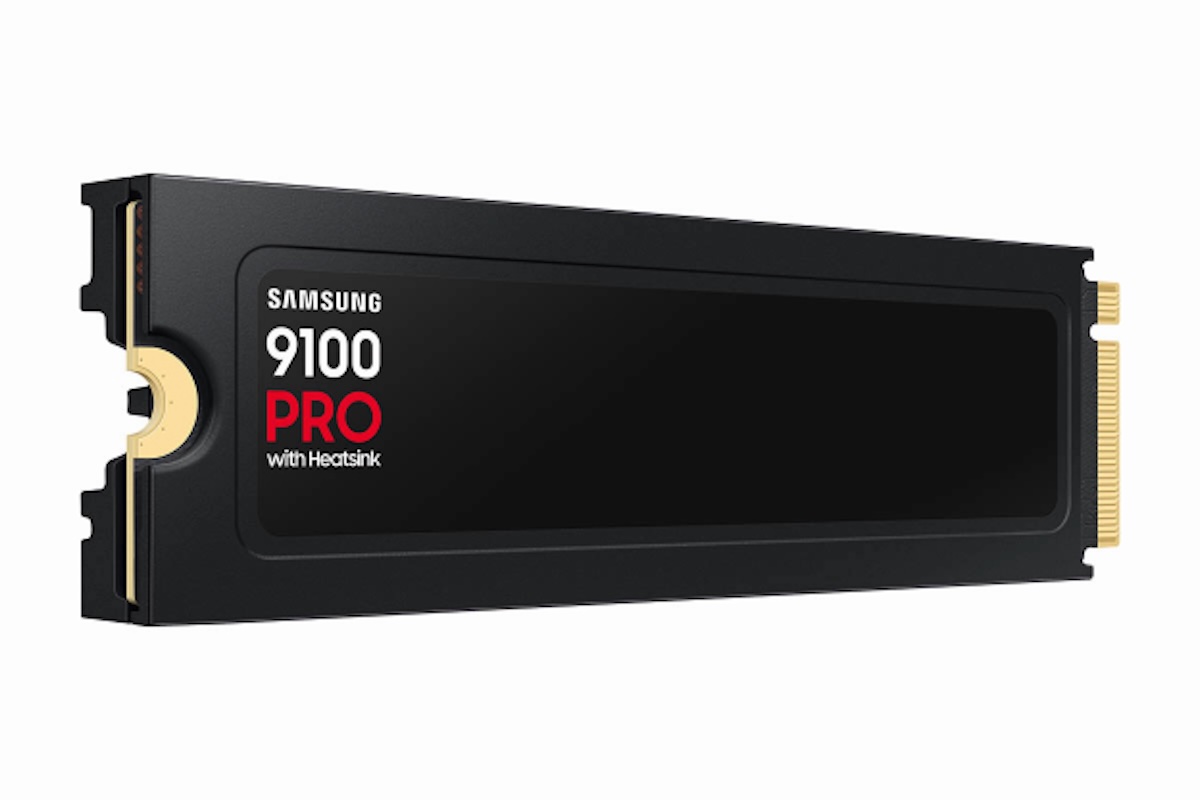
The memory crisis accompanying the AI boom is starting to hit end consumers hard. Japan has become one of the most visibly affected markets: several Samsung SSDs have seen price increases of up to 300% in PC stores, while Kioxia is also experiencing double-digit hikes. The most notable case is the Samsung 9100 Pro 8TB, which some Japanese retailers have listed at around ¥547,980, approximately $3,470 at current exchange rates.
According to TrendForce, based on information from Tom’s Hardware and Akiba PC Hotline!, this should not be interpreted as a uniform global price increase across all brands. In fact, the Japanese market shows a clear divergence: while Samsung and Kioxia are experiencing steep rises on certain models, Western Digital and some Crucial SSDs have seen temporary price drops on specific references. Nonetheless, the underlying message is hard to ignore: storage is becoming more expensive again, and AI infrastructure demand is disrupting the balance between manufacturers, distributors, and consumers.
Samsung and Kioxia, the most visible increases
Samsung’s high-end SSDs are generating the headlines. As reported by Tom’s Hardware, the Samsung 9100 Pro 8TB has reached nearly $3,500 in Japan, well above its price points in other markets. The difference with the US is striking: the same model appears on Amazon for about $1,960 — roughly 43% less than in Japan.
The pressure isn’t limited to the 8TB model. The Samsung 9100 Pro 4TB with a heatsink is around ¥279,980, about $1,773, after a 31.5% increase. The 2TB version has risen to approximately ¥140,980, close to $893. In more mainstream Samsung lines, some references have experienced even sharper increases compared to January, with rises exceeding 380% on certain models, according to Tom’s Hardware.
Kioxia is also affected. Their SSDs have seen gains between 39.8% and 59.4% across several models. The Kioxia Exceria Pro G2 2TB is listed at around ¥93,880, about $595, whereas the Exceria Basic 1TB is near ¥32,980, approximately $208.
| Brand or Model | Reported Market Price in Japan |
|---|---|
| Samsung 9100 Pro 8TB | Up to ¥547,980, about $3,470 |
| Samsung 9100 Pro 4TB with heatsink | Approximately ¥279,980, +31.5% |
| Samsung 9100 Pro 2TB | Near ¥140,980 |
| Kioxia Exceria Pro G2 2TB | Around ¥93,880 |
| Kioxia Exceria Basic 1TB | About ¥32,980 |
| Kioxia SSDs | Increases between 39.8% and 59.4% |
These figures reflect real tension, though not necessarily permanent in all models. Japanese retail can shift quickly when stock is low, replenishments are delayed, or buyers engage in advance purchasing to avoid further price hikes. That’s why it’s important to distinguish between official prices, store prices, and spot prices during shortages.
Not all prices are rising: Western Digital and Crucial show another market side
The picture isn’t uniform. Akiba PC Hotline! also reports declines in several Western Digital models, especially within the WD Black SN8100 family without heatsinks. The 8TB, 4TB, and 1TB versions have dropped in some stores, with the 4TB model now at ¥157,980 after falling 24.7%. The variants with heatsinks have remained relatively stable.
Crucial, Micron’s consumer brand, presents a mixed picture. The 4TB T710 without heatsink has fallen to ¥129,800, while the 2TB version has increased to ¥94,800 due to limited stock at lower prices. This behavior confirms that the issue isn’t affecting all products equally. Factors like capacity, controller, NAND type, local inventory, distribution agreements, and specific demand for each model can cause significant movements within the same week.
For consumers, this volatility complicates buying decisions. It used to be enough to wait for a deal or compare two or three stores. Now, differences between brands, capacities, and countries can be vast. An 8TB SSD might see extreme price hikes in Japan while remaining much cheaper in the US or other markets. This creates opportunities for informed buyers but also increases the risk of overpaying due to lack of immediate alternatives.
AI begins shifting resources away from consumer electronics
The background lies in the memory supply chain. Manufacturers have been warning for months about a tightening supply environment heading toward 2027. AI data centers are demanding advanced memory, enterprise storage, high-capacity NAND, HBM, and server components. When major cloud clients reserve capacity and pay to secure supply, the consumer segment’s priority diminishes in relative terms.
This effect is especially noticeable in sensitive retail markets with high electronics turnover, like Japan. TrendForce interprets these fluctuations as a sign of increasing supply chain anxiety. Japanese consumer electronics manufacturers, already competing on thin margins against South Korean, Chinese, and other global rivals, have less flexibility to absorb component price increases.
Nintendo exemplifies this pressure. The company has announced price hikes for the Switch 2 in various markets. In Japan, the price will rise from ¥49,980 to ¥59,980 starting May 25; in the US, it will go from $449.99 to $499.99 beginning September 1. Additionally, Nintendo has lowered its sales forecast for the Switch 2 for the fiscal year ending March 31, 2027, to 16.5 million units from the previously cited 19.86 million, according to CNBC and TrendForce.
Not all of this is solely memory-related. In consumer products, currency exchange rates, logistics, tariffs, demand, marketing strategies, and margins also play roles. However, the rising costs of memory and storage are becoming harder to hide. When laptops, consoles, phones, or mini PCs require more RAM and SSDs than previous generations, any increase in those components directly impacts the final price or shrinks manufacturer margins.
What could happen next with SSDs
The most likely scenario is continued volatility. High-capacity models, especially 4TB and 8TB, are more exposed because they compete with enterprise storage demands and because users needing that capacity have fewer alternatives. 1TB and 2TB models might behave more irregularly, depending on local stock and manufacturer policies.
For home users, gamers, and content creators, the practical advice is to compare more than ever. If a specific model has soared in price, there may be similar-performance alternatives from other brands. It’s also important to distinguish between real need and impulse buying: if you must expand storage now, you might have to pay more; but if you can wait, you could benefit from market adjustments once the channel stabilizes.
For PC and console manufacturers, the pressure is more serious. If memory prices keep rising, they’ll need to choose between raising prices, reducing base capacities, cutting margins, or negotiating longer supply agreements. None of these options is ideal. In a market where consumers are already price-sensitive, any increase in SSD or RAM costs can directly impact sales.
AI is reshaping the semiconductor industry, starting at levels barely visible to end users. First came GPUs and HBM. Then servers, networking equipment, and advanced packaging. Now, the impact is beginning to be felt in consumer SSDs, consoles, and everyday electronics. The inexpensive storage that has accompanied PCs for years may no longer be so affordable if AI infrastructure continues to consume capacity at the current rate.
Frequently Asked Questions
Why are some SSD prices spiking so much in Japan?
The increase combines local shortages, higher re-supply costs, pressure on NAND supply, and the prioritization of the memory supply chain toward servers and AI infrastructure. Specific models may spike due to low retail stock.
Is it only affecting Samsung?
No. While Samsung’s increases are the most noticeable, Kioxia has also recorded significant gains. Conversely, Western Digital and some Crucial models have dropped in certain references, indicating a highly unequal market.
Will SSD prices also rise in Europe?
While exact percentages are uncertain, the global pressure on memory and storage may transmit to other markets. The impact will depend on stock levels, brands, sales channels, and SSD capacities.
Should I buy an SSD now or wait?
It depends on your urgency. If you need an SSD immediately, compare brands and capacities to find the best deal. If your purchase isn’t urgent, waiting might be reasonable, as the market is very volatile, and some models are still decreasing despite overall price increases.
via: trendforce
