
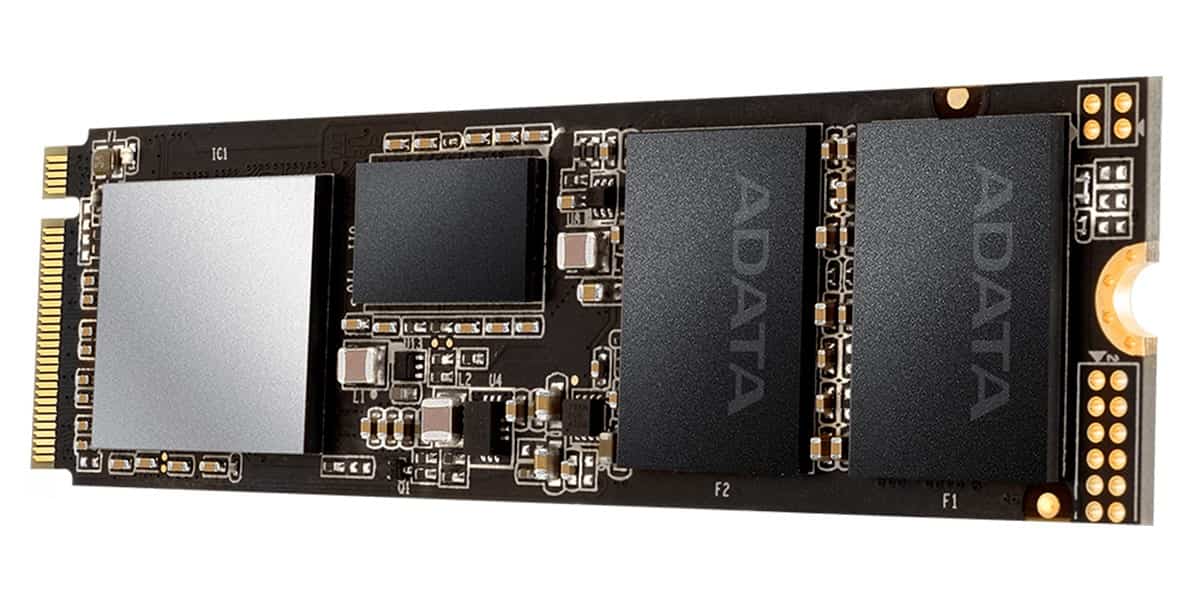
The rise in memory prices no longer appears to be a one-time upturn within the old semiconductor cycle. Adata, one of Taiwan’s major manufacturers of DRAM and NAND modules, expects contractual prices for both memory types to increase by at least 40% in the second quarter of 2026. The main reason remains the same: artificial intelligence demand is absorbing capacity, and large cloud providers are securing long-term supply ahead of further market tightening.
The warning comes at a time when memory has become one of the most sensitive resources in the entire tech infrastructure. For months, the focus has been on GPUs, AI accelerators, and TSMC’s capacity, but pressure is shifting throughout the supply chain: HBM for training, server DRAM for inference, enterprise SSDs for mass storage, and advanced NAND for data centers. Adata clearly summarizes this in its own market outlook: the expansion of cloud providers has caused a severe NAND shortage since Q3 2025, and this tension could persist throughout 2026.
AI consumes memory before it reaches the consumer market
The most significant change is that major customers are no longer buying memory solely to meet quarterly needs. They are signing supply agreements spanning multiple quarters or even longer-term to secure capacity into 2027. This reduces the available volume for PC, mobile, consumer SSD, and retail module manufacturers, which end up competing for a smaller, more expensive supply.
TrendForce aligns with this outlook. The firm predicts that conventional DRAM contractual prices will rise between 58% and 63% quarter-on-quarter in Q2 2026, while NAND Flash could increase by 70% to 75%. The consultancy attributes this rise to capacity reallocation toward HBM and server applications, as well as the strong pull of enterprise SSDs for AI data centers.
Adata’s outlook is somewhat more cautious on the figures but not on the diagnosis. The company expects increases of at least 40% in DRAM and NAND during the quarter and aims to raise its memory inventory from 40 billion Taiwanese dollars to 50 billion in June. This isn’t just defensive stockpiling: it’s an investment betting that shortages will continue to drive margins and profits.
Recent results help explain this movement. In Q1, Adata recorded a net profit of 9.53 billion Taiwanese dollars, up 130.75% from the previous quarter and an incredible 1,711.79% year-over-year. Its gross margin reached 55.7%, a record level for the company.
Servers, HBM, and enterprise SSDs shift the balance
Pressure does not affect all segments equally. In DRAM, manufacturing is shifting toward HBM, high-capacity RDIMMs, and server products with better margins. This leaves less room for DDR4, consumer DDR5, and other less profitable lines. Adata notes that the DRAM supply has narrowed due to the gradual withdrawal of DDR4, the advancement of DDR5, and NAND shortages for AI servers.
Something similar is happening with NAND. Providers are prioritizing enterprise SSDs because AI deployments generate intense demand for fast, high-capacity storage. TrendForce warns that demand for high-performance SSDs shows no signs of slowing down and that meaningful expansion of new capacity is unlikely to occur until late 2027 or 2028.
This has direct implications for end users. If PC and mobile manufacturers receive less memory allocation, they have two options: raise prices or cut configurations. This is already evident in certain market segments where memory and storage make up a larger percentage of total product cost. In laptops, desktops, NAS devices, small servers, and workstations, RAM and SSD upgrades could become noticeably more expensive in 2026.
The Semiconductor and Beyond 2026 report from PwC helps contextualize these changes. The firm forecasts the global semiconductor market will grow from $627 billion in 2024 to $1.03 trillion in 2030, with servers and networking as the fastest-growing segments at an annual compounded rate of 11.6%. It also highlights that HBM will remain a crucial component for supporting CPUs, GPUs, and AI accelerators, and that data centers could more than double their electricity consumption by 2030.
A less cyclical and more structural scarcity
The memory market has always been cyclical. When prices rise, manufacturers invest; when capacity becomes too much, prices fall. But the current cycle has different elements. AI isn’t just causing a demand spike but is prompting a reorganization of industrial priorities. Manufacturers prefer to dedicate wafers, packaging, and advanced capacity to server products because they offer better margins and more stable contracts.
This doesn’t mean memory prices will rise indefinitely. In semiconductors, forecasts can change if demand drops, if hyperscalers moderate investments, or if new capacity comes online earlier than expected. But in the short term, the market heavily favors suppliers. Customers who haven’t secured supply agreements will have less room to negotiate.
For its part, Adata describes this as the start of a new era where shortages are beginning to look like a “new normal.” This phrase encapsulates the industry’s psychological shift. It’s no longer just about waiting for prices to fall in a few months. Manufacturers, distributors, and enterprise clients are beginning to plan as if memory is a strategic resource, not an abundant commodity.
For companies buying servers, storage, or workstations, the practical advice is to review budgets as soon as possible. Prices for configurations with large RAM or SSD capacities can change rapidly, and delaying critical purchases could be costly if suppliers no longer guarantee availability. For consumers, the impact will be more gradual but will manifest through more expensive laptops, fewer aggressive SSD deals, and potential capacity cuts in entry-level ranges.
The AI race is proving that the digital infrastructure depends on multiple bottlenecks simultaneously. First, GPUs were scarce. Then HBM. Next, network, power, high-performance chips, and substrates faced tensions. Now, DRAM and NAND are back at the center. Without enough memory, AI can’t scale; and when AI consumes memory, the rest of the market pays the price.
Frequently asked questions
How much will DRAM and NAND prices increase according to Adata?
Adata expects that contractual prices for DRAM and NAND will rise by at least 40% in the second quarter of 2026.
Why are memory prices rising so much?
Because of demand from AI servers, HBM, high-capacity RDIMMs, and enterprise SSDs. Large cloud providers are securing long-term supply and reducing the available memory for other segments.
Will this affect consumer PCs and SSD prices?
Yes, though the impact may vary by product. PC, mobile, and consumer SSD manufacturers might raise prices, cut capacities, or limit promotions if they receive less memory allocation.
When might this shortage ease?
TrendForce indicates that significant NAND capacity expansion in volume likely won’t occur until late 2027 or 2028, though market conditions could change if AI demand moderates.
