
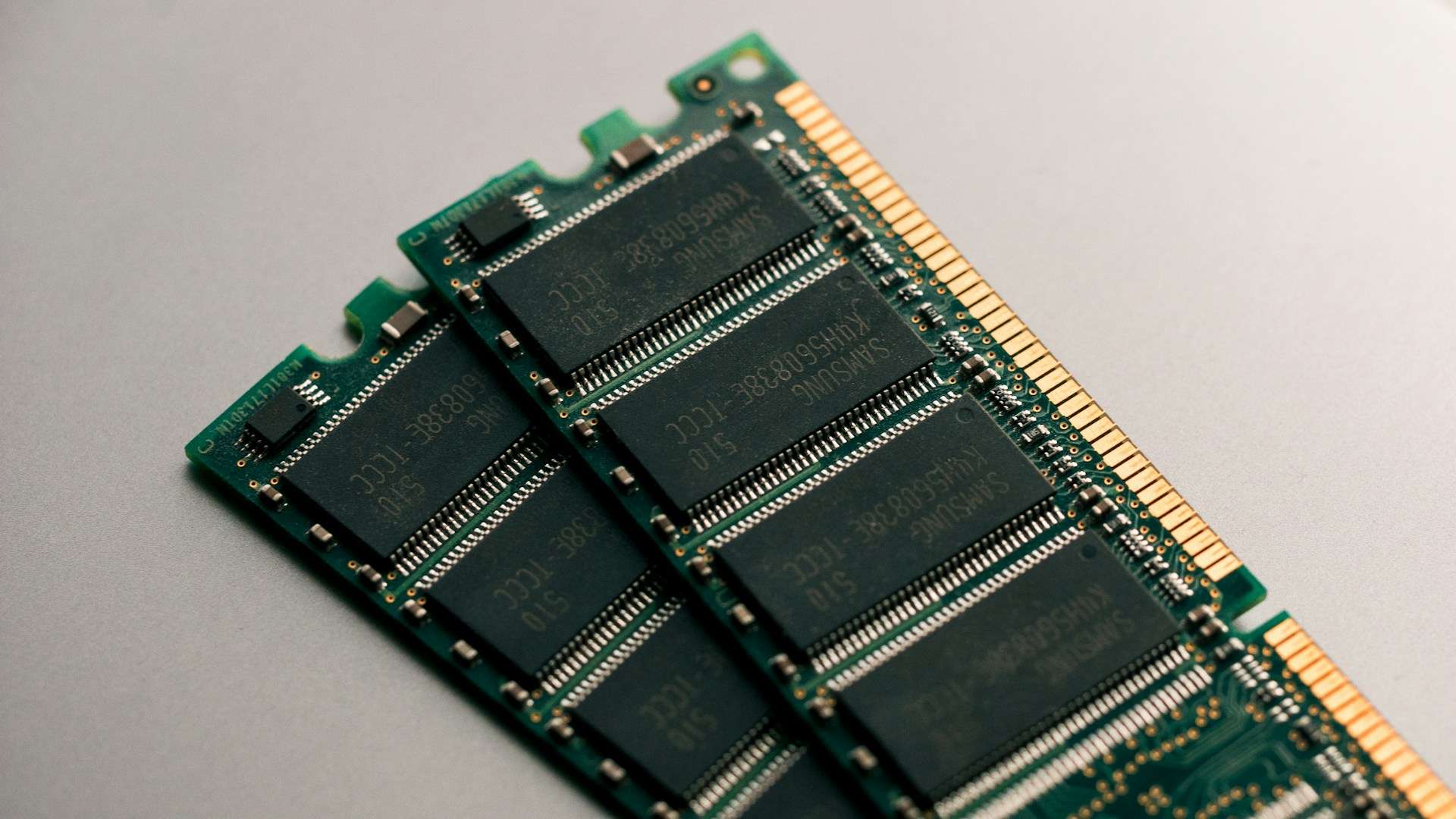
Memory has become one of the most sought-after components in the global technological infrastructure. For years, the DRAM and NAND markets operated in cycles: oversupply, falling prices, investment cuts, and then a renewed surge in demand. But artificial intelligence is disrupting this pattern. SK hynix, one of the world’s major memory manufacturers, now finds itself in an unusual position: not only receiving chip orders but also proposals to fund new production lines and even parts of the equipment needed to manufacture them.
This phenomenon reflects how much AI has shifted the priorities of major tech companies. Buying GPUs, TPUs, or accelerators is no longer enough. Without high-bandwidth memory, advanced DRAM, and reserved manufacturing capacity, many data center plans could be left incomplete. Memory has shifted from being an essential but relatively invisible component to a strategic resource, almost as contested as AI accelerators themselves.
According to sources cited by Reuters, SK hynix is receiving unusually high offers from large tech firms to ensure supply. Some proposals include investments in dedicated production lines, while others involve financing for very expensive manufacturing equipment, like ASML’s EUV scanners. One source summarized the situation clearly: current available capacity is “essentially zero.”
When the bottleneck is no longer just the GPU
AI’s rapid development has placed NVIDIA at the center of discussion, but training and inference systems do not rely solely on accelerators. They require fast memory, interconnects, storage, networking, CPUs, power, and cooling. For large models, HBM has become especially critical because it supplies the bandwidth needed to keep GPU performance optimal.
SK hynix has been one of the best-positioned suppliers of HBM, a strength that has resulted in demand far exceeding available capacity. This has shifted bargaining power. Big tech firms are no longer just asking for price and volume; they want priority, long-term contracts, and visibility into future production.
This is where the unusual happens: clients willing to help fund manufacturing capacity. In other industrial sectors, shared investments in supply agreements are common, but in memory, the situation is more delicate. Semiconductor manufacturing requires massive investments, long cycles, and planning that can become risky if demand cools off. Rapid capacity expansion in a cyclical market can cause oversupply and falling prices.
That’s why SK hynix treads carefully. Accepting customer financing might seem attractive, especially if it allows capacity expansion without bearing the full cost. However, it could also tie future production to specific buyers, lock in less favorable pricing, or create tensions with other strategic clients. The company must decide whether to sell capacity as just another product or to preserve it as a negotiable advantage.
The role of ASML clarifies this further. EUV scanners are critical for manufacturing advanced chips, costing hundreds of millions of dollars in their most sophisticated models. SK hynix has announced a nearly $8 billion order of EUV tools from ASML, aimed at boosting production of HBM and advanced DRAM at sites like Yongin and M15X in Cheongju.
Yongin, HBM, and the fear of investing too early
The Yongin complex in South Korea is a major industrial bet for SK hynix. The company announced a roughly $13 billion investment in a new plant to meet the surge in memory demand linked to AI. The first phase will focus on DRAM, with HBM as one of the key commercial pressures.
The challenge is that building capacity is not immediate. An advanced memory line needs permits, civil works, clean rooms, equipment, process qualification, skilled personnel, materials supply, and customer validation. Even if a tech giant arrives with funding, it doesn’t automatically mean a new fab’s wafers will be ready for sale right away.
Moreover, SK hynix wants to avoid common memory industry pitfalls. The sector has experienced phases of aggressive investment followed by price drops. Now, AI seems to drive more structural demand, but no one knows how long the current pace will last or what will happen if customers optimize models, reduce inference costs, diversify suppliers, or if infrastructure spending slows.
Reuters mentions alternative approaches being considered, such as price bands with annual floor and ceiling or advance payments from clients, potentially representing 30-40% of cash flow. Such arrangements aim to provide stability for both manufacturers and buyers without fully restricting pricing flexibility.
Samsug and Micron are also operating within this new landscape. Demand for AI memory isn’t monopolized by a single supplier, though SK hynix has a particularly strong position in HBM. Major clients will likely need to diversify supply sources. Manufacturers will focus on expanding capacity while maintaining financial discipline and avoiding excessive dependence on hyperscalers.
Memory enters the AI geopolitical sphere
Pressure on SK hynix isn’t solely market-driven; it’s part of a broader tech geopolitical struggle. The US, South Korea, Taiwan, Japan, China, and Europe are competing to secure industrial capacity in chips, materials, equipment, and advanced packaging. AI has heightened the strategic importance of components, making shortages potentially decisive for cloud, defense, automation, robotics, scientific research, and enterprise services.
For big tech companies, running out of memory doesn’t just mean fewer servers sold; it could delay AI clusters, diminish competitive edge, hinder cloud contracts, or cause sudden cost increases. Some may be willing to finance parts of their production infrastructure, aiming to secure supply instead of just buying chips.
The paradox is that money alone isn’t enough. Limited capacity, long lead times for equipment like ASML’s machines, years-long factory builds, and reluctance to overcommit to a single customer mean that even generous offers don’t solve everything. The scarcity is organizational, industrial, and strategic.
There are regulatory and competitive risks as well. If a manufacturer reserves too much capacity for a few clients, others could be left out. If those clients dominate cloud and AI, market concentration could grow. Memory, once just a supply layer, now influences who can train models, deploy services, and compete at scale.
SK hynix’s case illustrates that AI infrastructure is entering a less glamorous but more decisive phase. It’s no longer enough to announce data centers, GPUs, or big investments. Securing every link—memory, packaging, networking, power, cooling, lithography tools, and industrial talent—is crucial.
Memory has shifted from a commodity to strategic capacity. SK hynix understands this, as do its clients, making negotiations fierce. The company faces a great opportunity but also a tough choice: grow quickly enough to meet demand without becoming trapped by commitments that could weigh on it when the cycle turns.
If AI continues to expand at its current pace, these supply arrangements may become the new norm. Big tech will not only buy chips but also fund factories, reserve equipment, and compete for industrial priority. In this scenario, technological survival depends not just on better models but on who secures memory when everyone needs it most.
Frequently Asked Questions
Why is SK hynix so important for AI?
Because it is a leading manufacturer of advanced memory, including HBM, a critical component for powering GPUs and accelerators used in AI training and inference.
Is it true that clients want to finance SK hynix equipment?
Reuters reports that some large tech companies have proposed investing in production lines and even helping to fund equipment like ASML’s EUV scanners, though SK hynix is cautious in evaluating these offers.
What is HBM?
High Bandwidth Memory (HBM) is high-speed, stacked memory used alongside AI accelerators to move large data volumes with lower latency and greater efficiency.
Why doesn’t SK hynix just accept all the money?
Because financing capacity with specific clients could lock in long-term supply and pricing commitments, which is risky in a cyclical market like memory if demand shifts unexpectedly.
via: Reuters
