
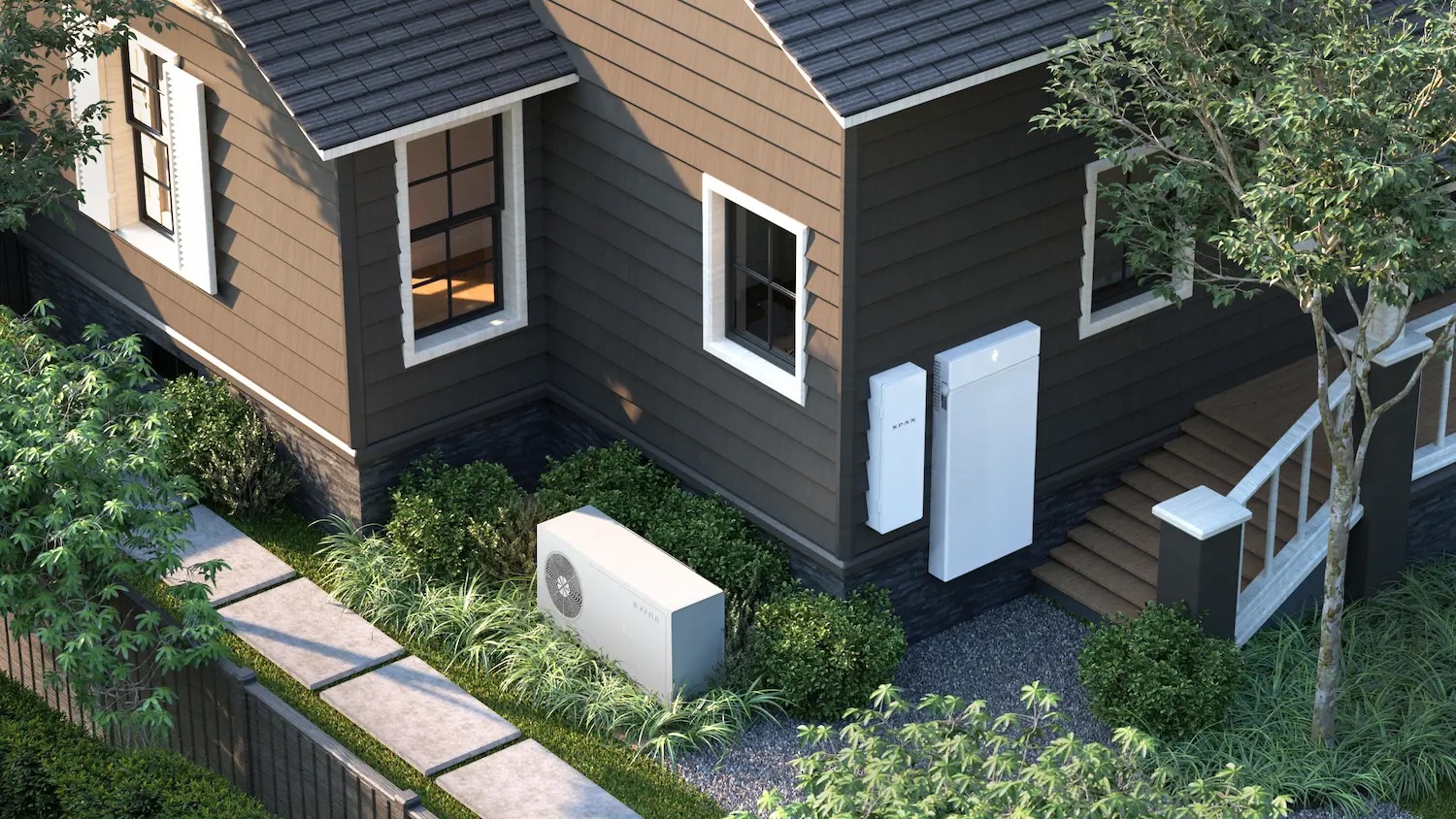
The next AI battle isn’t just fought in models — it’s also about power outlets. The demand for computing for inference, cloud gaming, and new AI services is hitting a very physical bottleneck: securing available electrical capacity, permits, grid interconnection, and space for data centers. SPAN, a company known for its smart electrical panels, proposes an unconventional approach: distributing small computing nodes across residences and small businesses.
This concept is called XFRA and counts NVIDIA among its initial partners. The system envisions a distributed network of nodes installed in residential or light commercial spaces, powered by the existing low-voltage electrical capacity in the grid, which, according to SPAN, is often underutilized. It’s not presented as a substitute for traditional data centers but as an additional edge layer for inference workloads that need rapid growth and proximity to users.
Mini data centers where there used to be an air conditioning unit
SPAN describes XFRA as a “distributed data center” solution designed to bridge the gap between the increasing demand for AI and the slow pace of building new electrical infrastructure. The company claims that U.S. data centers consumed 183 TWh in 2024 — over 4% of the country’s electricity — and suggests this could rise to over 9% by 2030. These figures support their model of leveraging existing capacity instead of waiting years for new substations or large interconnections.
The XFRA node would be installed outside homes or small commercial units, in a form factor some American media compare to an air conditioning unit. Realtor.com, citing SPAN, notes these units are designed to integrate with electrical and HVAC systems, and the company plans a proof of concept with about 100 homes in partnership with PulteGroup and other builders. Data Center Dynamics adds that each node would use 16 NVIDIA RTX PRO 6000 Blackwell GPUs and be managed via a proprietary platform called XFRA Cloud.
This technical approach aligns with a clear trend: AI inference doesn’t always require sprawling campuses far from users. For certain services — especially those demanding low latency — it makes sense to bring part of the compute closer to urban or residential zones. NVIDIA, for its part, introduces the RTX PRO 6000 Blackwell Server Edition as a GPU designed for AI workloads, graphics, simulation, data analysis, and video in data center environments, with 96 GB of GDDR7 memory and support for air or liquid cooling configurations.
SPAN promises that XFRA will enable capacity expansion faster than a centralized data center. It also offers incentives to property owners: smart electrical panels, backup batteries, possible solar integration, and reduced or even waived electricity and internet tariffs, depending on the case. It’s an attractive message but still faces the toughest test: proving that the model can operate safely, cost-effectively, quietly, maintainably, and acceptably for neighbors, insurers, utility operators, and cloud clients.
The uncomfortable side: physical security, network, and liability
From a cybersecurity perspective, XFRA opens a conversation beyond energy marketing. Traditional data centers condense risks within facilities with access controls, surveillance, defined perimeters, specialized staff, redundancy, maintenance procedures, and audits. Placing AI nodes on facades, yards, or residential areas changes part of that equation.
The first risk is physical: a high-value, hardware-accelerated node installed outside a home could become a target. Merely stating it will be about the size of an HVAC unit isn’t sufficient. Such a system would need to address theft, tampering, sabotage, vandalism, weather exposure, power outages, fires, and unauthorized maintenance. It would also need clear liability protocols for damages, insurance coverage, and procedures for urgent removal of the equipment.
The second risk involves connectivity. If these nodes are part of a distributed compute network for third parties, there must be a strict separation between the provider’s infrastructure, the home network, and the services used by the owner. Any ambiguity would be unacceptable. Owners shouldn’t have access to the nodes, nodes shouldn’t interfere with smart home devices, and cloud clients must have guaranteed isolation, encryption, traceability, and secure data deletion assurances.
Furthermore, there’s an attack surface consideration. Thousands of nodes distributed across homes can be quicker to deploy than a large campus but become more challenging to inspect and operate uniformly. Firmware, updates, secure boot, remote management, credentials, telemetry, temperature control, batteries, connectivity, and monitoring would all need to adhere to very high standards. In security, distributing infrastructure doesn’t eliminate risk; it shifts and multiplies it across more locations.
Responsibility chains are also complex. For AI workloads processing sensitive data on a physically installed home node, business clients will want to know where that occurs, under which jurisdiction, with which controls, and with what contractual guarantees. For low-sensitivity workloads, this may be adequate. But for regulated sectors — defense, healthcare, banking, public administration — the requirements are much higher. In Europe, a similar model would need to comply with GDPR, NIS2, data sovereignty, operational traceability, and security obligations for critical or important providers.
A brilliant idea that needs very serious controls
SPaN’s proposal makes sense from an energy perspective. Large AI deployments face long timelines, local opposition, grid tension, and difficulty sourcing available capacity. If part of inference workloads can be performed on nodes near the end-user, powered by underused residential capacity, this model could help address some bottlenecks.
However, the conceptual leap is considerable. Turning homes into nodes of a commercial computing network isn’t the same as installing solar panels or a home battery. Electricity flows, but so do workloads, data, remote updates, and computational value. This demands a security architecture resembling that of a distributed data center — not a smart appliance.
NVIDIA and SPAN aren’t alone in pursuing this idea. Edge computing has promised for years to bring processing closer to users, factories, vehicles, stores, and cities. Now, the push from generative and agentic AI has made every available GPU a strategic resource. If XFRA scales successfully, it could herald a new class of infrastructure: homes that not only consume digital services but also host a small part of the infrastructure enabling those services.
The security question isn’t if this model can be deployed — it’s under what conditions. Ensuring extreme isolation, certifications, independent audits, physical controls, verifiable maintenance, protection against tampering, contractual transparency, and clear boundaries on acceptable loads are critical. Without those measures, the dream of turning homes into micro data centers could create a new wave of distributed risks.
Frequently Asked Questions
What is SPAN’s XFRA?
A distributed data center proposal installing compute nodes in homes and small commercial spaces for AI inference, digital services, and more.
Does NVIDIA participate in the project?
Yes. SPAN cites NVIDIA as an initial partner, and the plan includes deploying NVIDIA RTX PRO 6000 Blackwell Server Edition GPUs in initial units.
Do these nodes replace traditional data centers?
No. They are envisioned as a supplement to enhance edge capacity, not as replacements for large centralized data centers.
What security risks exist with installing AI compute in homes?
Main risks include physical security of equipment, network segregation, data protection, remote management, contractual liability, and operational challenges of hundreds or thousands of distributed nodes.
via: span.io
