
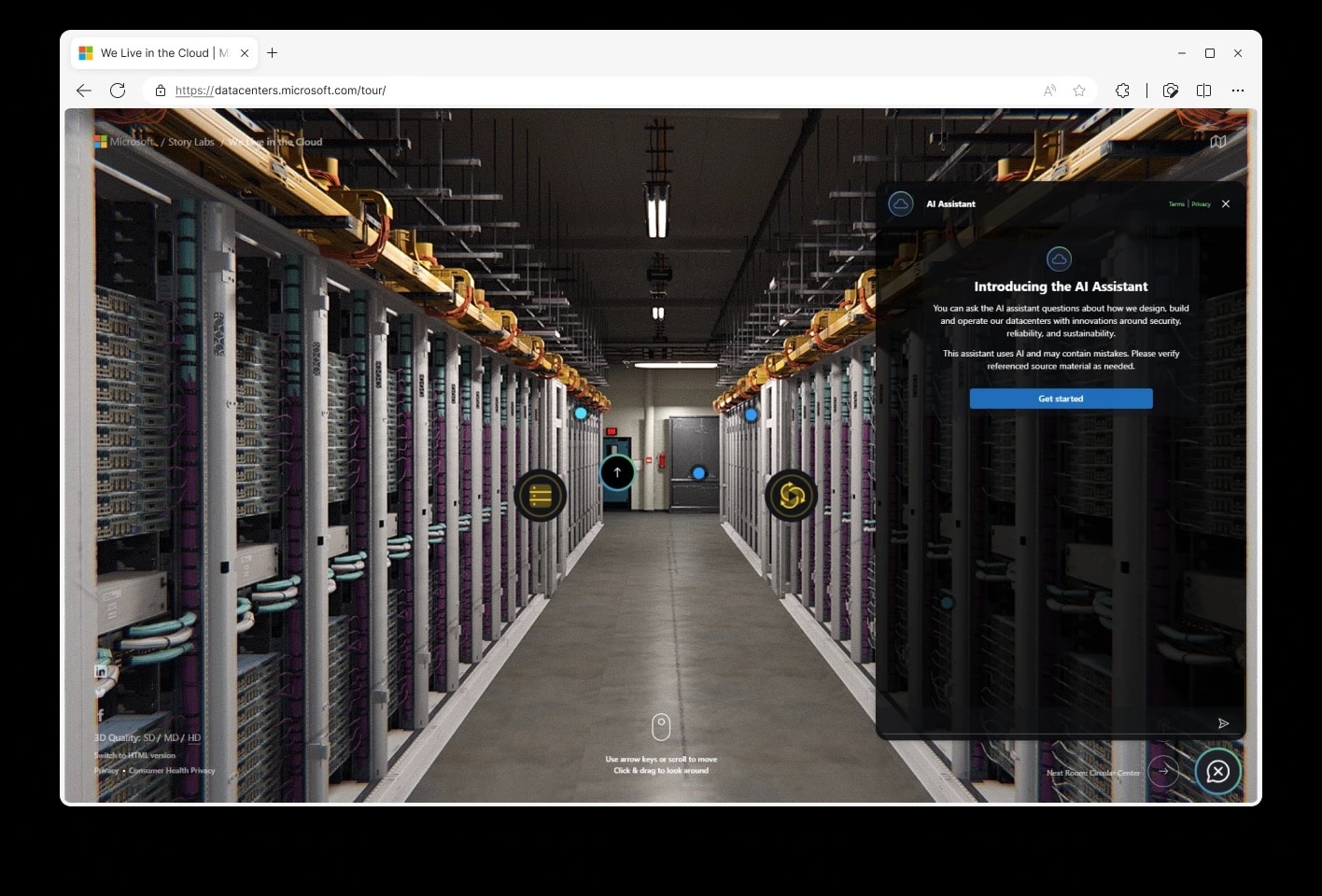
Microsoft is facing a tension that is beginning to define the new AI economy: it wants to build data centers rapidly, but this expansion clashes with some of its most ambitious climate commitments. According to Bloomberg, the company is internally debating whether to delay, reduce, or even abandon its goal to match 100% of its electricity consumption in real time with clean energy on the same grid by 2030.
The company hasn’t announced any official changes. In response to TechCrunch questions, Microsoft avoided commenting on the internal debate and said it continues to seek opportunities to meet its annual offset goal. The nuance is important: purchasing clean electricity equivalent to a year’s worth of consumption is not the same as matching every hour of demand with carbon-free generation available at that moment and on the same grid.
The toughest benchmark: hourly clean energy
In 2021, Microsoft announced its 100/100/0 commitment: to use 100% clean energy for 100% of its electricity consumption, all the time, by 2030. This is a more demanding goal than typical annual renewable targets, as it requires considering when and where electricity is used, not just how much is purchased by year’s end.
Though it might seem technical, the difference fundamentally changes the level of challenge. An annual goal allows a company to buy a lot of solar energy during peak hours and count it toward total consumption. This model has helped fund renewables but does not guarantee that data centers run on clean energy when the sun isn’t shining or when local grids rely on gas, coal, or other fossil fuels.
Hourly matching, on the other hand, requires aligning consumption and clean generation almost in real time. If a data center operates overnight or during periods of low renewable output, the company needs to find another carbon-free source on the same grid—wind, nuclear, geothermal, storage, hydropower, or a combination thereof. This approach is closer to what a truly decarbonized electric grid would look like but is also much more challenging and costly.
Artificial Intelligence has shifted the starting conditions. Large models, enterprise assistants, Copilot, Azure AI, and new inference services demand more servers, GPUs, cooling, and contracted capacity. The infrastructure is no longer growing at conventional rates. AI data centers are planned in hundreds of megawatt or even gigawatt blocks, and clean energy isn’t always available at the right place and time.
Gas makes a comeback with AI
The energy pressure explains why Microsoft, like other hyperscalers, is also looking toward sources that a few years ago seemed less compatible with their climate messaging. In March 2026, Microsoft signed an exclusivity agreement with Chevron and Engine No. 1 to negotiate power supply for AI data centers. The project involves a natural gas plant in West Texas, with an initial capacity reported at 2.5 GW and potential expansion up to 5 GW.
Natural gas offers something that variable renewables can’t always provide on their own: steady, available power. For an AI data center, this reliability is highly attractive. An accelerator cluster cannot rely on intermittent generation if the local grid lacks sufficient storage, nuclear, hydro, or other consistent sources.
The contradiction is clear. Microsoft aims to be carbon negative by 2030 and simultaneously needs to secure energy at a scale that requires considering fossil solutions—at least during a transition phase. The company has signed significant renewable and storage agreements and is involved in plans to reactivate a nuclear unit at Three Mile Island alongside Constellation. But energy infrastructure timelines often don’t match the urgent pace of AI deployment.
This issue isn’t unique to Microsoft. The International Energy Agency estimates data centers consumed about 415 TWh of electricity in 2024, roughly 1.5% of global demand. By 2030, this could more than double to around 945 TWh, with AI driving much of this growth. Demand is unevenly distributed, concentrating in specific regions, which can strain grids, raise costs, and provoke social opposition.
A difficult climate promise to sustain at current pace
Microsoft remains one of the tech companies with the most detailed climate goals. Beyond the 100/100/0 commitment, it aspires to be carbon negative by 2030 and to remove more carbon from the atmosphere than it emits. It has also long used an internal carbon price to guide business decisions and fund reductions.
However, its own reports show how challenging this path has become. In its 2025 environmental report covering fiscal year 2024, Microsoft acknowledged that its total Scope 1, 2, and 3 emissions increased by 23.4% compared to the 2020 baseline. The increase was attributed, among other factors, to growth in AI and cloud services. The construction of data centers, steel, concrete, chips, servers, and the entire supply chain weigh increasingly on its footprint.
This underscores why the internal debate about hourly energy is not trivial. Maintaining an annual target allows continued procurement of large volumes of clean energy and supports overall climate progress. An hourly target, however, requires addressing the fundamental issue: how to operate AI data centers hour by hour with carbon-free energy in grids not yet prepared for such demand levels.
The issue also has a reputational dimension. Data centers are increasingly facing local resistance due to their electricity, water, and land use. If Microsoft enters a community with a project backed by new clean energy, it can argue that it does not shift costs to neighbors nor increase fossil dependency locally. Reducing commitments, however, risks losing that legitimacy, especially as the so-called “social license” of AI becomes as crucial as regulatory approval.
For the industry, Microsoft’s case acts as a warning. Tech giants have led corporate renewable procurement for years, but AI is pushing this strategy to its limits. Buying certificates or signing annual PPAs no longer suffices for addressing more complex questions: what energy powers each data center when models run, their impact on local grids, who funds expansion, and what happens when clean energy cannot keep pace with digital deployment.
Microsoft may still achieve its original ambitions, modify them, or adopt a more flexible transition strategy. Each choice has consequences. Maintaining the hourly goal will likely mean higher costs, earlier investments, and potentially slower deployment. Scaling back signals to markets that even the most committed decarbonizers believe AI has altered energy rules.
The promise of useful, productive, widespread AI relies on massive physical infrastructure—one that demands constant electricity. The current debate questions whether the industry can build this infrastructure without undoing its own climate commitments.
Frequently Asked Questions
What climate goal is Microsoft considering revising?
According to Bloomberg, Microsoft is debating whether to delay, reduce, or abandon its target to match 100% of its electricity consumption in real time with clean energy on the same grid by 2030.
What’s the difference between annual and hourly compensation?
Annual compensation compares consumption and clean purchases at the end of the year. Hourly matching requires each hour’s consumption to be covered by available clean energy at that time and on that grid.
Why does AI complicate energy goals?
Because AI data centers require large amounts of steady electricity for GPUs, servers, networking, and cooling—often in regions where continuous access to clean energy isn’t available.
Has Microsoft already abandoned its 100/100/0 goal?
No. There’s no official announcement of abandonment. The published information points to an internal debate, while Microsoft continues to publicly uphold its climate commitments and annual offset targets.
via: techcrunch
