
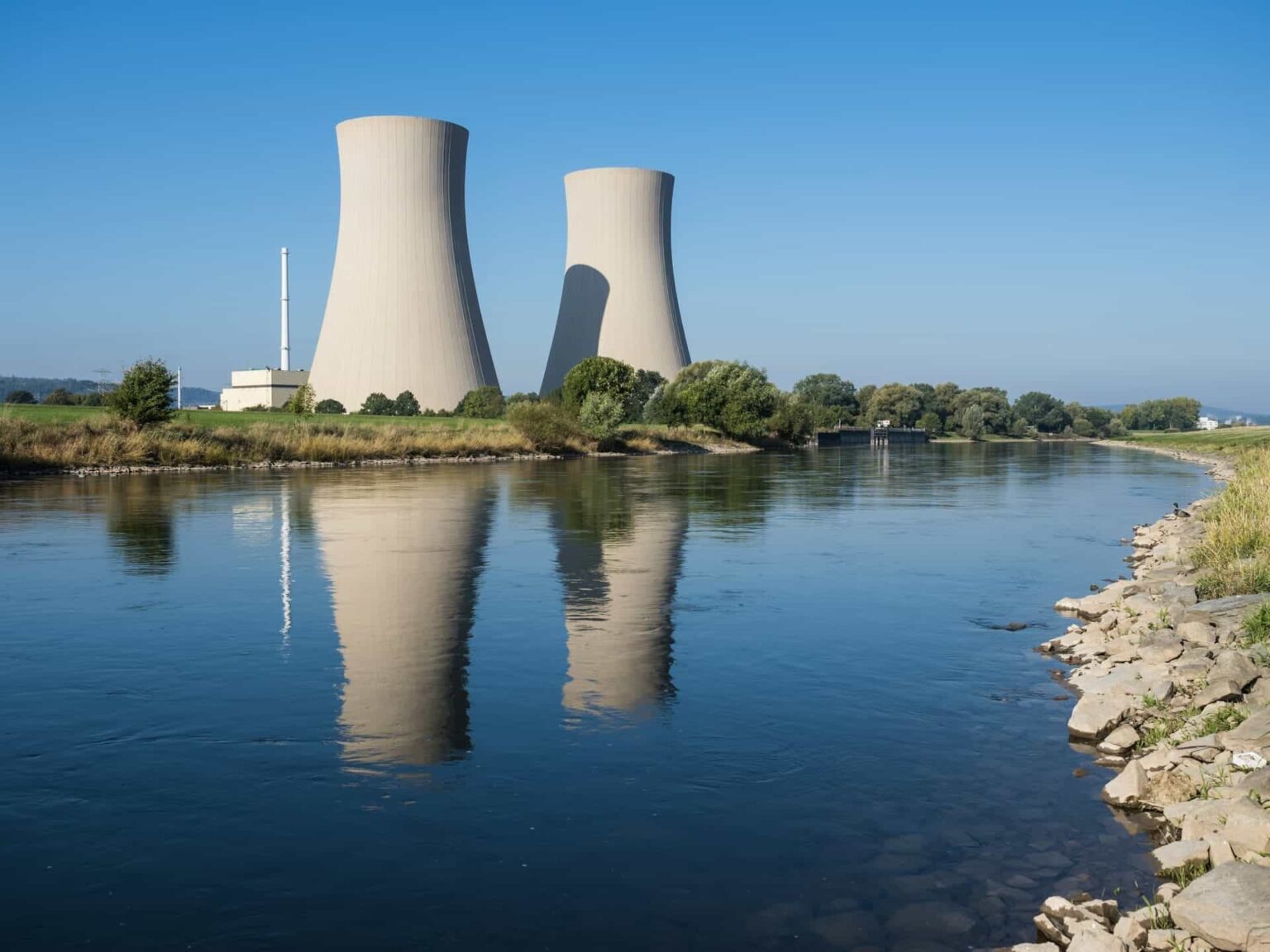
Data centers have ceased to be a silent infrastructure. The expansion of cloud computing, artificial intelligence, and digital services is turning energy into the industry’s major bottleneck. Finding land, fiber optic, and permits is no longer enough. The critical question is now: who can guarantee enough, stable, and continuous electricity 24/7?
Spain is not immune to this tension. Madrid, Aragon, and other emerging hubs are attracting millions in investments in data centers, cloud, and AI. But this growth requires an electrical grid capable of handling new, highly intensive loads with guarantees of continuity and competitive costs. That’s why nuclear energy has come back into the conversation—not as nostalgia for the old atomic era, but as a potential solution to a very current problem: how to power an increasingly electricity-hungry digital economy.
AI Changes the Scale of the Energy Challenge
The International Energy Agency estimates that the global electricity consumption of data centers could double, reaching around 945 TWh by 2030, about 3% of the world’s electricity demand. The portion specifically tied to AI-focused data centers could grow even faster, tripling in that period. This is no small figure: it equates to adding a demand to the global power system comparable to that of large industrial economies.
Barclays Research also quantifies this phenomenon. In their report “AI revolution: Meeting massive AI infrastructure demands,” they estimate that U.S. data center electricity demand could rise from 150-175 TWh in 2023 to as much as 560 TWh in 2030, roughly 13% of the country’s current electricity consumption. The report acknowledges uncertainties in these projections but highlights a clear trend: AI could drive electricity demand higher than many decarbonization plans anticipated.
In Europe, the challenge has unique nuances. McKinsey estimated that the demand for IT from European data centers could grow from about 10 GW to 35 GW by 2030, with electricity consumption surpassing 150 TWh. This places the region at a crossroads: attract digital infrastructure, strengthen technological sovereignty, and compete with the U.S. and China—all without straining electrical grids or missing climate goals.
The issue is not just how much electricity is consumed, but when and how it is used. A data center cannot operate intermittently. It needs a constant supply, redundant systems, stable power, cooling, and fault recovery capabilities. Renewable energy sources are essential for decarbonization, but their intermittency requires pairing with storage, grid support, backup, and firm power sources. Here, nuclear energy regains relevance in the debate.
Why Technology Companies Are Revisiting Nuclear Power
Major hyperscalers have long been signing contracts for renewable energy. Amazon, Microsoft, Google, and Meta are among the largest corporate buyers of clean electricity. However, purchasing renewable energy annually is not the same as operating with carbon-free power every hour on the same grid and across all locations of data centers.
Barclays summarizes the tension well: tech companies seek firm electricity—available even in adverse conditions and dispatchable, capable of responding to grid needs. Renewables alone often don’t meet both conditions reliably. In contrast, nuclear provides consistent output, low operational emissions, and less land use per unit of energy generated.
In the U.S., progress is faster. Amazon invested in X-energy to support the deployment of small modular reactors (SMRs) aimed, among other uses, at data centers. Google reached an agreement with Kairos Power to buy energy from advanced nuclear reactors. Microsoft signed a deal with Constellation to restart a Three Mile Island unit and power its electrical demand with nuclear energy. These are different moves, but they share a common idea: securing clean, reliable energy has become a strategic advantage.
SMRs, or small modular reactors, carry much of the current promise. These are smaller than traditional nuclear plants, built in modules, and designed for more flexible deployment. On paper, they could be installed near large industrial consumers, reduce pressure on transmission networks, and provide continuous power with low emissions. In practice, however, they still need to prove costs, timelines, licensing, supply chain viability, and social acceptance.
Nuclear fusion is another frontier—more ambitious and still less mature commercially. Unlike fission, which splits atomic nuclei, fusion joins light nuclei to release energy. Advocates point out that fusion does not produce long-lived radioactive waste like fission and does not involve chain reactions. The challenge is that no commercial fusion plant is yet delivering electricity to the grid. Therefore, it should be considered a future option, not an immediate solution for the data centers being planned today.
Spain, Aragón, and Madrid Facing a Strategic Decision
The growth of data centers in Spain heavily depends on land availability, fiber, renewables, and grid connections. Madrid has established itself as the country’s main interconnection hub and data center hub. Aragón has gained prominence through investments from AWS and other projects related to cloud and AI. Other regions also compete to attract digital campuses, submarine cable stations, edge nodes, and advanced computing projects.
This race can bring investment, skilled jobs, technological providers, and industrial activity. But it also requires long-term energy planning. An area attracting data centers without resolving issues related to generation, transmission, distribution, water, cooling, and social acceptance risks delays, conflicts, and roadblocks with other economic activities.
Nuclear energy would not solve all these issues by itself. Spain has an agreed nuclear shutdown schedule, a sensitive political debate, and public opinion shaped by decades of discussion on waste, safety, and costs. Reopening that debate will not be easy. But the pressures from AI and electrification force us to look at the entire energy system without taboos.
The Spanish dilemma is especially delicate because the country has a strong renewable energy position. This advantage could attract data centers seeking low-carbon energy. But if demand grows rapidly, it will be necessary to bolster grids, storage, interconnections, demand management, and firm energy sources. The question is not renewables versus nuclear, but which combination can sustain industry, households, electrified transport, and data centers without soaring prices or risking stability.
Brussels is also shifting tone. In March, the European Commission announced a €330 million investment to accelerate fusion energy and support nuclear technologies and skills within the Euratom program for 2026-2027. Additionally, Ursula von der Leyen stated at the Paris Nuclear Energy Summit that Europe made a strategic mistake by turning away from a reliable, affordable, and low-emission energy source. This is a politically significant remark in an EU where nuclear has been a divisive issue for years.
An Opportunity with Real Risks
Criticism of nuclear energy persists. Waste, construction costs, delays, safety, dismantling, and reliance on specialized supply chains remain genuine concerns. Europe is well aware of cost overruns on recent projects. Small modular reactors are not yet a proven large-scale solution, as much of that technology is still in licensing, design, or initial deployment stages.
Fusion warrants even more caution. It could be one of the major energy solutions of the second half of the century, but today’s data centers need electricity now. Mixing fusion expectations with grid issues projected for 2026 or 2030 might make headlines, but it does not address immediate planning needs.
There is also a fundamental debate about the very model of AI. If each efficiency improvement leads to more use, more queries, more models, and more data centers, total demand could continue rising. This is Jevons’ paradox applied to AI: making a technology more efficient does not always reduce total consumption if the efficiency accelerates adoption. Barclays highlights this tension with the concept of the new “Jensen and Sam law”: each generation of more powerful GPUs may end up fueling even larger AI deployments.
What’s clear is that energy has become a strategic variable. The location of data centers will no longer depend solely on fiber, land, or tax incentives. More and more, it will depend on the availability of firm, clean, and competitive electricity. For Europe, this represents a question of sovereignty: without sufficient energy, there will be no sovereign AI, no European cloud, and no strong digital industry.
Spain has a clear opportunity if it can leverage its advantages: abundant renewables, geographic position, growing hubs like Madrid and Aragón, international connectivity, and industrial capacity. But this opportunity requires serious conversation about energy, grids, storage, nuclear, water, and territory. Data centers are not just server buildings—they are major industrial consumers in an electrifying economy.
The new atomic era will not necessarily arrive with the futuristic aesthetics of the 1950s. It might arrive more pragmatically: long-term energy contracts, SMRs alongside large industrial campuses, utility agreements, experimental fusion plants, and governments revising energy plans once thought settled. AI has changed the question. Europe now must decide what kind of electricity it wants to use to sustain its digital future.
Frequently Asked Questions
Why are data centers reopening the nuclear debate?
Because they require constant, stable, low-emission electricity. AI is dramatically increasing energy demand, and renewables—though essential—need backup, storage, and grid support to ensure 24/7 supply.
What are SMRs?
Small Modular Reactors are smaller than conventional nuclear plants. Designed as modular units, they are envisioned to generate reliable power near large industrial consumers, though they still need to demonstrate cost-effectiveness and large-scale deployment.
Can nuclear fusion power data centers soon?
Fusion has great potential, but no commercial plant is currently providing regular grid electricity. It may be important in the future, but it is not an immediate solution for the current demand of data centers.
What role can Spain play?
Spain can leverage its renewable potential, connectivity, and hubs like Madrid and Aragón, but it will need careful energy planning, grid reinforcement, storage solutions, and a realistic debate on firm power sources to support AI and cloud growth.
