
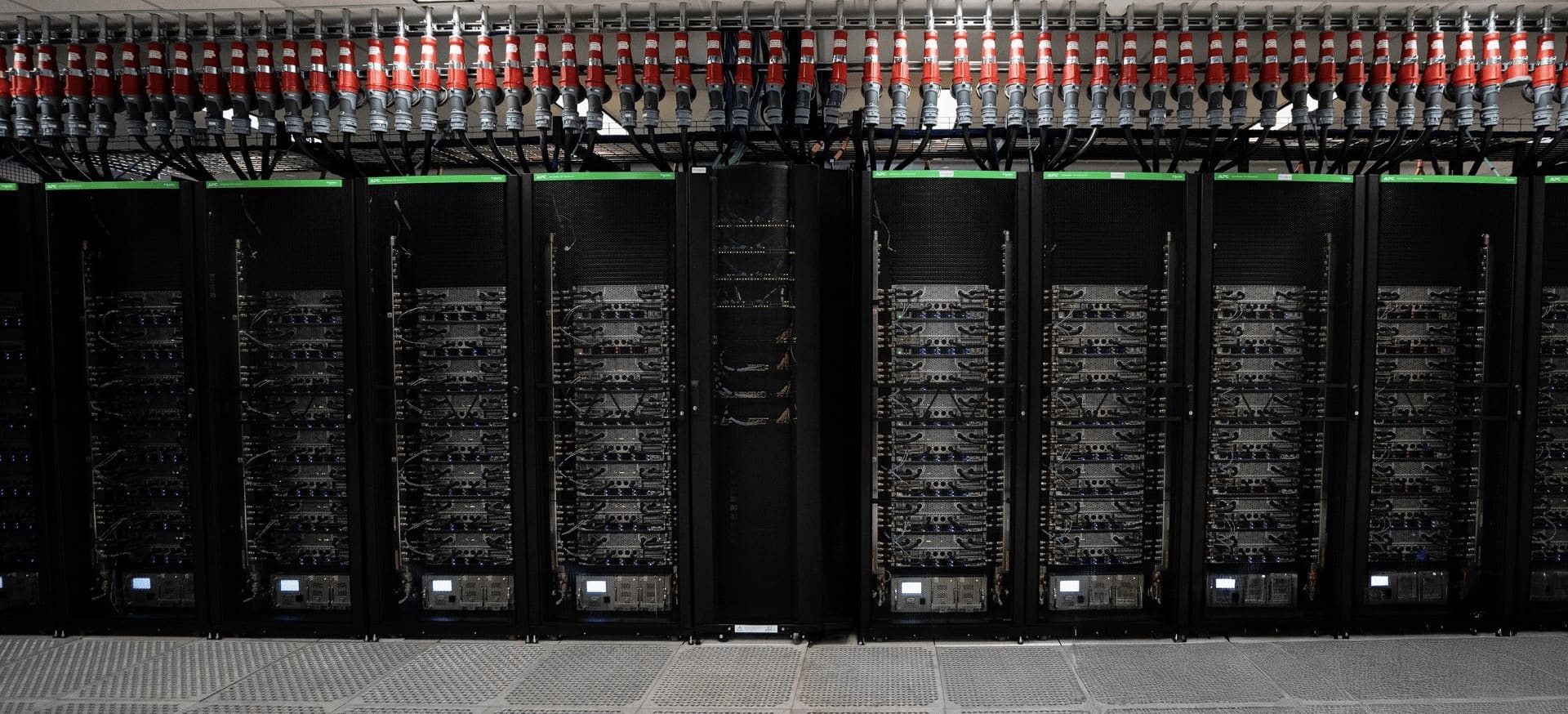
Riot Platforms, one of the major Bitcoin mining companies in the United States, has taken another step to reduce dependence solely on the crypto business and fully enter the high-performance computing infrastructure market. The company has announced that AMD has exercised its option to contract an additional 25 MW of critical IT capacity at Riot’s campus in Rockdale, Texas, bringing the total committed capacity by the chip manufacturer to 50 MW.
The agreement confirms an increasingly visible trend in the sector: part of the electrical and physical infrastructure built for cryptocurrency mining is attempting to be repurposed to serve AI clients, HPC, and data centers. The transition isn’t automatic or straightforward, but Riot’s case illustrates why many mining operators now see a greater opportunity in selling capacity to tech companies rather than relying solely on Bitcoin prices.
Riot shifts from Bitcoin mining to selling data center capacity
In January, Riot announced its shift toward high-performance data centers with AMD as its first major client. The initial agreement included 25 MW of critical IT load at the Rockdale campus, with a ten-year term and three five-year extension options. The initial contract was valued at approximately $311 million in base rent over the initial period.
Now, AMD has activated an additional 25 MW. The new expansion also has a ten-year initial duration, with three additional five-year options, and is expected to generate around $325 million during the initial period. In total, Riot now has 50 MW contracted with AMD, with a predicted base rent value of about $636 million over ten years.
The additional capacity will be delivered in the same building as the original 25 MW. The first phase, starting in January 2026 with 5 MW, was completed in May of this year. The extra 25 MW is scheduled to be available by May 2027, according to the communicated timeline.
| Riot-AMD Agreement Element | Details |
|---|---|
| Initial contracted capacity | 25 MW |
| Expansion exercised by AMD | 25 MW |
| Total contracted capacity | 50 MW |
| Estimated value of the first contract | $311 million |
| Estimated value of the expansion | $325 million |
| Initial duration | 10 years |
| Extension options | 3 periods of 5 years |
| First phase delivery | January-May 2026 |
| Expansion delivery | May 2027 |
Jason Les, Riot’s CEO, described the first quarter of 2026 as a turning point for the company. According to Riot, AMD’s decision to double its footprint so quickly validates Riot’s ability to operate at an institutional scale and serve demanding clients. The language is deliberate: Riot aims to be recognized not just as a Bitcoin miner but as a digital infrastructure platform with access to energy, land, and development capacity.
From crypto campus to HPC infrastructure in Rockdale
The Rockdale campus, in Texas, began construction in 2020 and was completed in 2023. It features seven buildings: two of them, with about 200 MW, use immersion cooling; the other five, totaling approximately 500 MW, utilize air cooling. Riot has also secured rights and easements that could allow expansion beyond 700 MW.
To accommodate the AMD contract, Riot is adapting one of its existing buildings and purchased an additional 200 acres of land in Rockdale. The company explained that the original AMD agreement contemplated up to 200 MW of critical IT load at the campus, with further options still available.
This type of conversion has become attractive for two main reasons. First, demand: AI and HPC require enormous amounts of electrical capacity, servers, cooling, and connectivity. Second, speed: many mining operators already have land, energy access, substations, technical buildings, and operational experience with high-density loads. Not everything directly translates to AI, but part of this infrastructure can be adapted faster than building a campus from scratch.
Riot isn’t the only miner repositioning itself. The crypto sector has experienced cycles of volatile margins, regulatory pressure, and rising energy costs. The demand for AI data centers, on the other hand, has created an alternative outlet for electrical assets that previously depended almost entirely on Bitcoin mining performance.
An emerging business reflected in financial results
This shift is already evident in Riot’s earnings. The company reported quarterly revenue of $167.2 million in Q1 2026, up from $161.4 million in the same period the previous year. Of that, $33.2 million came from data center operations already.
This is significant because it shows Riot isn’t just announcing future plans. The company has begun generating revenue as a data center operator. However, the transition will take time: Riot remains one of the largest Bitcoin miners globally, with its financial performance still tied to the crypto market, network difficulty, energy costs, and regulatory developments.
The company owns and manages over 1,100 acres and 1.7 GW of electrical capacity across two Texas facilities. Besides Rockdale, it operates the Corsicana site, near Dallas, where construction is ongoing on the first two 56 MW buildings. The project could expand to eleven buildings with 672 MW, and have the potential to reach 1 GW. Riot also has two operational sites in Kentucky, with 60 MW currently, and the capacity to exceed 300 MW after acquiring Block Mining in 2024.
For AMD, this agreement aligns with market realities: chip manufacturers no longer only sell processors and accelerators. They also need to ensure deployment ecosystems, client capacity, and infrastructure access suitable for AI and HPC workloads. AMD hasn’t publicly specified the exact use of the contracted capacity at Rockdale, so it’s cautious to assume the entire agreement is dedicated exclusively to large-model training. However, market context indicates increasing demand for high-compute capacity.
Energy, reputation, and environmental pressures
The repurposing of Bitcoin mines into data centers also raises tough questions. Crypto mining has faced criticism for its energy consumption and environmental impact of some facilities. Greenpeace even pointed out Riot for operating one of the most energy-intensive and carbon-heavy Bitcoin mines in the U.S., contributing to the broader debate on the energy costs of proof-of-work networks.
The move toward HPC and AI doesn’t eliminate this debate. AI data centers consume large amounts of energy, require cooling, often water for certain designs, reinforced electrical grids, and long-term power supply agreements. The key difference now is the industrial narrative: electricity no longer powers only crypto networks but also provides computational services to tech companies, cloud providers, chip manufacturers, and AI clients.
This shift might improve the economic perception of these assets, but it doesn’t fully resolve local tensions. Communities, regulators, and grid operators will continue to scrutinize employment, grid stability, energy sourcing, emissions, and land use. Riot will need to demonstrate it can compete not just in power access but also in reliability, efficiency, and adherence to standards demanded by corporate clients like AMD.
AMD’s decision to expand its contract is an important signal for Riot. While it doesn’t automatically turn Riot into a colocation or cloud giant, it adds credibility in a market where contracted electrical capacity has become a scarce asset. In the current AI boom, having megawatts ready, land, and reasonable timelines can be as valuable as experience in traditional data centers.
Riot has found a way to transform part of its mining infrastructure into a business with long-term contracts, higher-quality clients, and predictable revenues. Now, execution is key. Delivering 50 MW to AMD on time, operating to data center standards, and expanding the customer portfolio will be the real test of whether its shift to HPC is a solid new business line or just a way to soften Bitcoin’s volatility.
Frequently Asked Questions
What has AMD signed with Riot?
AMD has exercised an option to secure an additional 25 MW of critical IT capacity at Riot’s Rockdale campus, raising its total contracted capacity to 50 MW.
What is the value of the expanded agreement?
The initial 25 MW contract was estimated at $311 million over ten years. The expansion adds another $325 million, making the combined base rent around $636 million during the initial period.
Why is Riot entering data centers?
Because the demand for infrastructure for AI and HPC is growing rapidly, and Riot possesses valuable assets for that market: land, electrical capacity, technical buildings, and operational experience with high-density loads.
Does Riot stop being a Bitcoin miner?
No. Riot remains a major Bitcoin mining company, but it is diversifying into high-performance data centers to reduce reliance on the crypto cycle and capitalize on computing demand.
