
Meta has decided to explore one of the most eye-catching energy solutions in the race for Artificial Intelligence: capturing solar energy in space and sending it to Earth to support the operation of its data centers. The company has signed an agreement with Overview Energy to reserve up to 1 GW of space-based solar energy capacity, a significant figure considering the growing pressure that AI infrastructure is placing on electrical grids.
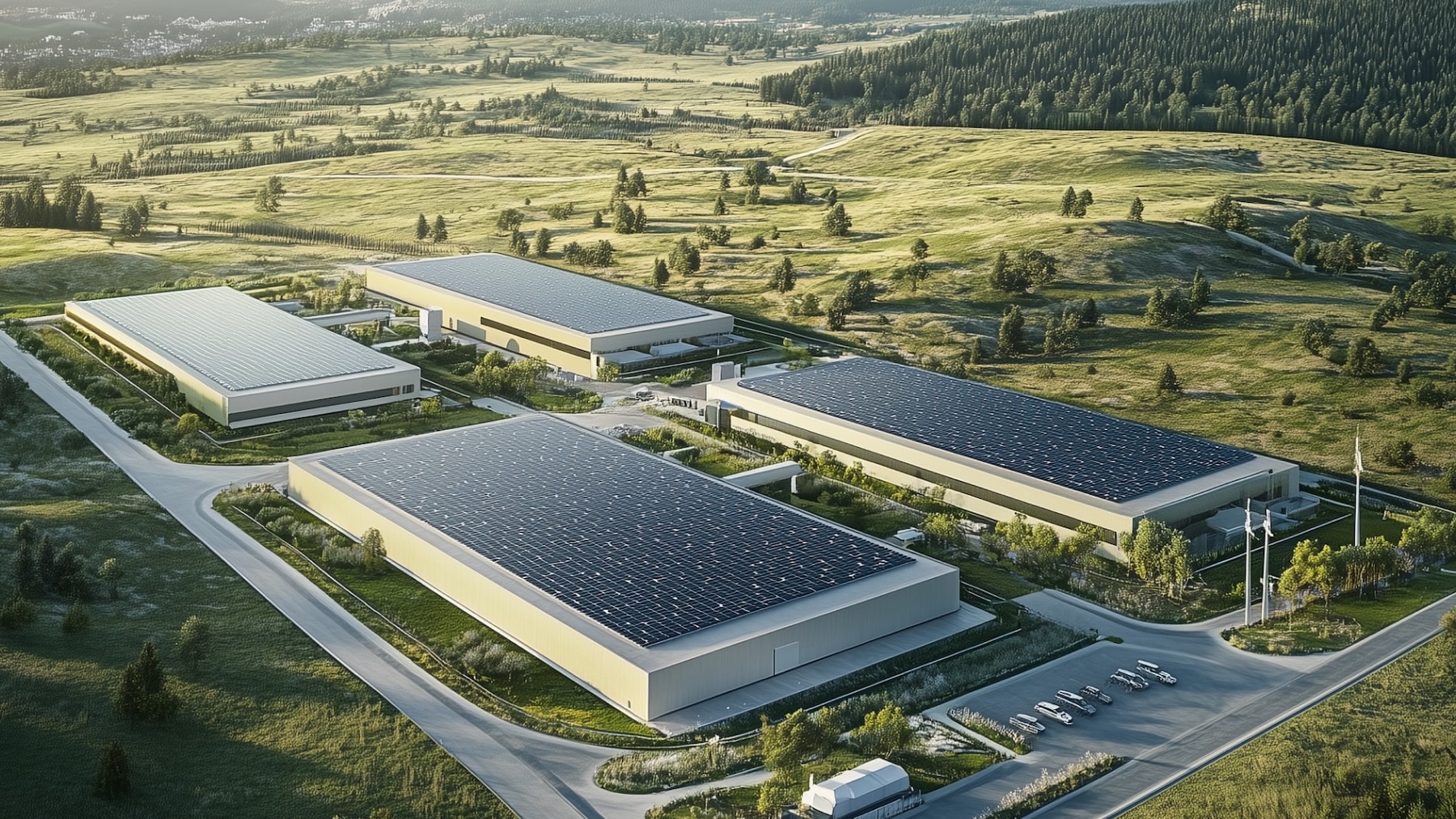
The idea is not to place data centers in orbit or to replace terrestrial solar plants. Overview Energy’s plan is to deploy solar satellites in geostationary orbit, about 35,000 kilometers above Earth, where they can receive sunlight almost continuously. That energy would then be transmitted back to terrestrial solar facilities using low-intensity near-infrared light, allowing these plants to continue producing electricity even when they are not receiving direct sunlight.
Space solar power, but with feet on the grid
The proposal has a clear advantage over conventional solar energy: it does not depend on the day-night cycle on Earth’s surface. Current solar plants are underutilized for many hours because they only generate electricity when there is sufficient sunlight. If satellites can send energy to those same facilities during the night or low-production periods, the already-connected infrastructure could be utilized for more hours.
This point is crucial because one of the major bottlenecks for data centers is not just generating energy but delivering it on time. New plants, power lines, substations, and permits can take years to develop. Meta presents space technology as a way to maximize the use of existing solar installations without occupying new land or waiting for the deployment of entirely new electrical infrastructure from scratch.
Nevertheless, it’s important to temper enthusiasm. The technology is still in early stages. Meta notes that Overview Energy envisions an orbital demonstration in 2028, which would be the first attempt for the system to wirelessly transmit energy from space to a solar plant on Earth. If successful, commercial delivery to the U.S. grid could begin as early as 2030.
This doesn’t mean a ready-to-use energy source for data centers tomorrow. It’s about capacity reserve and a bet on a technology that still needs to demonstrate viability, safety, efficiency, cost, and scalability. In the energy sector, moving from demonstration to reliable commercial operation is often more challenging than presenting an appealing concept.
The second pillar: storing energy for days
Meta has not only announced the agreement with Overview Energy. The company has also partnered with Noon Energy to reserve up to 1 GW / 100 GWh of long-duration energy storage. This part of the strategy is less spectacular than space solar, but it may be equally important.
Conventional lithium-ion batteries are generally designed to deliver energy for a few hours. They are useful for peak shaving, smoothing renewable generation, or supporting the grid over short periods. But data centers require continuity. They cannot depend solely on a battery that covers an afternoon without wind or a few hours without sun.
Noon Energy is working with storage systems based on reversible solid oxide fuel cells and carbon storage, designed to deliver energy for over 100 hours. Meta has reserved up to 100 GWh of capacity, with the first pilot test planned for 25 MW / 2.5 GWh, targeted for completion in 2028. If successful, the agreement could scale up to the reserved capacity.
The combination of both technologies highlights the core challenge. The tech industry needs more clean energy — but also clean energy available anytime. AI demand demands 24/7 data center operation, with increasingly intensive and somewhat predictable workloads. Renewable generation and long-duration storage must work together to meet this requirement.
AI makes energy a strategic asset
Meta’s announcement fits into a broader trend. Major tech companies are no longer acquiring renewable energy solely for climate image enhancement. They are trying to secure power supplies as a central part of their growth strategy. Without sufficient energy, there are no new data centers, GPUs, model training, or large-scale inference.
The International Energy Agency estimates worldwide data center electricity consumption will grow from about 485 TWh in 2025 to 950 TWh in 2030, nearly 3% of global electricity demand. AI-focused data centers are expected to grow even faster, potentially tripling in that period. This highlights why companies like Meta are signing all kinds of agreements: solar, wind, geothermal, nuclear, storage, and now space solar power.
Meta claims to have already contracted over 30 GW of clean, renewable energy. It also highlights agreements in advanced geothermal and a nuclear portfolio of 7.7 GW linked to projects with companies like Vistra, TerraPower, Oklo, and Constellation Energy. The strategy is clear: diversify sources, reduce exposure to bottlenecks, and ensure stable power for an AI infrastructure that will continue growing.
The less visible aspect is the impact on electrical grids. Data centers could become huge clients for local utilities—potentially attracting investment, jobs, and infrastructure. But questions arise about who pays for grid upgrades, how costs are shared, and what happens if technological demand competes with residential, industrial, or public services.
An ambitious bet still to be tested
Space-based solar energy has been appearing in plans, studies, and futuristic proposals for decades, but has never made the leap to large-scale commercial deployment. Its proponents point out that space offers more hours of sunlight, fewer interruptions, and the possibility to send energy to specific points. Critics remind us of the challenges: launch costs, orbital maintenance, conversion efficiency, spectrum or beam regulation, safety, and competitiveness with increasingly affordable terrestrial renewables.
Meta isn’t solving all these issues with this announcement. Instead, it’s reserving capacity and supporting a company attempting to turn the idea into actual infrastructure. For Overview Energy, having a high-profile client like Meta can facilitate financing, credibility, and early commercial routes. For Meta, it’s an option on a technology that, if it works, could give early access to a distinctive energy source.
Similarly, Noon Energy’s over 100-hour storage could be highly valuable if costs are competitive and industrial reliability is proven. But it will also need to demonstrate that it can mass-produce, install, and operate at gigawatt-hour scale without becoming just another difficult-to-deploy promise.
Thus, the news should not be interpreted as Meta instantly powering its data centers with space sunlight. The more realistic view is that AI’s energy demands are so enormous that big tech companies are funding solutions once considered too distant. Energy has become part of the AI stack, at a strategic level comparable to chips, memory, networking, and software.
If the 2028 tests succeed, Meta could be among the first to bring space solar power and ultra-long-duration storage to the data center realm. If they don’t, the announcement still serves as a market signal: the industry is seeking solutions outside traditional approaches because AI’s speed is straining the electrical grid faster than many regions can handle.
Frequently Asked Questions
Will Meta set up space-based data centers?
No. The announced agreement focuses on capturing solar energy in space and transmitting it to terrestrial solar facilities. Data centers will remain on Earth.
How much space solar capacity has Meta reserved?
Meta has signed an agreement with Overview Energy to reserve up to 1 GW of space-based solar energy capacity to support its data center operations.
When might this technology be available?
Overview Energy anticipates an orbital demonstration in 2028. If successful, commercial energy delivery to the U.S. grid could start around 2030.
What role does Noon Energy play in Meta’s strategy?
Noon Energy would provide long-duration storage. Meta has reserved up to 1 GW / 100 GWh, with an initial pilot of 25 MW / 2.5 GWh planned for 2028.
