
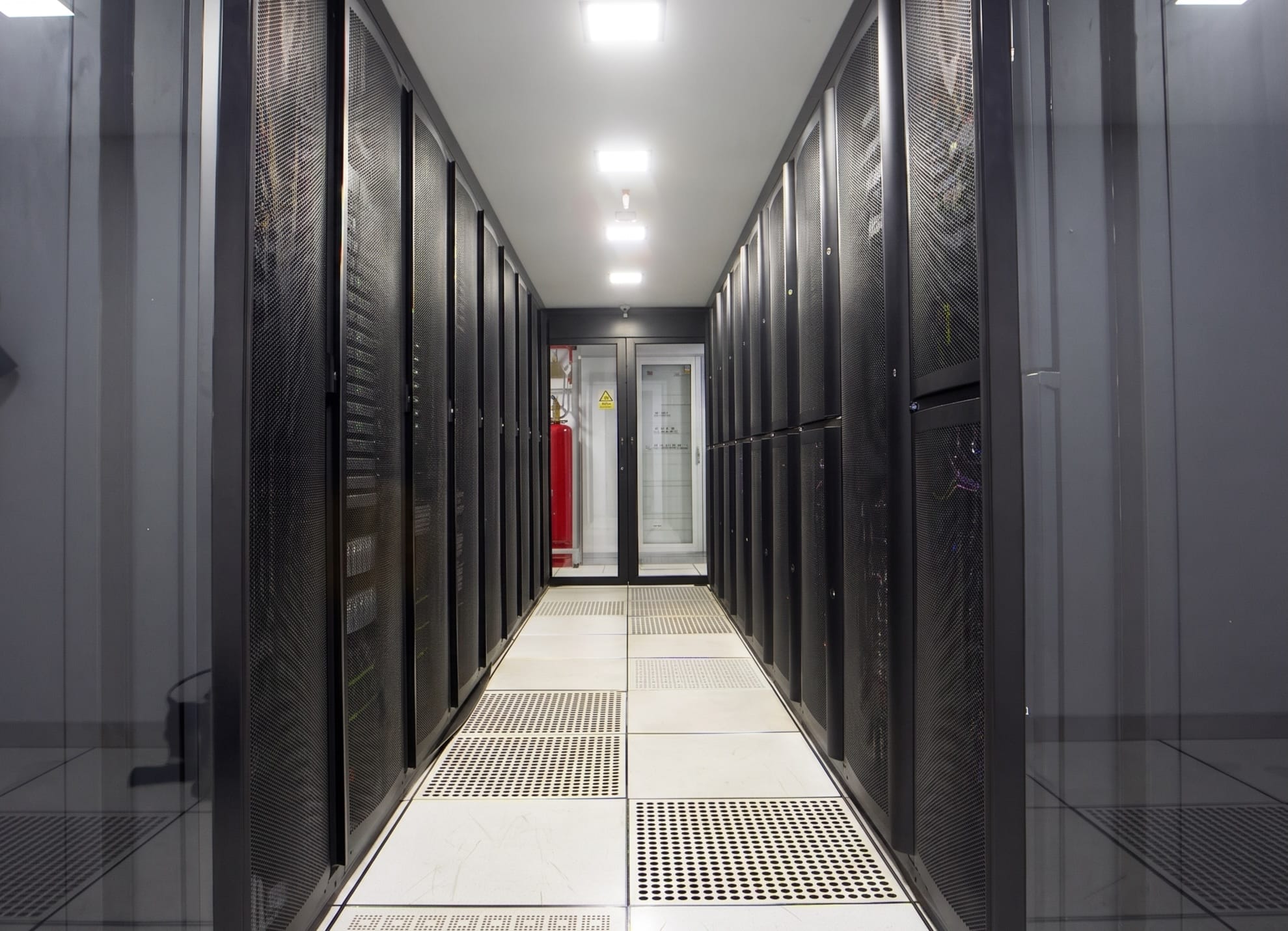
Aire has introduced a renewed colocation offering that aims to go beyond traditional data center space rental. The company’s proposal revolves around a simple idea: companies no longer just need to host servers, but to place their data close to users, improve connectivity, and ensure the infrastructure responds more quickly to the applications relying on it.
This move follows a strategic partnership with Templus, which has expanded Aire’s available data center footprint and allows it to strengthen an offering targeted at enterprises, operators, integrators, and organizations that require distributed infrastructure, connectivity, and scalability without relying on a single location. The company mentions more than 20 data centers in Iberia, five of which are owned by them, and seven additional locations at key points across Europe.
From Standalone Racks to Connected Infrastructure
For years, colocation has been a largely physical decision: space, power, cooling, security, and basic connectivity. While this view remains essential, it is no longer sufficient for many projects. Artificial intelligence workloads, private cloud services, distributed applications, edge computing, and low-latency requirements are forcing a rethink on where infrastructure is placed and how it is connected.
Aire aims to leverage a unique advantage: it is not just a space provider but also a network operator. According to the company, it has over 800 interconnection agreements and a presence in major exchange points such as AMS-IX, DE-CIX, LINX, and ESPANIX. This combination of colocation and networking enables the design of environments where servers are not isolated in a data center but are directly connected to operators, clients, cloud services, digital services, and corporate headquarters.
This difference is crucial in sectors where every millisecond counts or where availability depends on multiple well-connected locations. Hosting infrastructure in a remote data center and connecting via several intermediaries is different from deploying within a network with local presence and already integrated links.
Aire’s proposal also responds to some economic shifts. Many companies want to scale without overprovisioning from day one. That’s why the company has structured its commercial model around kW consumption—a more realistic approach today, where electrical capacity and power density weigh just as heavily as physical space.
Three Options for Different Needs
The new offering is organized into three levels: DC Edge, DC Core, and Global Data Centers. Each addresses a different need, from local proximity to larger-scale projects at international nodes.
| Mode | Focus | Locations Mentioned |
|---|---|---|
| DC Edge | Proximity for distributed loads and low latency | Elche, Valencia, Murcia, Zaragoza, or Talavera de la Reina |
| DC Core | Higher density and key urban or European nodes | Madrid, Barcelona, Málaga, Seville, Paris, London, Milan, Copenhagen, or Zurich |
| Global Data Centers | Access to major international partner nodes | Infrastructure from players like Equinix, Digital Realty, or Data4 |
DC Edge is designed to bring infrastructure closer to areas where latency and regional presence can make a difference. It’s a practical choice for operators, companies with distributed offices, or services that need proximity to users and local networks.
DC Core targets workloads with higher power density, with figures of around 4.5 kW per rack as per Aire’s published information. This includes more demanding enterprise environments, cloud platforms, critical infrastructure, and projects requiring prominent locations in major cities or European capitals.
Global Data Centers extend the reach to large exchange points and data centers operated by international partners. This tier makes sense for companies needing international presence, global interconnection, or larger volume deployments.
The partnership with Templus strengthens this strategy. In January, Templus acquired three of Grupo Aire’s data centers in Lisbon, Madrid, and Valencia, adding 6.5 MW to its installed capacity in a transaction. Simultaneously, Grupo Aire became a strategic partner, retained its clients in those centers, and expanded its access to Templus’s data center network in Spain and other European markets.
Sovereignty, Security, and AI Workloads
Aire’s new approach also emphasizes three increasingly important market factors: data sovereignty, security, and energy efficiency. The company highlights hosting within national borders for projects requiring local control, GDPR compliance, and environments aligned with regulatory needs. It also mentions physical security 24/7, anti-DDoS systems, and centers prepared for higher power densities.
Artificial intelligence is among the forces transforming data center design. While not all AI projects need racks of extremely high density, the growth of GPUs, high-speed storage, low-latency networks, and advanced cooling is raising technical requirements. Aire states its infrastructure is prepared for such workloads, featuring advanced climate control systems and Tier III Ready-certified centers.
This part warrants careful reading. The “AI-ready” label has become common in the sector, but its real value depends on specific factors: rack density, available electrical capacity, cooling type, connectivity, redundancy, provisioning timelines, and operational support. Still, the message is clear: colocation can no longer be sold solely on square meters and physical security.
For medium-sized companies, integrators, and service providers, the appeal might lie in a more practical combination: deploying infrastructure across multiple locations, connecting to an existing network, paying based on actual power requirements, and having a pathway to scale into core or global nodes when needed.
Aire’s challenge will be to demonstrate that this modular approach genuinely reduces complexity. Many organizations already work with multiple providers for connectivity, cloud, housing, cybersecurity, and managed services. Unifying part of that relationship could be beneficial if it improves timing, support, and costs—but will require clear commercial and technical distinctions.
The data center market in Spain and Europe is experiencing significant growth driven by demand for cloud, AI, edge, and digital services. For Aire, the opportunity isn’t just about having more locations but offering a coherent network among them. In a sector where energy, latency, and connectivity are increasingly critical, proximity can be an advantage if accompanied by good operations.
The company’s chosen phrase, “Data is not stored, it’s activated,” encapsulates its commercial intent. Behind this message lies a more distributed, connected, and modular colocation offering, supported by the partnership with Templus and Aire’s networking capacity. If it translates this promise into real projects, the company could strengthen its position in a market where data centers are evolving beyond mere technical buildings to become a critical part of digital performance for businesses.
Frequently Asked Questions
What has Aire announced regarding colocation?
Aire has unveiled a renewed colocation offering following its strategic partnership with Templus, featuring increased data center presence, integrated connectivity, and multiple service levels suited to various consumption and scale needs.
What modalities does Aire Colocation offer?
The offering is organized into three levels: DC Edge for proximity, DC Core for higher density nodes, and Global Data Centers for international projects.
Why is connectivity important in a colocation service?
Because performance depends not only on server location but also on how they connect to users, sites, operators, cloud services, and others. Low latency and direct interconnection can improve user experience and reduce complexity.
What does the partnership with Templus bring?
The partnership expands Aire’s available data center footprint and strengthens its ability to offer distributed colocation across Spain, Portugal, and other European nodes.
