
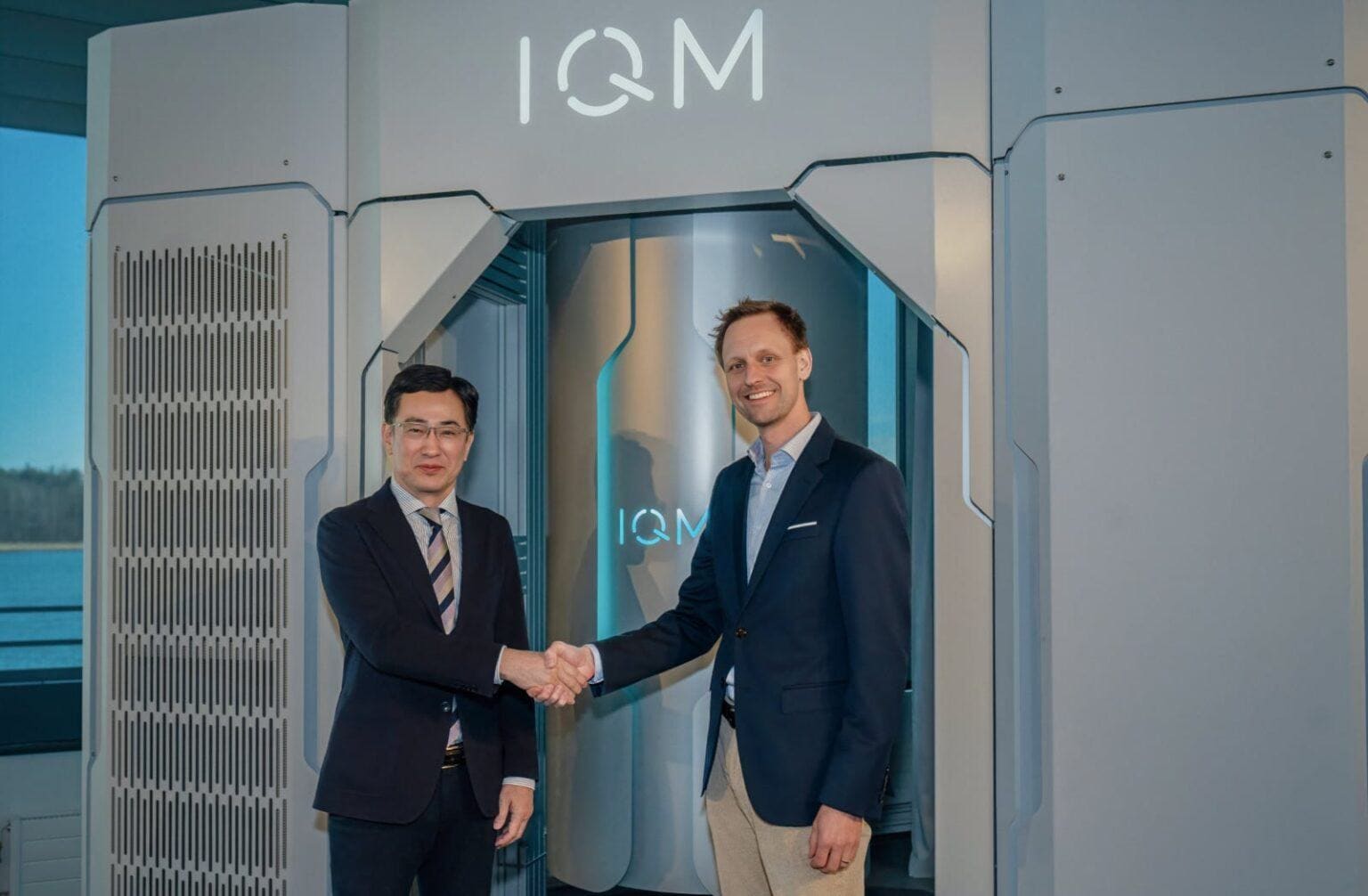
Finnish company IQM Quantum Computers has announced the sale of a 20-qubit Radiance quantum computer to Japanese firm Toyo Corporation, in what they describe as the first enterprise deployment of a quantum system in Japan. The unit is scheduled for delivery before the end of 2026 and will be available both on local premises and in cloud environments, aiming to bring quantum computing closer to companies, researchers, and industrial projects across the country.
The purchase comes at a time when Japan is striving to turn quantum computing into a practical technology, not just a laboratory discipline. The Japanese government has set ambitious goals for 2030, including reaching 10 million domestic users of quantum technologies and generating an associated production value of 50 trillion yen. In this context, having physical machines operated by local companies can accelerate talent development, use case creation, and integration with classical supercomputing.
Toyo Seeks to Combine Quantum Computing and HPC
Toyo Corporation is a Japanese company specializing in advanced measurement solutions, with activity in sectors such as automotive, energy, and ICT. According to IQM, Toyo will make the system available to Japanese companies and researchers and will integrate it with high-performance computing infrastructure, known as HPC. This combination is important because current quantum computing does not function as a direct replacement for classical supercomputers, but as a complementary tool for specific problems.
In practice, many quantum applications operate in hybrid models. A classical system prepares data, coordinates flows, runs auxiliary algorithms, and collects results, while the quantum processor intervenes at specific points in the calculation. This architecture can be useful for exploring optimization problems, materials simulation, computational chemistry, physical modeling, or quantum machine learning, though we are still in early stages.
The Radiance system purchased by Toyo has 20 qubits and uses superconducting technology, which is IQM’s focus. It is not a fault-tolerant quantum machine nor intended to solve large-scale industrial problems outright. Its immediate value lies in enabling Japanese organizations to learn how to program, test, and operate real quantum systems—something difficult to achieve with simulators or limited remote access alone.
Toshiya Kohno, president and CEO of Toyo Corporation, views this operation as part of a new phase of Japanese manufacturing. He believes the race for practical quantum technology has already begun, especially in integrating with HPC, developing use cases, and training corporate talent. The takeaway is clear: waiting for fully mature quantum computing might delay the learning curve.
IQM Strengthens Presence in Asia-Pacific
For IQM, the sale to Toyo reinforces an international strategy already including deployments in South Korea and Taiwan. The company states this will be its third quantum computer installed in the Asia-Pacific region. It has also delivered systems to supercomputing centers in Europe, including projects in Poland and Italy, and operates quantum centers in Finland and Munich, where it offers cloud access to its machines.
Jan Goetz, CEO and co-founder of IQM, argues that leading companies are building real quantum capabilities by owning, operating, and growing with the infrastructure. This contrasts with purely remote access to quantum computers. Having an in-house or domestically managed machine allows experimentation with integration, maintenance, hybrid workflows, security, internal training, and software development around the hardware.
This vision makes sense for Japan. The country boasts an advanced manufacturing industry, major tech conglomerates, research centers, and public policies aimed at connecting science, industry, and infrastructure. Quantum computing could have future applications in materials, batteries, automotive, logistics, finance, communications, and pharmaceuticals—yet these applications will take years of testing and specialized personnel to develop.
The operation also signals that the quantum market is moving beyond pure scientific announcement. Although there is still a significant gap between current systems and the most ambitious promises, each enterprise deployment helps translate the technology into operational infrastructure. For providers like IQM, selling complete systems to companies and supercomputing centers is a way to generate revenue, learn from real customers, and establish a solid footing ahead of larger systems rollout.
A Growing Market Under Industrial Pressure
Quantum computing is in a complex phase. On one side, advances in hardware, control, software, and error correction are ongoing. On the other, current machines still face clear limitations: few useful qubits, noise, errors, short coherence times, and constant calibration needs. The leap to systems providing broad practical advantages is not yet guaranteed.
Thus, it’s important to view the Toyo deal with balance. It doesn’t mean Japan will have a transformative machine by 2026. Instead, a Japanese company will have direct access to a real quantum system to generate knowledge, test algorithms, train teams, and connect quantum computing with HPC. In a slow-maturing technology, this accumulated experience could be as valuable as the initial system’s power.
IQM is entering this operation amid a period of corporate expansion. In February 2026, the company announced plans to go public via a merger with SPAC Real Asset Acquisition Corp., with a pre-money valuation of about $1.8 billion. The company states this will bolster its technological and commercial development towards fault-tolerant quantum computing.
The sale of the Radiance system to Toyo fits this growth narrative. To convince the market, a quantum company needs more than scientific publications: it must demonstrate customers, deployments, manufacturing capacity, and a credible commercial path. Japan’s industrial size and national strategy could position it as a significant showcase.
There’s also a geopolitical aspect. The US, China, Europe, and Japan are investing in quantum technologies for strategic reasons related to security, science, industry, and competitiveness. Success isn’t solely about building the most powerful quantum computer but also involves supply chains, talent, testing centers, enterprise access, and integration with classical infrastructure.
The Toyo purchase doesn’t solve all major challenges in quantum computing, but it sends a clear signal: companies are beginning to buy systems to learn, operate, and develop use cases. In an ongoing technological race, proximity to hardware could become a key advantage as the technology progresses.
Frequently Asked Questions
What did Toyo Corporation buy from IQM?
Toyo acquired a 20-qubit IQM Radiance quantum computer based on superconducting technology, to be delivered before the end of 2026.
Why is this purchase significant for Japan?
IQM describes it as the first enterprise deployment of a quantum computer in Japan. The system will enable companies and researchers to work with real quantum hardware and integrate it with HPC infrastructure.
What does integrating quantum computing with HPC entail?
It means combining a quantum computer with classical supercomputing to run hybrid workflows, where each system is used in the parts of the problem where it adds the most value.
Does a 20-qubit quantum computer already have mature industrial applications?
Not broadly. Its main utility is in applied research, training, algorithm testing, use case development, and preparing for more advanced quantum systems.
