
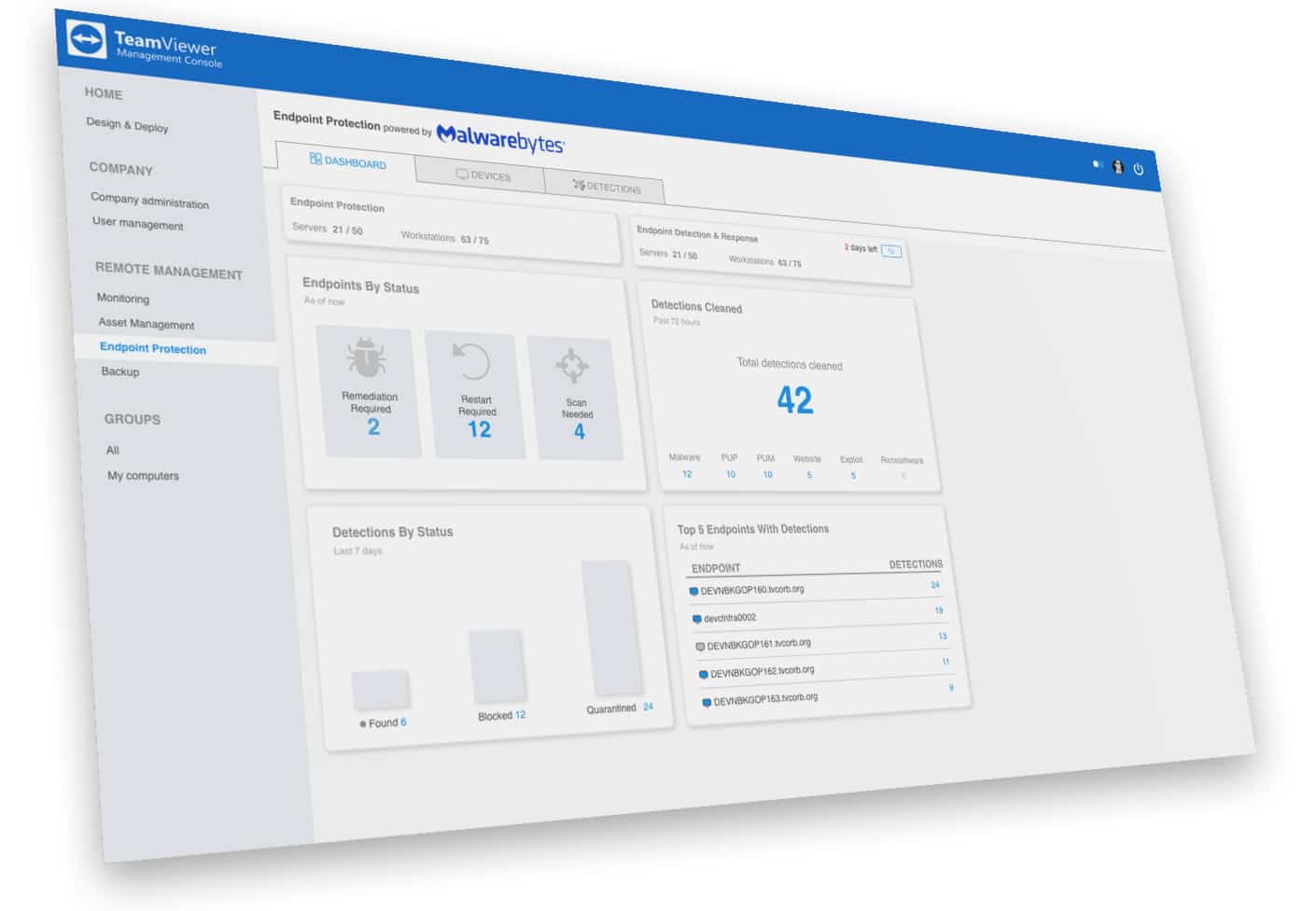
TeamViewer has introduced a new AI-powered scripting capability for Tia, its intelligent agent embedded within the TeamViewer ONE platform. The feature enables transforming previously resolved support tickets into automation scripts ready for review, adjustment, and deployment on specific devices or groups of devices. The company showcased this innovation at the Gartner Digital Workplace Summit 2026, held in London on April 27 and 28.
The announcement addresses a common issue in IT departments: many incidents are repeatedly resolved, but the knowledge remains confined within tickets, remote sessions, internal notes, or the memories of individual technicians. TeamViewer aims to ensure that each useful intervention leaves a reusable footprint. When a technician fixes an issue, Tia can extract the steps applied and suggest a script based on that real solution, not just a generic recommendation from a broad knowledge base.
From Remote Support to Autonomous Endpoint Management
This innovation fits into TeamViewer’s Autonomous Endpoint Management (AEM) strategy, a natural evolution for a company long associated with remote support. The goal is no longer just to connect to a device to fix a problem but to monitor device status, understand context, assist technicians during sessions, and turn repeatable solutions into automated actions.
TeamViewer explains that Tia works in two steps. First, it analyzes information from previous support sessions to offer recommendations based on the organization’s actual history. Then, if the IT team approves, it converts a resolved session into a script generated from documented steps. This script isn’t deployed blindly; it’s prepared for review and adjustment before being applied to selected devices.
This distinction is important. In corporate environments, uncontrolled automation can cause as many problems as it solves. An ill-timed reboot, a misapplied configuration change to the wrong group, or a solution suitable for one device but not others can impact users, critical applications, or internal processes. That’s why TeamViewer’s approach operates in a middle ground: AI helps generate automation, but the validation and deployment decisions remain with the technical team.
Already functioning as a support assistant during remote sessions, Tia handles natural language queries, analyzes device data, and provides real-time recommendations. In March, TeamViewer announced that its clients had surpassed one million AI-assisted remote sessions, with over 300,000 added just that month. This operational database is now being transformed into reusable knowledge for automation.
The Promise: Less Repeated Incidents and More Constant Support
Repetition is one of the biggest hidden costs for support teams. A driver failing after an update, incorrect network configurations, a service that won’t start, misapplied policies, or recurring issues with specific devices can consume extensive hours if each case is treated as new.
TeamViewer’s Tia aims to organize this dispersed knowledge. If a solution has been successfully applied multiple times, the system can help standardize it as a repeatable action. This can shorten response times, improve consistency among technicians, and prevent the same issue from affecting more users when a tested fix is available.
The utility becomes even greater in organizations with numerous endpoints, dispersed teams, and decentralized support. In small companies, knowledge often circulates informally. But in organizations with thousands of laptops, hybrid offices, industrial devices, connected machines, or teams across multiple countries, this informality is insufficient. Manual documentation also doesn’t always suffice, as it requires discipline, time, and constant updates.
AI can assist precisely here: capturing what occurs during sessions, summarizing it, relating it to other cases, and proposing automation pathways. TeamViewer already offers Session Insights, a feature that generates session summaries and, according to its documentation, is available for Business, Premium, Corporate, Tensor, and TeamViewer ONE clients, supporting remote connections to Windows and macOS devices.
DEX, RMM, and Remote Support Begin to Converge
This movement also reflects broader trends in the enterprise IT market. Remote support tools, digital employee experience (DEX) platforms, and remote management and monitoring (RMM) solutions are increasingly converging. Previously, each category addressed only part of the problem: remote access, endpoint visibility, experience analysis, patch deployment, or task automation. Now, providers aim to unify these capabilities within more integrated platforms.
TeamViewer ONE positions itself along this trajectory. The company describes it as a unified platform for digital workspace, secure support, endpoint observability, AI-assisted assistance, and automation. The new AI scripting layer adds a practical dimension: turning human fixes into repeatable actions.
Mei Dent, TeamViewer’s Director of Product and Technology, summarized the concept succinctly: every resolved incident can become a tested, deployable asset that helps protect other devices from the same problem. While ambitious, its success will depend on data quality, internal process maturity, and the IT teams’ ability to review AI-generated proposals before deployment.
Challenges remain. Organizations must safeguard support session data privacy, define clear permissions, control which users can generate and deploy scripts, and maintain audit trails of automated actions. In regulated sectors, traceability will be as critical as speed.
TeamViewer isn’t selling a technician-free IT solution. The more realistic view is that the company aims for technicians to spend less time repeating known tasks and more time on new, complex, or critical issues. AI doesn’t replace operational judgment but can transform support history into a more useful tool than a mere collection of closed tickets.
Frequently Asked Questions
What has TeamViewer announced about Tia?
TeamViewer has introduced an AI-based scripting feature that enables Tia to generate automations from real, previously resolved support incidents.
What is Tia in TeamViewer?
Tia, the TeamViewer Intelligent Agent, is an AI assistant integrated into the TeamViewer platform to assist technicians during support sessions and endpoint operations.
Do automations run automatically without human review?
Not according to TeamViewer’s announcement. The AI generates a script, but the IT team can review, adjust, and decide where to deploy it.
Why is this innovation important for IT departments?
It can help reduce repeated incidents, improve documentation of solutions, and standardize fixes across environments with many managed devices.
via: teamviewer
