
Intel has found an unexpected lever amidst the surge in demand for data center and server processors. The company closed Q1 2026 with revenues of $13.6 billion, a 7% increase year-over-year, and with a non-GAAP gross margin of 41%, clearly above the range it had expected for the quarter. In its official note, the company attributed this result to the “growing and essential role of CPUs in the AI era” and to an “unprecedented demand for silicon,” as well as efforts to expand the available supply.
But behind this improved margin performance, a more striking interpretation has emerged. According to information published by Tom’s Hardware, analyst Ben Bajarin stated, after speaking with Intel’s investor relations team, that some of the additional boost might have come from the sale of chips that, under normal circumstances, would have had a much lower commercial value or could have been discarded altogether. Intel did not frame this explanation explicitly in its public earnings release, so this point should be considered an interpretation based on a discussion with IR, not an official statement detailed in their financial documents.
When a chip doesn’t reach high-end tier, it doesn’t always end up in the trash
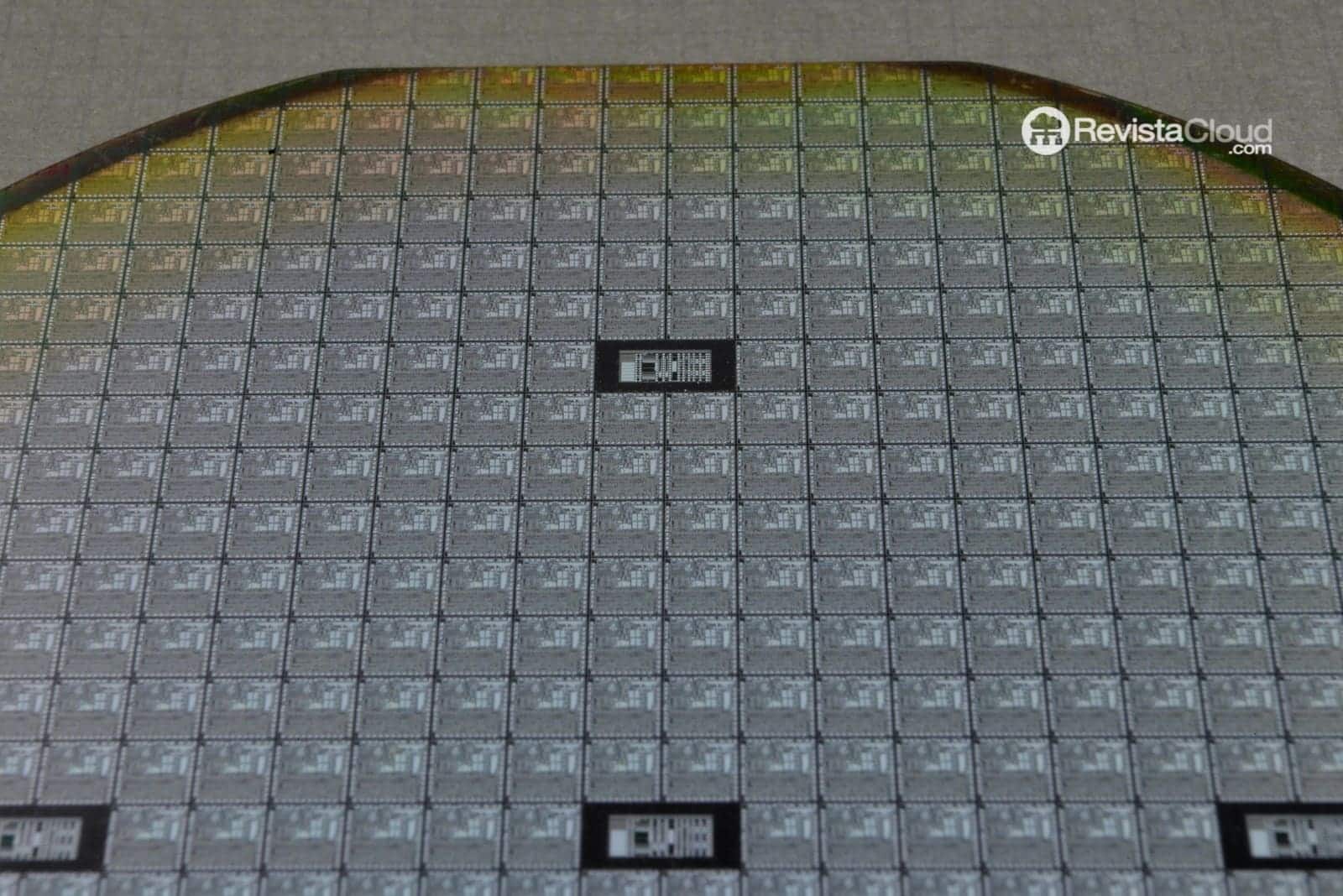
In the semiconductor industry, this isn’t an absolute rarity. When a wafer is manufactured, not all chips perform at the same level. Some dies meet the specifications for the most powerful models, while others are sold as lower-tier versions following a standard binning process. In a normal market, a portion of this lower-expectation output might have limited commercial viability. In a market with fierce CPU demand, the threshold for “sellable” shifts.
This seems to be exactly what’s happening now. Tom’s Hardware suggests that the demand intensity is prompting customers to purchase even processors that previously would have fallen outside the most desired configurations. It’s not necessarily “defective chips” in the colloquial sense but rather pieces that do not meet the bar for a premium SKU, yet can be sold as lower-tier versions at a discount. The difference now is that the market is absorbing this stock much more easily than one or two years ago.
Meanwhile, Intel has publicly acknowledged something more general but highly relevant: demand exceeds supply. In its earnings presentation, CFO David Zinsner mentioned “unprecedented demand for silicon” and the need to continue optimizing the manufacturing network to increase supply. The company also anticipates revenue for Q2 of between $13.8 billion and $14.8 billion, with a non-GAAP gross margin of 39%, indicating that supply chain tensions are not easing immediately.
AI is restoring CPU prominence
The context matters. Over recent years, discussions about AI infrastructure have been dominated by GPUs, but the market is rediscovering the importance of CPUs in edge, inference, and complex workload orchestration environments. Intel has clearly articulated this in its results, linking the strong quarter to the role of the CPU in the AI era. It also highlighted milestones such as selecting Xeon 6 as the host CPU for NVIDIA DGX Rubin NVL8 systems, along with multiple industry agreements related to AI infrastructure.
This pressure has been particularly noticeable in Intel’s Data Center and AI division, which increased its revenue to $5.1 billion, a 22% year-over-year rise, with an operating margin of 30.5% and an operating profit of $1.5 billion. This is one of the most significant data points of the quarter because it confirms that the data center CPU business is gaining much more traction than expected, partly due to hyper-scale expansion and partly due to new AI-related demand.
The client segment also holds up better than expected in a tense environment characterized by memory and storage pressures. The Client Computing Group posted revenue of $7.7 billion, slightly above the previous year, and Zinsner admitted during the quarter that even with increased production, demand continues to outstrip supply. This imbalance helps explain why the market is willing to accept a broader range of processors and why Intel can monetize products that in a weaker cycle might have been less successful.
Improving margins doesn’t always mean better manufacturing
It’s important to exercise caution here. An improved margin doesn’t necessarily mean all manufacturing issues are resolved. In fact, Intel continues to report significant losses at Intel Foundry, which generated $5.4 billion in revenue but also incurred operating losses close to $2.4 billion during the quarter. The company also recognizes risks related to yields, capacity, and demand in advanced nodes like 18A and 14A.
Therefore, the sale of lower-bin expectation chips shouldn’t be viewed as an industrial revolution or proof that Intel has suddenly transformed its manufacturing efficiency. Rather, it reflects an extremely strained market where every available unit has greater economic value. In other words, the margin improvement is driven not only by increased or improved production but also by the market’s willingness to buy virtually everything that comes out of their fabs. This is a strong indicator of demand, but it doesn’t necessarily mean business normalization in manufacturing.
The case also delivers a broader message for the industry. If customers are more readily accepting lower-bin CPUs, it’s because AI infrastructure is consuming capacity at a rate that supply chains were not prepared for. The consequences include price pressure, availability tensions, and a temporary boost in revenues for manufacturers able to extract value from nearly all their production. Intel has benefited this time, but overall, it describes a market hungry for CPUs.
Frequently Asked Questions
Has Intel officially confirmed selling chips it would have previously discarded?
Intel did not state it explicitly in its official earnings report. This interpretation comes from information published by Tom’s Hardware, based on what analyst Ben Bajarin said he clarified with Intel’s investor relations team.
What does it mean when a processor is sold with lower binning?
It means that a chip which doesn’t meet the specifications for a high-end tier can be classified and sold as a lower SKU, with fewer features or at a lower price, instead of being completely discarded.
Why is there such high demand for CPUs in 2026?
Intel attributes this pressure to the growing role of CPUs in the AI era and to unprecedented silicon demand. The expansion of the Data Center and AI division reinforces this view.
Do Intel’s strong margins indicate its manufacturing business is now healthy?
Not necessarily. Although the quarter outperformed expectations in revenue and gross margin, Intel Foundry continues to record high operating losses, and the company maintains open risks related to yields, capacity, and advanced nodes.
