
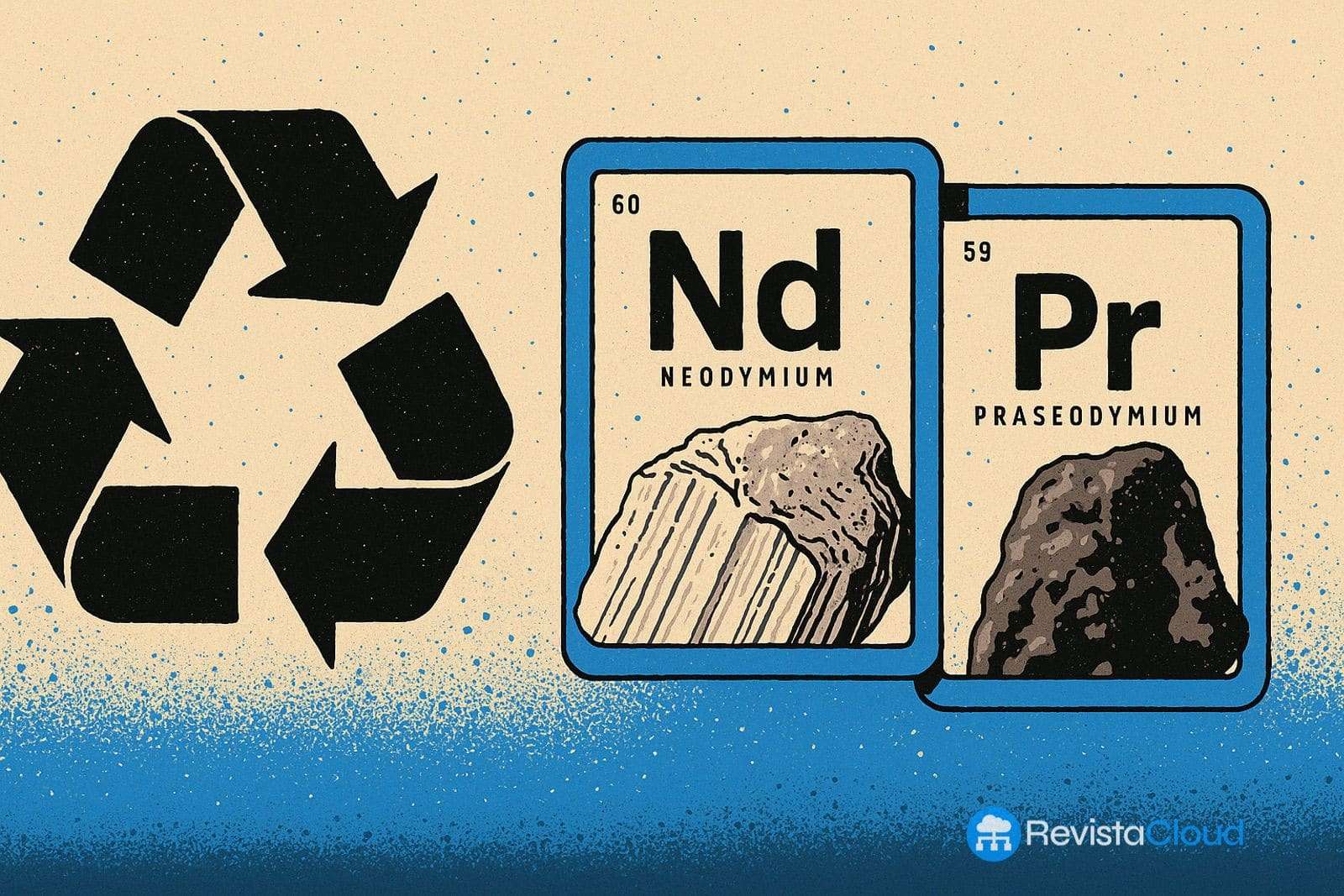
China has once again prioritized industrial security within its technological strategy. The country’s authorities are intensifying surveillance and sanctions on information leaks in sectors considered critical, with particular focus on rare earth elements, semiconductors, and digital data. This move reinforces the idea that Beijing no longer views these breaches solely as corporate violations but as a matter of national security.
The most prominent example of this new approach is a case involving an executive from a rare earth company, who, according to Chinese media cited by Digitimes and Global Times, was sentenced to 11 years and six months in prison and had assets confiscated for providing classified information to foreign parties. The political message is clear: for China, safeguarding the supply chain of strategic materials and sensitive technologies has become a matter of state priority.
An exemplary punishment in a strategic sector
Information reported by Chinese outlets and picked up by specialized press indicates that a foreign non-ferrous metals company used local employees to approach the deputy general manager of a Chinese rare earths firm with financial incentives. Even knowing he possessed state secrets, the executive allegedly provided seven categories of classified information, including reserves, volumes, and prices, in exchange for money. The outcome was a sentence of 11.5 years in prison and asset confiscation.
The context matters as much as the sentence. China considers rare earths a strategic resource for advanced manufacturing, defense, and semiconductors, and has been strengthening control over this market for years. In October 2025, Beijing expanded export controls on rare earths and related technologies, citing national security reasons and subjecting certain applications linked to the semiconductor sector to further review.
This tightening of regulations did not emerge out of nowhere. Reuters recalled that China had reinforced its dominance over the rare earth supply chain over the years and, in 2025, again expanded restrictions on elements, equipment, and processes related to their extraction and refining. AP pointed out that the Chinese government justified these measures as a way to prevent sensitive uses, including military applications, and to protect national security.
Semiconductors and data: the web tightens
The effort extends beyond critical minerals. According to the Chinese Ministry of State Security, cited by CCTV and reported by Global Times, there have also been technology leaks in semiconductors and massive data exfiltrations within the digital economy. In the chip domain, authorities mention cases of engineers who, after leaving their companies, shared process technologies and key plans with foreign organizations, which Beijing perceives as a direct threat to its industrial competitiveness.
Simultaneously, China is raising the rhetoric against industrial-scale data theft. One example cited by Chinese media describes a company that inserted unauthorized code into e-commerce systems to extract operational data on a large scale, stealing millions of records daily for profit. Authorities are not framing this as merely a commercial violation but as organized data exfiltration.
The official conclusion from Beijing is that protecting the industrial chain can no longer focus solely on one component. Authorities talk about a comprehensive framework covering hardware, software, and personnel, with stricter controls on chips, servers, industrial control systems, code audits, backdoor detection, and increased oversight of cross-border data flows.
A signal for the entire tech supply chain
What is happening in China fits within a broader evolution: global technological competition is no longer solely decided by chip design or AI model launches but also by each country’s ability to safeguard its material base, intellectual property, and data. In this context, rare earth elements are particularly sensitive. Reuters and AP last year reminded that China dominates much of the global rare earth processing and that the new export controls are part of a broader strategy of geopolitical economic pressure and technological defense.
Therefore, this offensive goes beyond a single legal case. The conviction of the rare earth executive serves as a public warning to employees, suppliers, partners, and companies across the supply chain. The message is that any leak involving critical materials, semiconductor processes, or vast volumes of data may no longer be viewed merely as a commercial dispute but as a threat to the country’s strategic interests.
Practically, this translates into a tougher environment for companies operating in China or handling sensitive information related to critical minerals, chip design, or data platforms. It also signals increased compliance checks, internal monitoring, and regulatory pressures in sectors where the line between trade secrets and national security once appeared more blurred. Now, that line is rapidly narrowing in China.
Frequently Asked Questions
What sentence was handed down in the Chinese rare earth case?
According to Chinese media cited by Digitimes and Global Times, the involved executive was sentenced to 11 years and six months in prison and the confiscation of assets for providing classified information to foreign entities.
Why is China tightening these investigations?
Because the Chinese government considers the security of industrial supply chains as directly impacting the country’s economic security and technological development.
Does this only concern rare earths?
No. Chinese authorities are also focusing on semiconductors and illegal data extraction within the digital economy.
Is this related to the export controls on rare earths?
Yes. China expanded controls over rare earths and related technologies in 2025, citing national security concerns and tightening reviews on certain uses linked to defense and semiconductors.
via: digitimes
