
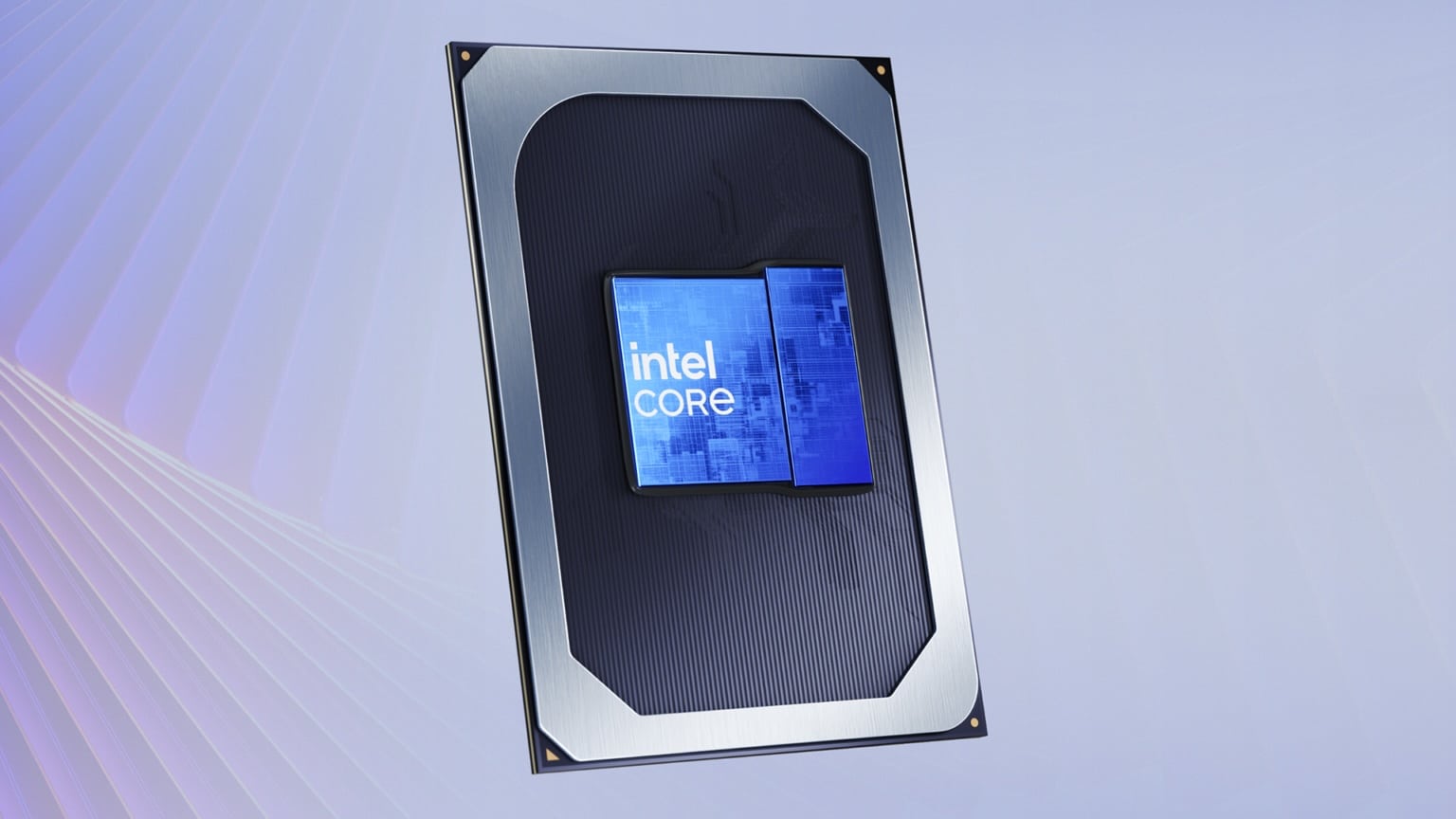
Intel has announced its new Intel Core Series 3, a family of mobile processors aimed at bringing some of the capabilities of its latest architectures to more affordable devices, commercial laptops, small businesses, educational centers, and basic edge devices. The company positions them as an option to upgrade older computers without necessarily entering the premium AI PC tiers.
The launch comes at a particularly sensitive time for the PC market. After several years of modest upgrades, many households, small businesses, and educational institutions still use equipment that is five or more years old. Intel seeks to capitalize on this refresh cycle with a proposal that offers better efficiency, modern connectivity, and integrated AI acceleration, though with performance clearly below its more advanced Core Ultra ranges.
AI and efficiency for everyday computing
According to Intel, the new Core Series 3 chips are built on the Intel 18A process node, a key component of their industrial strategy, and are based on the foundations of the Core Ultra Series 3 family. They are presented as “AI-ready” processors for budget-conscious buyers, with up to 40 TOPS of platform-level AI performance, support for Thunderbolt 4, Wi-Fi 7, and Bluetooth 6.
The goal isn’t to compete with the most powerful laptops for advanced creation, gaming, or workstation tasks, but to raise the level of everyday devices. Intel claims improvements of up to 47% in single-thread performance, up to 41% in multi-threaded performance, and up to 2.8 times more AI performance on GPU compared to a five-year-old PC based on a Core i7-1185G7. As always with such figures, these come from internal tests and specific configurations, so they should be viewed as a generational improvement benchmark rather than a guarantee for all commercial devices.
Compared to the previous generation Intel Core 7 150U, the company promises up to 2.1 times more performance in creation and productivity tasks, up to 64% lower processor power consumption in certain scenarios, and up to 2.7 times more AI performance on GPU. The focus is on real-world uses such as productivity, browsing, video calls, light editing, AI applications, and battery life for the whole day.
| Feature | Intel Core Series 3 |
|---|---|
| Main segment | Affordable laptops, commercial devices, and basic edge |
| Manufacturing process | Intel 18A |
| AI performance | Up to 40 TOPS platform performance |
| Connectivity | Up to 2 Thunderbolt 4, Wi-Fi 7, and Bluetooth 6 |
| Performance improvement over 5-year-old PC | Up to 47% single-thread, 41% multi-thread, and 2.8x AI in GPU |
| Availability in consumer and business | Starting April 16, 2026, according to OEMs |
| Availability in edge | From Q2 2026 |
| Expected designs | Over 70 designs from partners |
Over 70 designs and a volume-focused strategy
Intel guarantees that there will be more than 70 designs based on Core Series 3 in the coming months. Among the manufacturers mentioned are Acer, ASUS, HP, Honor, Lenovo, MSI, Samsung, Tecno, Infinix, Wiko, Colorful, Hasee, Haier, Mechrevo, and Positivo, though specific availability will depend on each market and manufacturer.
Some announced models include the Acer Aspire Go 14, 15, and 16, several ASUS Vivobook models, the HP Omnibook 5 14, Honor’s MagicBook X14 and X15, MSI’s Modern series, and upcoming Lenovo models like ThinkBook, ThinkPad E, IdeaPad Slim, and IdeaCentre AIO. Samsung also plans to release the Galaxy Book 6.
This ecosystem approach is significant because Intel isn’t just competing on the chip itself but on scale. In the entry-level and mid-range segments, success depends on both performance and the variety of designs, pricing, availability, and manufacturer trust. If Core Series 3 devices arrive as truly affordable laptops with good battery life and modern connectivity, they could become an attractive option for widespread upgrades in education, SMBs, and government fleets.
Edge, robotics, and point-of-sale applications
Intel also aims for this family to have a presence beyond laptops. The company mentions uses in robotics, smart buildings, point-of-sale terminals, smart measurement, and other edge deployments requiring a balance between power consumption, cost, reliability, and lightweight AI workloads.
In this context, Intel compares the Core 7 350 with NVIDIA Jetson Orin Nano, stating it offers up to 1.5 times more object detection performance, up to 1.9 times better image classification, and up to 2.2 times better video analysis, based on its internal tests. This is a relevant comparison since NVIDIA has gained significant traction in edge inference, computer vision, and lightweight robotics. Intel emphasizes that x86 architecture still has a role in this market, especially when enterprise software compatibility and fleet management are crucial alongside raw performance.
A strategic move for Intel 18A
This launch also offers a strategic insight for Intel. Bringing the 18A node to a volume-oriented family demonstrates that their manufacturing technology isn’t limited to high-end or showcase products. Intel needs 18A to be seen as a viable node for real products, with commercial scale and adoption by major manufacturers.
In this sense, the Core Series 3 isn’t just another update for budget laptops. It’s also part of Intel’s industrial recovery and their effort to regain credibility in advanced manufacturing. The chips are presented as modern, efficient, AI-capable processors suited for daily use, but with a value proposition tailored to segments where price remains a key factor.
The challenge will be in execution. The low- and mid-range PC market is highly competitive, with AMD continuing to push efficient processors, and laptop makers needing to balance cost, battery life, and user experience. Intel must prove that their claims regarding autonomy, AI, and performance translate into attractive devices, not just impressive numbers in the lab.
FAQs
What are the Intel Core Series 3?
They are new Intel mobile processors targeting affordable laptops, commercial devices, small businesses, education, and basic edge gadgets. They aim to bring modern connectivity, efficiency, and AI capabilities to more budget-friendly systems.
Are the Intel Core Series 3 processors AI PC-ready?
Intel describes them as “AI-ready,” with up to 40 TOPS of platform-level AI performance. They are not intended to be the most advanced local AI solutions but provide integrated AI acceleration for everyday use.
What improvements do they offer over older laptops?
According to Intel, they can deliver up to a 47% increase in single-thread performance, a 41% boost in multi-threaded tasks, and up to 2.8 times more AI performance on GPU, depending on the specific configuration and tests.
When will the first laptops with Intel Core Series 3 be available?
Intel indicates that consumer and commercial systems will start availability from April 16, 2026, via OEM partners, while edge devices will arrive from the second quarter of 2026.
via: newsroom.intel
