
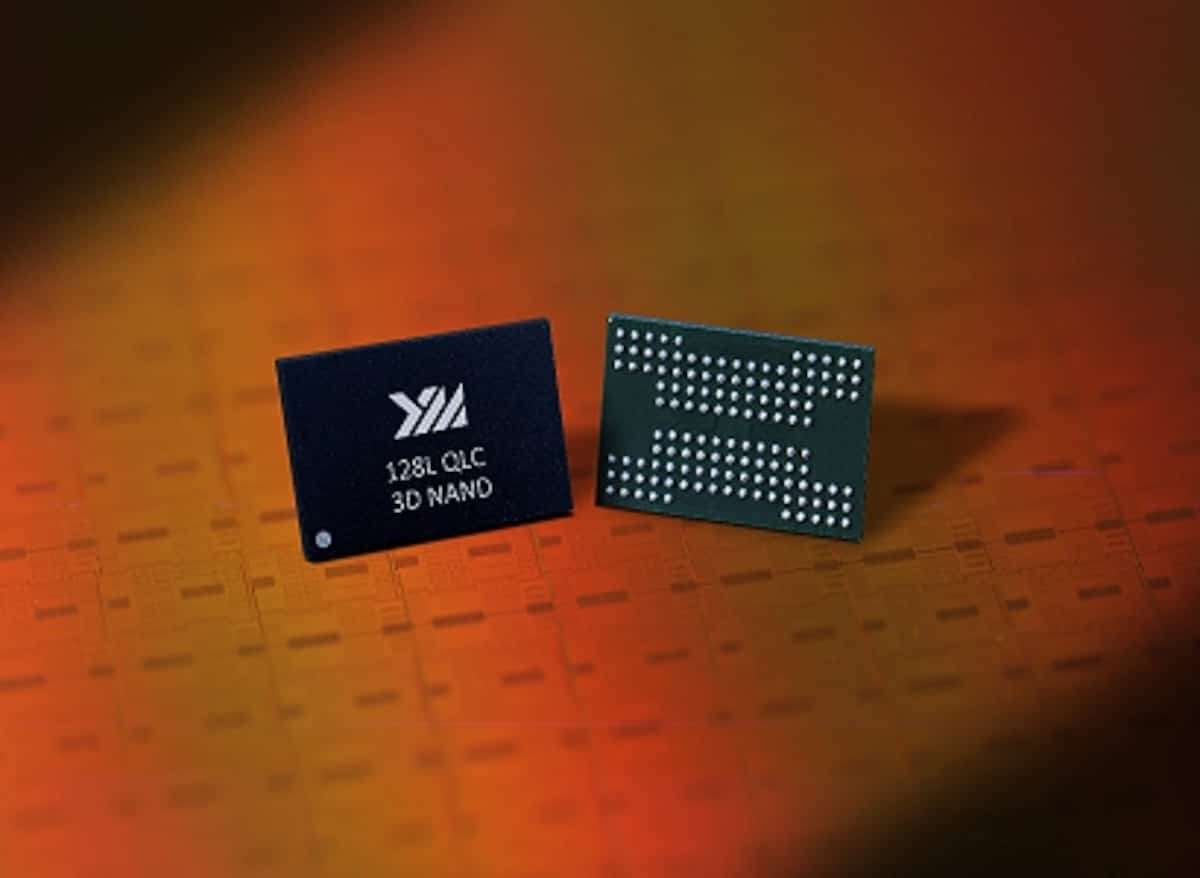
China aims to stop being just a major consumer of memory and become a much more self-sufficient manufacturing powerhouse. The latest move by YMTC, China’s largest NAND Flash memory manufacturer, is precisely in that direction. The company plans to build two new factories in addition to a third plant that is already well advanced and is expected to start operations by late 2026. If all three projects come online as planned, YMTC’s production capacity would more than double its current output. This information has been disclosed through sources familiar with the plan cited by Reuters, while the company has not publicly responded to requests for comment.
The scale of the project helps to understand why this news is so significant. According to those sources, each of the three new facilities could reach 100,000 wafers per month when fully operational. Currently, YMTC operates two factories with a combined capacity of around 200,000 wafers per month. The third plant, also located in Wuhan, is initially expected to produce about 50,000 wafers per month in 2027. Beyond the industrial magnitude, what’s important is the timing: this expansion comes amidst intense US regulatory pressure on the Chinese semiconductor industry and in a NAND market still highly affected by demand and episodic shortages.
Much more than a response to shortages
The immediate assumption might be that more factories simply mean more available memory, easing a tight global market. But the reality is more complex. TrendForce warned at the end of 2025 that severe NAND shortages were driving price increases, panic buying, and high volatility in the spot market. In that context, increased capacity at YMTC could help ease some supply pressures, especially in China and specific segments, but reducing a global shortage isn’t something only one company or industry expansion can achieve.
Where there seems to be a clearer signal is in technological independence. YMTC is expanding capacity not in a comfortable environment but amid Washington’s efforts to further restrict China’s access to chip manufacturing equipment and technologies. Regulatory pressures are not new. The US Department of Commerce’s Bureau of Industry and Security added YMTC to the Entity List in December 2022, within a package of restrictions tightening access to US-export-controlled goods, software, and technology.
This regulatory push has now been complemented by a new political offensive. In April 2026, US Republican and Democratic lawmakers introduced the so-called MATCH Act, a proposal aimed at harmonizing and tightening export controls on semiconductor manufacturing equipment, closing loopholes, and preventing China from accessing critical tools through third countries or associated services. Both the House Select Committee on China and the Senate Foreign Relations Committee have presented this legislation as a way to close “loopholes” and curb Beijing’s ability to strengthen its chip industry.
The third Wuhan plant reflects a shift toward Chinese suppliers
In this context, the most revealing aspect of YMTC’s plan is not just the number of factories, but the origin of the equipment. Reuters reports that over 50% of machinery in the third plant, which is already in the installation phase, comes from Chinese suppliers—including critical equipment for vertical stacking of layers, a central technology in the manufacturing of 3D NAND memory. Among the named suppliers is AMEC, one of China’s leading firms in semiconductor equipment.
This detail aligns with a broader trend: sanctions have not halted China’s progress but have accelerated the country’s efforts to replace foreign components, tools, and processes with domestic alternatives. It doesn’t mean China has solved all its bottlenecks; dependence on foreign suppliers remains in several sensitive areas. However, it indicates that companies like YMTC are reconfiguring their supply chains to depend less on Western sources and better withstand future restrictions. This is probably the core strategic significance of this news.
Xtacking 4.0 and the ambition to gain market share
The manufacturing expansion also isn’t happening in a technological vacuum. TechInsights notes that Xtacking 4.0 introduces significant improvements in density, speed, energy efficiency, and the maturity of the wafer-to-wafer hybrid bonding technology that YMTC has been developing for years in its 3D NAND memory. This evolution helps explain why the company is no longer perceived solely as a protected domestic player, but as a serious competitor with a robust technical proposition.
Market figures support this trend. According to a UBS report cited by Reuters, YMTC ended 2025 with an 11.8% share of the global NAND Flash market, and could surpass 14% by early 2027. Reuters adds that this share already places YMTC alongside SanDisk and relatively close to Micron, Kioxia, and SK Hynix, although it remains behind Samsung. While the gap is still notable, it clearly demonstrates that YMTC is no longer a peripheral entity in the sector.
Further, sources cited by Reuters indicate that the new plants will not solely focus on NAND. Part of their capacity might also be reserved for DRAM, depending on YMTC’s internal development progress. The company has reportedly sent LPDDR samples to customers and is awaiting feedback before deciding on production pace. If confirmed, this would signify not just capacity growth but a broader market ambition in memory technology.
An industrial story with geopolitical implications
Therefore, this story resonates well beyond Wuhan. If YMTC completes this expansion and integrates an increasing proportion of domestically produced equipment, the outcome will not just be more memory production. It would also demonstrate a resilient industrial response to an environment of escalating sanctions, controls, and geopolitical competition. In other words: more than a miraculous fix for global memory shortages, YMTC’s moves highlight China’s intent to shift from a defensive stance to aggressive growth and greater technological self-reliance. This is likely the aspect that concerns Washington most and that markets will monitor most closely over the next 18 months.
Frequently Asked Questions
How many new factories does YMTC plan to launch?
YMTC is planning two additional new factories and already has a third, advanced plant expected to start operations by late 2026. If all three come online, its total capacity would more than double compared to the current level.
Where will YMTC’s most advanced new plant be located?
The third factory is in Wuhan, the same city as YMTC’s existing plants. Reuters reports that the building is already completed and equipment is being installed.
Can YMTC’s expansion alleviate the global NAND memory shortage?
It could help improve supply, especially if market tensions persist, but alone it doesn’t guarantee an end to the shortage. TrendForce has been warning of significant imbalances between supply and demand in NAND.
Why is this expansion so important for China?
Because it strengthens the country’s technological self-sufficiency in a strategic sector and occurs amid increased export restrictions from the US. Additionally, part of the equipment already in the new plant comes from Chinese suppliers, showing progress in technological substitution.
