
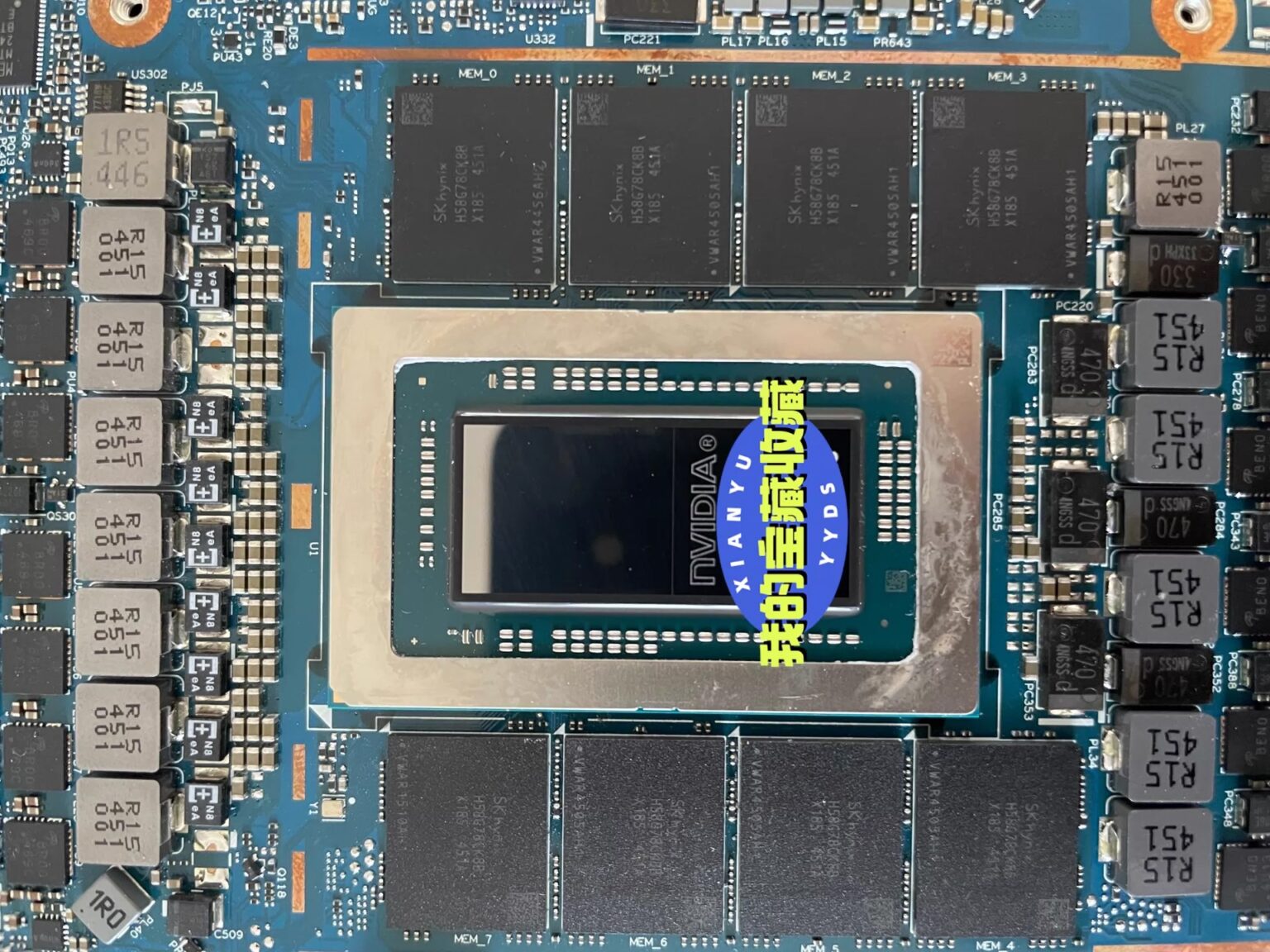
The leak of a supposed engineering motherboard with the NVIDIA N1X has reignited an idea that’s been floating around the industry for months: NVIDIA isn’t entering Windows on Arm to make “another AI laptop,” but rather to target a much more ambitious category—devices with large amounts of unified memory, integrated high-end GPU, and real capability to handle heavy local AI workloads. The images show a design with 128 GB of SK hynix LPDDR5X at 8,533 MT/s, 2 M.2 2240 slots, built-in connectivity, and a form factor clearly indicative of early validation. NVIDIA hasn’t officially confirmed this, so everything related to this board should be considered a leak, not a final product.
However, the strategic direction of the project is much better supported than it was a year ago. Reuters reported in 2023 that NVIDIA was developing Arm CPUs for Windows PCs, and in 2024 added that the project had support from MediaTek. Additionally, Jensen Huang will return to Computex 2026 and has promised “many announcements,” though he hasn’t confirmed whether the N1X will be revealed there.
The key clue isn’t the chip: it’s that 128 GB
The most revealing aspect of the leak isn’t just that NVIDIA has real hardware in validation, but the amount of memory and its speed around the SoC. In the current Windows on Arm landscape, most devices with Snapdragon X Elite or X Plus use 16, 32, or 64 GB of LPDDR5x, with an NPU of 45 TOPS, and a profile clearly geared towards productivity, battery life, and some local AI. The Microsoft Surface Laptop, a major benchmark of this generation, maxes out at up to 64 GB of LPDDR5x.
If the N1X truly aims for 128 GB of LPDDR5X-8533 based on the first leaked hardware, then its closest comparison wouldn’t be a Surface Laptop or a typical Copilot+ portable, but instead a much more demanding category: devices like the MacBook Pro with M5 Max or lightweight workstations featuring Ryzen AI Max+ 395, which are already beginning to use large amounts of unified memory for local AI, video, graphics, and mixed CPU/GPU workloads.
Honest comparison: what can we realistically compare to the N1X?
Since NVIDIA hasn’t officially unveiled the N1X, we can’t perform a definitive performance comparison. What we can do is create a technology positioning table with confirmed data from current devices and what we truly know about the leaked N1X. A clear pattern emerges: in terms of memory, concept, and potential purpose, the N1X resembles more high-end systems with aggressive unified memory than current mainstream Windows on Arm laptops.
Simple, real comparison: Leaked N1X vs. current rivals
| Platform / Device | CPU / SoC | Integrated GPU | Max Memory / Type | Bandwidth / Related Data | Status |
|---|---|---|---|---|---|
| NVIDIA N1X (leaked board) | Unannounced Arm SoC | Unconfirmed; leaks suggest Blackwell iGPU | 128 GB LPDDR5X-8533 | Not official; leak indicates 8,533 MT/s | Leak / engineering board |
| MacBook Pro 14/16 with M5 Max | Apple M5 Max, 18-core CPU | Up to 40-core GPU | Up to 128 GB unified memory | Up to 614 GB/s | Official product on sale |
| HP ZBook Ultra G1a 14 | AMD Ryzen AI Max+ PRO 395, 16 cores / 32 threads | Radeon 8060S integrated | Up to 128 GB unified LPDDR5X-8533 | HP mentions up to 8,000 MT/s on commercial pages and 8,533 in documentation/marketing | Official product announced / available per market |
| ASUS ROG Flow Z13 (2025) | AMD Ryzen AI Max+ 395, 16 cores / 32 threads | Radeon 8060S integrated | Up to 128 GB LPDDR5X-8000 | ASUS emphasizes four-channel unified memory | Official product |
| Surface Laptop 13.8/15 with Snapdragon X Elite | Snapdragon X Elite, up to 12 cores | Adreno integrated | Up to 64 GB LPDDR5x | Qualcomm cites platform bandwidth at 135 GB/s | Official product |
What this table truly reveals
This comparison sends a clear message: if the leak is real, NVIDIA isn’t entering from below, but from above. It doesn’t seem like the platform for a lightweight ultraportable competing on battery life or Office tasks, but rather the foundation for something much closer to a device aimed at developers, content creators, and users wanting to run large models or hybrid workloads locally. The most meaningful benchmark then isn’t so much the Surface Laptop, but the MacBook Pro M5 Max and the new Ryzen AI Max systems, which are already pushing the concept of “massive unified memory + powerful integrated GPU.”
The MacBook Pro maintains a significant advantage on paper, especially in memory bandwidth with the M5 Max and up to 614 GB/s, a challenging feat to match. But HP and ASUS have demonstrated that the Windows world can also move towards 128 GB unified memory configurations with Ryzen AI Max. If NVIDIA manages to include a serious Blackwell-integrated GPU and a mature Windows on Arm experience, this could truly open a new category of portable: not just another Copilot+ PC, but an AI book with workstation ambitions.
The big question remains: Windows on Arm
And that’s the key factor that still prevents overly optimistic conclusions. NVIDIA might arrive with a very powerful platform, but success won’t depend solely on hardware. It will also hinge on three unresolved factors: the maturity of Windows on Arm, real support for professional applications, and the thermal/energy behavior of a SoC that—according to some rumors—could draw significantly more power than a traditional Arm laptop. None of this has been officially confirmed yet.
In summary: comparison is possible, but honestly. The leaked N1X doesn’t appear to be a direct rival to a standard Snapdragon-based laptop. Conceptually—and with caution, given it’s still a leak—it seems to aim higher: toward where the MacBook Pro M5 Max and latest Ryzen AI Max devices with large unified memory live. If NVIDIA truly reaches that space, the premium AI-enabled portable market will become much more interesting in the second half of 2026.
Frequently Asked Questions
Is the NVIDIA N1X official yet?
No. What has been seen is a supposed leaked engineering motherboard. NVIDIA has not officially announced the N1X or confirmed its final specifications.
What current portable device is it conceptually closest to?
In terms of unified memory and local AI ambitions, it’s more similar to systems like the MacBook Pro with M5 Max or portables with Ryzen AI Max+ 395 than a conventional Copilot+ PC with Snapdragon X Elite.
Are there current Windows laptops with 128 GB unified memory?
Yes. HP and ASUS already offer systems with Ryzen AI Max+ 395 and configurations up to 128 GB of unified memory.
Will it be unveiled at Computex 2026?
That’s not confirmed. The only official info is that Jensen Huang will attend Computex 2026 and NVIDIA has several announcements planned.
Source: Nvidia N1X Leak
