
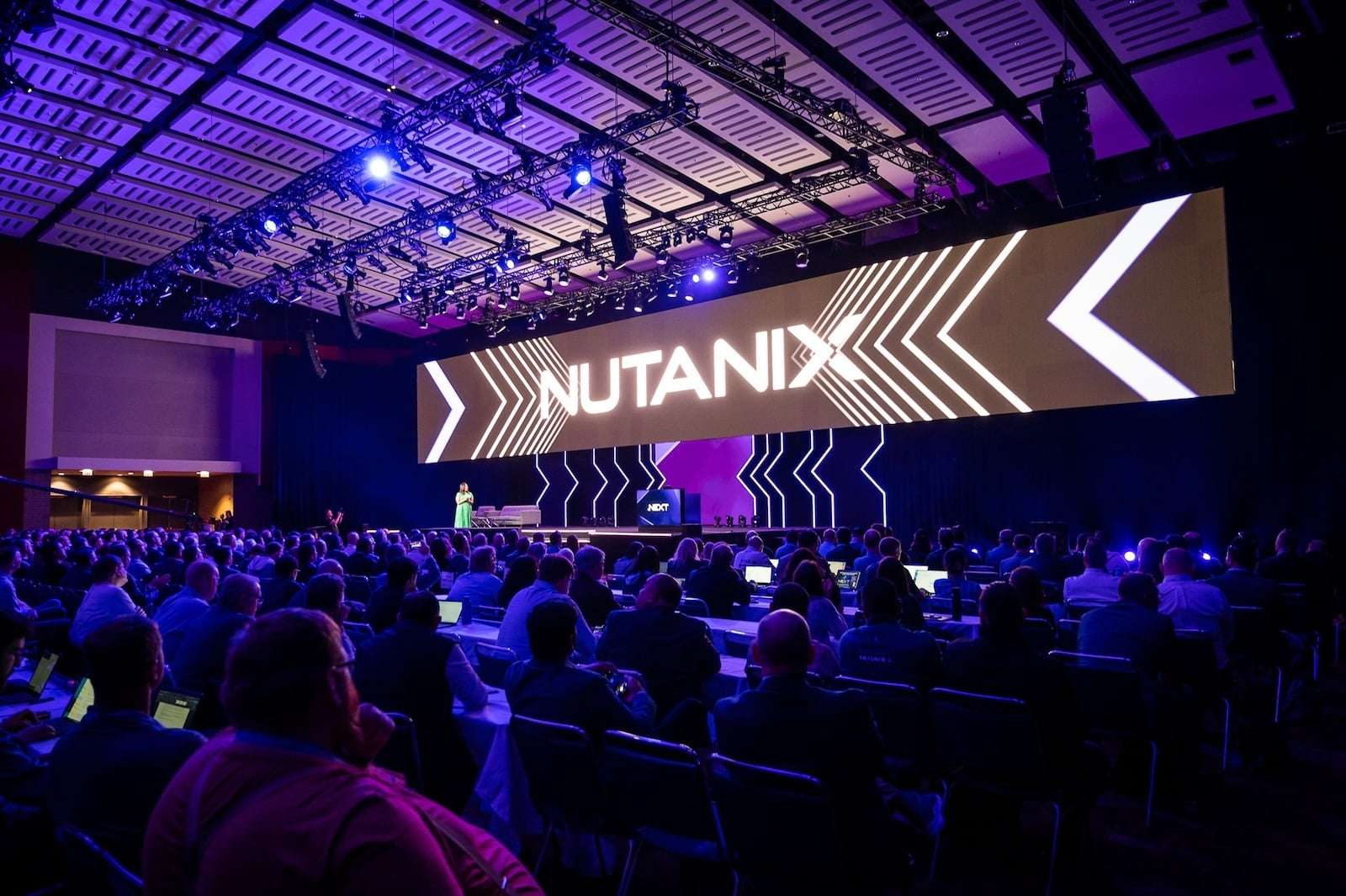
Nutanix leveraged their .NEXT 2026 conference to send a very clear message to the market: they want to position themselves as a comprehensive platform for the new phase of enterprise infrastructure, a stage where simply virtualizing machines is no longer enough. Instead, it’s essential to combine containers, agent-based AI, data sovereignty, advanced storage, and the ability to move workloads across clouds, data centers, and highly regulated environments. On April 7th, the company announced new capabilities in Nutanix Cloud Platform, with a special focus on AI, Kubernetes on bare metal, multi-site management, and expanded compatibility with third-party hardware and storage.
This move comes at a particularly sensitive time for the market. Many companies are still reevaluating their virtualization strategies following changes within the VMware ecosystem, while simultaneously preparing infrastructure for AI workloads and modern applications without relying solely on one cloud provider or facing increasingly tight hardware procurement cycles. Nutanix aims to occupy this space with a dual argument: greater flexibility to reuse existing infrastructure and more options for deploying workloads in hybrid and sovereign environments.
A bolder platform for AI, Kubernetes, and storage
The most visible part of the announcement is Nutanix Agentic AI, a full-stack platform to build and operate AI applications on Nutanix Cloud Platform. The company notes that this solution was first previewed during NVIDIA GTC 2026 and is now in early access, with general availability expected in the second half of 2026. According to Nutanix, the offering will combine a high-performance virtualization base for AI infrastructure with integrated compute, storage, networking, and Kubernetes services.
Alongside this, NKP Metal emerges as another key innovation. This extension of Nutanix Kubernetes Platform allows deploying Kubernetes directly on bare-metal infrastructure, which is especially important for edge workloads, GPU-dense environments, and AI training, where the overhead from intermediate layers can be problematic. Nutanix has launched this in early access, with general availability also planned for the second half of 2026.
For storage, Nutanix Unified Storage 5.3 is now available and is positioned as an enhanced layer for “AI Factories.” The company highlights new features such as smart tiering to Google Cloud and OVHcloud S3, multi-tenant object storage scaling, and quotas. Later in 2026, the company also promises accelerated RDMA support for S3-compatible storage to boost performance on large training datasets. Simultaneously, Data Lens 2.0 is available and can run entirely on-premises, even in isolated environments, offering ransomware analytics, data auditing, and governance.
Nutanix also aims to serve clients caught in transition
Although the focus in the announcement is heavily on agent-based AI, the underlying business message is equally important. Nutanix recognizes that many organizations are seeking alternatives to modernize their virtualized environments without starting from scratch. Therefore, a significant part of the announcement revolves around expanded support for more servers, platforms, and migration pathways. The company boasts the “largest infrastructure support expansion in its history,” with integrations across Cisco, Dell, Fujitsu, HPE, Lenovo, and its own NX Platform, along with new partnerships with NetApp, Everpure, and others.
An especially practical aspect of this strategy is enabling the reuse of already purchased hardware. Nutanix emphasizes that NCP (Nutanix Cloud Platform) allows leveraging existing investments in servers and storage even amidst supply constraints. This is reinforced by announcements such as the new Foundation Central appliance to streamline Nutanix Cloud Infrastructure and AHV deployments, and the general availability of zero-copy migrations from VMware vSphere Virtual Volumes to AHV vDisks, designed to accelerate in-place conversions without data duplication.
This approach is no coincidence. Industry commentary — from channel media and cloud ecosystem analysts — has interpreted Nutanix’s .NEXT 2026 announcements as a clear attempt to strengthen its position against VMware and attract service providers and new cloud providers seeking a multi-tenant, more controllable infrastructure base for AI services. Supporting this, Service Provider Central, still in Early Access and scheduled for the second half of 2026, adds multi-tenancy capabilities for Nutanix partners.
More sovereignty, control, and unified management
An essential aspect of the announcement is operational and data sovereignty. Nutanix is expanding Nutanix Cloud Clusters (NC2) into regions like AWS GovCloud, now available, and AWS European Sovereign Cloud, expected later this year. The company also previewed support for Hyperdisk and bare-metal C3 instances on Google Cloud in late 2026, aimed at enabling independent scaling of storage and the use of instances without local disks. The key message is clear: if a company needs to move workloads to the cloud due to latency, regulatory reasons, or simply a lack of hardware availability on-premises, Nutanix aims to make that transition seamless without forcing redesigns of applications.
Similarly, Nutanix Cloud Manager 2.0 is now available, built with a new architecture to manage large, distributed deployments across multiple Prism Central instances. Nutanix describes it as a solution for increasingly fragmented operations across clouds, data centers, and sovereign or isolated environments. It also includes Cost Governance for on-premises environments bundled within the same unified console, eliminating the need for separate SaaS applications.
All these developments underscore a broader vision: Nutanix seeks to position itself less as a specific HCI solution and more as an operational layer for the modern, distributed enterprise—one that needs to move VMs, containers, and AI workloads across various domains without losing visibility, control, or flexibility. Although ambitious, it’s important to recognize that many of these features are still in early access or scheduled for release in late 2026. There is real product today, but also a significant roadmap ahead.
Frequently Asked Questions
What exactly did Nutanix announce at .NEXT 2026?
Nutanix enhanced its Cloud Platform with new capabilities for agent-based AI, Kubernetes on bare metal, unified storage, multi-site management, multi-tenancy for providers, and more options for hybrid cloud sovereignty. Some features are already available, with others coming in the second half of 2026.
What is Nutanix Agentic AI?
It’s Nutanix’s new full-stack platform for building and running AI applications on its infrastructure. Announced at NVIDIA GTC 2026, it remains in early access, with general availability scheduled for the second half of 2026.
How does NKP Metal differ from traditional Kubernetes on Nutanix?
It allows deploying Kubernetes directly on bare-metal hardware, making it particularly suited for edge scenarios, GPU-intensive workloads, and AI training where performance and operational simplicity on physical hardware are critical. It is currently in early access, with general availability expected in late 2026.
Is Nutanix trying to attract customers dissatisfied with VMware?
While this isn’t explicitly stated, several announcements align clearly with such a strategy: zero-copy migrations from vSphere, expanding hardware partner ecosystem, and multi-tenancy solutions for providers seeking alternatives. Industry observers see this as a deliberate move in that direction.
via: nutanix
