
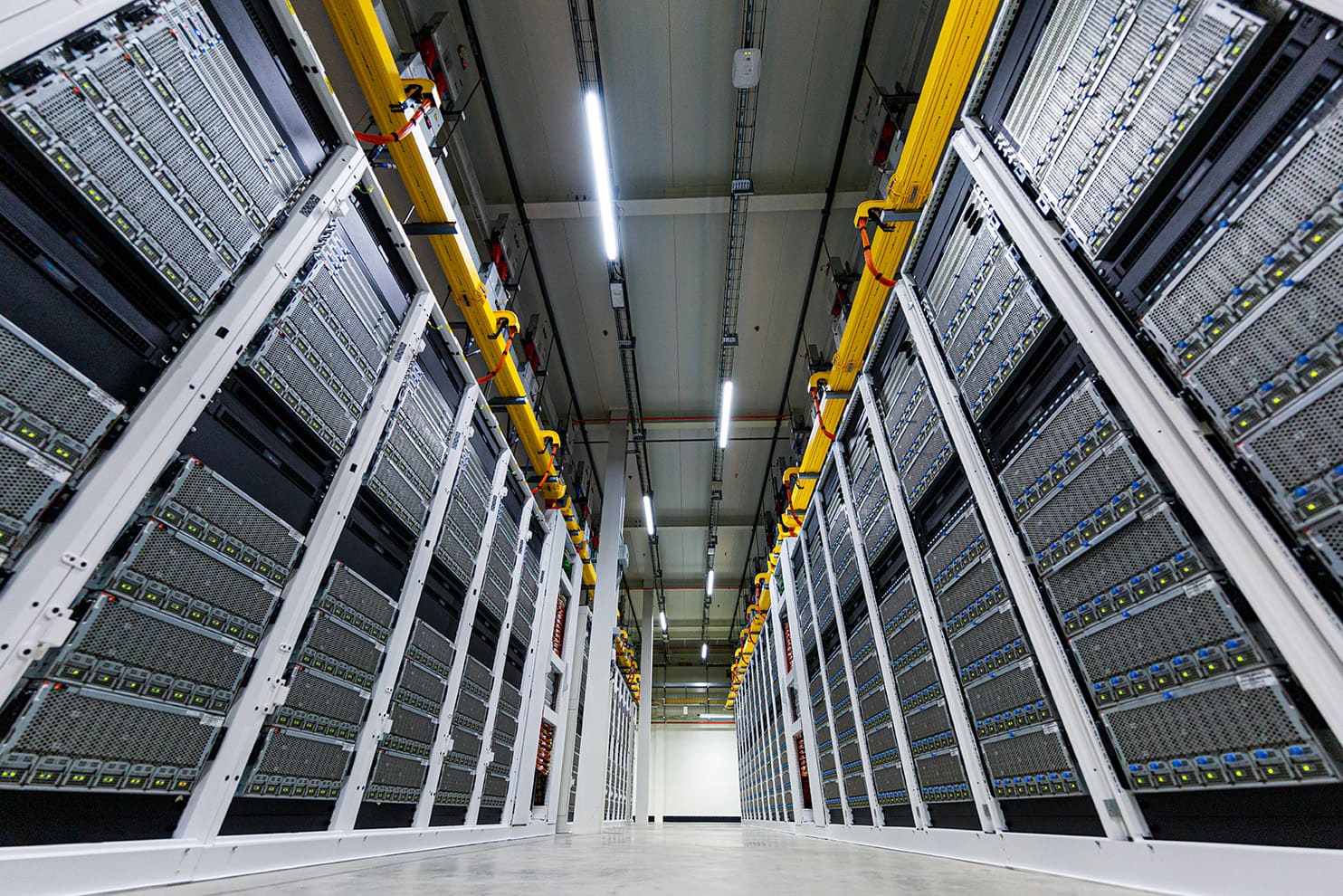
Mphasis and Flagstar Bank announced the completion of the first phase of a technology modernization program that, in just one year, enabled the U.S. bank to deploy a new data center and cloud infrastructure foundation to support its digital transformation. According to official documentation provided by Mphasis to the markets, the project has created a scalable technology platform aimed at enhancing operational resilience, improving performance, and preparing Flagstar for its next growth stage as a regional bank in the United States.
The most notable aspect of the project is the consolidation of six legacy data centers into two new next-generation data centers, a process Mphasis reports completing in approximately 12 months, an unusually short timeframe for such a large-scale banking operation. The first phase included designing, installing, configuring, and certifying those two new environments, as well as migrating hundreds of critical applications to the new platform without service interruptions, according to official figures and statements from the companies.
The need to simplify the infrastructure stemmed from Flagstar’s recent history. Mphasis explains that the bank had a complex technology footprint, partly due to several recent acquisitions, and needed to unify and modernize its core systems to support its evolution as a prominent regional entity. This approach aligns with Flagstar’s own corporate presentation, which describes it as one of the largest regional banks in the country, headquartered in Hicksville, New York, with $87.5 billion in assets, $61 billion in loans, $66 billion in deposits, and approximately 340 locations across ten states by the end of 2025.
Beyond the technical details, the operation is interesting as it reflects a growing trend in banking: modernization no longer just involves moving workloads to the cloud or renewing hardware, but also reconstructing the full architecture to gain agility, enhance disaster recovery, and facilitate future automation and AI layers. Flagstar has framed this progress within its S2 (Simple and Sophisticated) initiative, which, according to its leadership, aims to turn the technological architecture into a competitive advantage by offering a smoother, smarter, and more personalized customer experience.
For its part, Mphasis presented the project as an example of disciplined execution in an industry particularly sensitive to operational risk. The company emphasizes that regional banks are compelled to modernize legacy systems built over many years without ever compromising service continuity. In this case, the core message is that the new platform not only modernizes infrastructure but also improves disaster recovery capabilities and reinforces operational stability on which banking activities depend.
The market implications are noteworthy. For years, many financial institutions maintained legacy infrastructures out of prudence, regulation, or simply due to historical complexity. However, the pressure to respond faster to customers, integrate acquisitions, reduce technical debt, and unlock new digital capabilities is accelerating these transformations. In this context, the collaboration between Mphasis and Flagstar illustrates how infrastructure projects are regaining importance, now framed within the language of resilience, cloud, and continuous modernization. This interpretation is supported by the facts officially communicated by both companies, though the strategic assessment is a reasonable inference based on that information.
The most significant point is that this does not appear to be the final phase. Mphasis and Flagstar have confirmed that both organizations will now enter a second phase focused on modernizing applications and operations using Artificial Intelligence and next-generation technologies. In other words, infrastructure is no longer the ultimate goal but the foundation on which to build the bank’s next layer of transformation.
What exactly has been accomplished
| Element | Announced Result |
|---|---|
| Duration of the first phase | 1 year |
| Legacy data centers | 6 |
| New data centers | 2 | Scope | Design, installation, configuration, and certification |
| Application migration | Hundreds of critical applications |
| Service downtime | No downtime, according to Mphasis and Flagstar |
Frequently Asked Questions
What exactly did Mphasis and Flagstar announce?
They announced the completion of the first phase of a technology modernization program that enabled the deployment of a new data center and cloud platform for Flagstar Bank.
What was the most significant change in this phase?
The main milestone was the consolidation of six legacy data centers into two new modern data centers in approximately 12 months.
Were critical applications migrated without impacting service?
According to Mphasis, hundreds of critical applications were migrated to the new platform with zero downtime. This is the official statement from the company in the market announcement.
What is Flagstar Bank’s current size?
By the end of 2025, Flagstar Bank reported $87.5 billion in assets, $61 billion in loans, $66 billion in deposits, and approximately 340 locations across ten states.
What’s next after this first phase?
Mphasis and Flagstar have indicated that the next step will involve modernizing the bank’s applications and operations using AI and next-generation technologies.
