
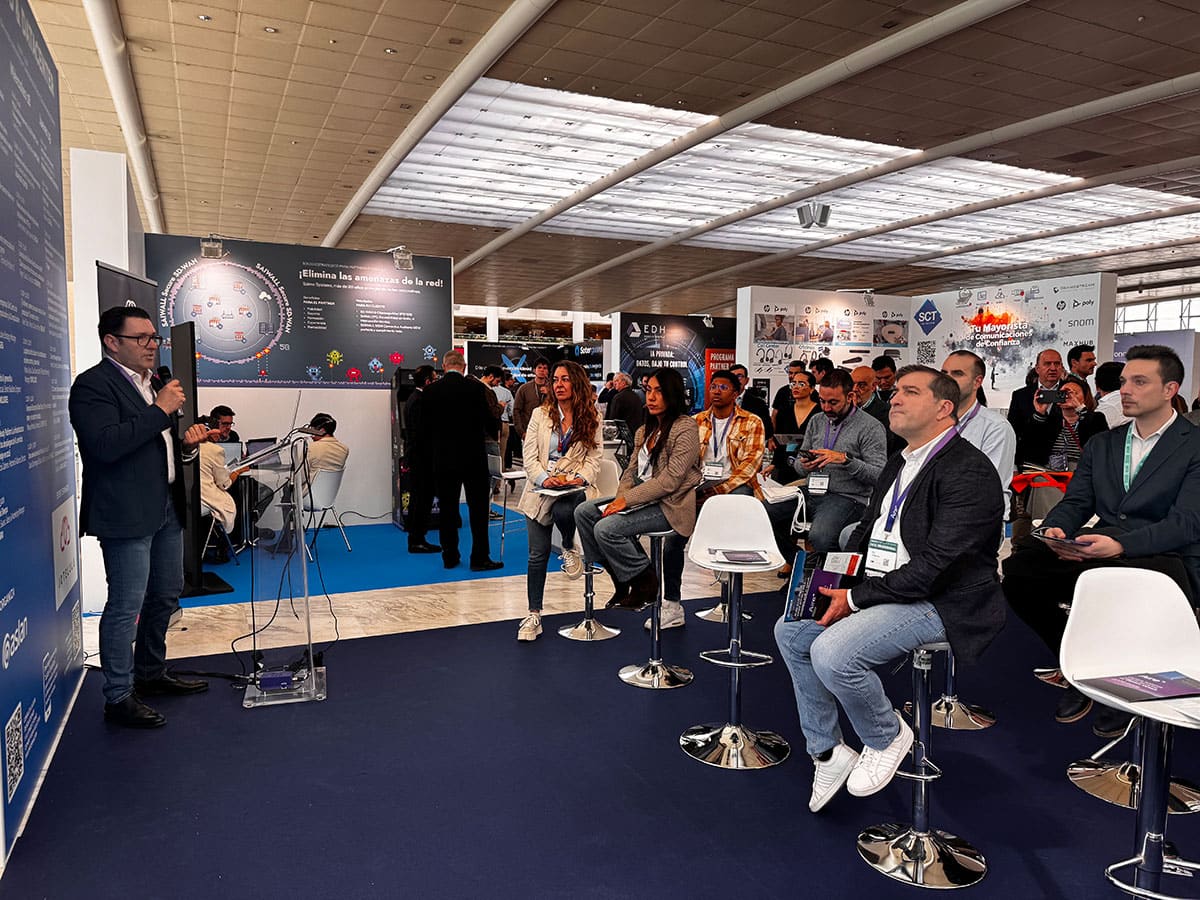
The public cloud is no longer debated solely in terms of scalability, agility, or access to advanced AI services. More and more companies are examining it from a much more uncomfortable perspective: the actual cost. This was precisely the focus of the presentation “FinOps or chaos: how to stop burning money on the public cloud”, in which Zigor Gaubeca, CIO of Aire, participated at ASLAN 2026, held in Madrid from March 17 to 19. The core message was clear: without financial discipline, visibility, and governance, the public cloud can become a constant source of inefficient spending and eroded margins.
This intervention aligns with a concern that is no longer marginal. For years, many organizations migrated workloads to hyperscalers attracted by elasticity, rapid deployment, and the ability to innovate without large initial investments. But as consumption grows, so do hidden costs, contractual complexity, and the difficulty of understanding which resources are truly being used and which are paid for out of inertia. In this context, FinOps ceases to be a buzzword and becomes a practical necessity: aligning technology, operations, and finance so that cloud doesn’t become a money leak.
One of the most striking data points shared by Aire during ASLAN was that 88% of the cloud market in the European Union is controlled by U.S. providers, according to data from IDC 2025 cited by the company. Beyond the commercial weight of these players, the key issue lies in the model: apparently competitive prices, yes, but with rate structures that may hide exit costs, traffic fees, or storage charges difficult to predict. Aire mentions, for example, exit fees of up to $0.09 per GB, a detail that might seem minor until a company needs to move large volumes of data off the platform. That’s where the so-called “surprise bill” emerges, one of the issues fueling current FinOps discussions.
When the cloud stops being convenient
The problem isn’t that public cloud is inherently bad. The problem is using it without governance. Many companies first discovered how easy it was to deploy resources; only later did they realize how hard it was to contain costs when those resources were over-provisioned, underutilized, or poorly labeled. Without fine-grained consumption control, technical teams tend to prioritize speed and availability, while the finance department faces mounting bills without clear traceability.
This is where FinOps makes sense. It’s not just about cutting costs but about understanding cloud costs almost in real-time, deciding which workloads truly need global infrastructure, and which should run in other environments, and preventing elasticity from becoming a permanent invitation to waste. That was precisely the approach Aire emphasized at ASLAN: rather than demonizing the public cloud, the goal is to govern it more intelligently.
Europe tightens rules and shifts the landscape
In addition to economic pressure, a regulatory factor is increasingly influential. The European Data Act comes into effect on September 12, 2025, representing a significant change in data access, usage, and portability. Among other things, it reinforces the idea that customers must be able to switch providers without being trapped by technical lock-ins or artificial penalties. For many European providers, this new framework could become a strategic opportunity against non-EU giants.
Alongside this, the European Commission presented in November 2025 a digital rules simplification package known informally as Digital Omnibus, aiming to reduce administrative burdens and streamline compliance. Brussels estimates these measures could save up to €5 billion in administrative costs by 2029. This context not only encourages companies to reassess their cloud providers but also gives more leverage to those supporting European infrastructure as a way to gain control, predictability, and lower legal exposure to third-country regulations.
Data sovereignty enters the financial equation
Aire’s intervention wasn’t limited to cost considerations. It also introduced a thesis that has gained momentum in Europe: the financial optimization of cloud can no longer be separated from digital sovereignty. Practically, this means that choosing a provider depends not only on price or service catalog but also on where the data resides, under what jurisdiction, and what risks the company assumes when working with infrastructures subject to non-EU regulations like the CLOUD Act in the United States.
In this vein, Aire positions itself as a European alternative with data hosted in Spanish and European centers, under EU jurisdiction, and offering greater cost transparency. The company also claims that certain European providers can be up to 50% more economical than some hyperscalers in specific scenarios, though such comparisons always depend on workload profiles, traffic, architecture, and services used. This is a significant commercial statement but should be understood as a positioning reference rather than a universal rule applicable in all cases.
The sovereign hybrid architecture as an intermediate solution
The approach advocated by Zigor Gaubeca doesn’t involve abandoning the public cloud entirely but designing a sovereign hybrid architecture. The idea is to segment data and workloads according to their sensitivity: less critical data can stay in global infrastructure, while more sensitive or regulated information should reside in certified European clouds, aligned with initiatives like Gaia-X, with end-to-end encryption and keys managed within the EU.
This makes sense because it reflects a reality many companies already experience: not all workloads require the same treatment. Some need regulatory proximity, contractual control, and cost predictability; others prioritize elasticity, global availability, or ecosystem integration. The hybrid model aims to reconcile these priorities without extremes.
The cloud of 2030 will be about control, not just scale
Aire’s final message points to a longer-term vision: an Europe with greater data and service sovereignty, less critical dependence on external providers, and a cloud ecosystem capable of competing globally without sacrificing compliance or operational proximity. It may sound ambitious, but the debate is already open, and it does not seem to be just a passing trend.
What ASLAN 2026 made clear is that public cloud has entered a new phase. It’s no longer enough to consume it; you must govern it. Existing scale isn’t enough; costs must be justified. And talking about innovation is no longer enough; you must decide where it makes sense to innovate and where it’s better to regain control. In this scenario, FinOps ceases to be a methodology for specialists and becomes a strategic issue for any company that isn’t willing to keep burning money in the cloud without knowing exactly why.
Frequently Asked Questions
What is FinOps, and why is it such a hot topic right now?
FinOps is a discipline that aims to align technical, financial, and business teams to control and optimize cloud spending. It has become more relevant because many companies now not only want to scale in the cloud but also understand and better manage their bills.
How does the Data Act relate to the cloud?
The Data Act, effective from September 12, 2025, enhances access and portability of data and limits technical lock-in situations between providers—especially important in cloud environments.
What does Aire propose compared to hyperscaler models?
Aire advocates for a strategy based on digital sovereignty, greater cost transparency, and hybrid sovereign architectures, combining global infrastructure for non-sensitive data with certified European clouds for critical information.
What is a sovereign hybrid architecture?
It’s an approach where companies distribute their workloads and data based on sensitivity and regulation: part of it in global clouds, and part in European infrastructures under EU jurisdiction with greater control over encryption, keys, and compliance.
