
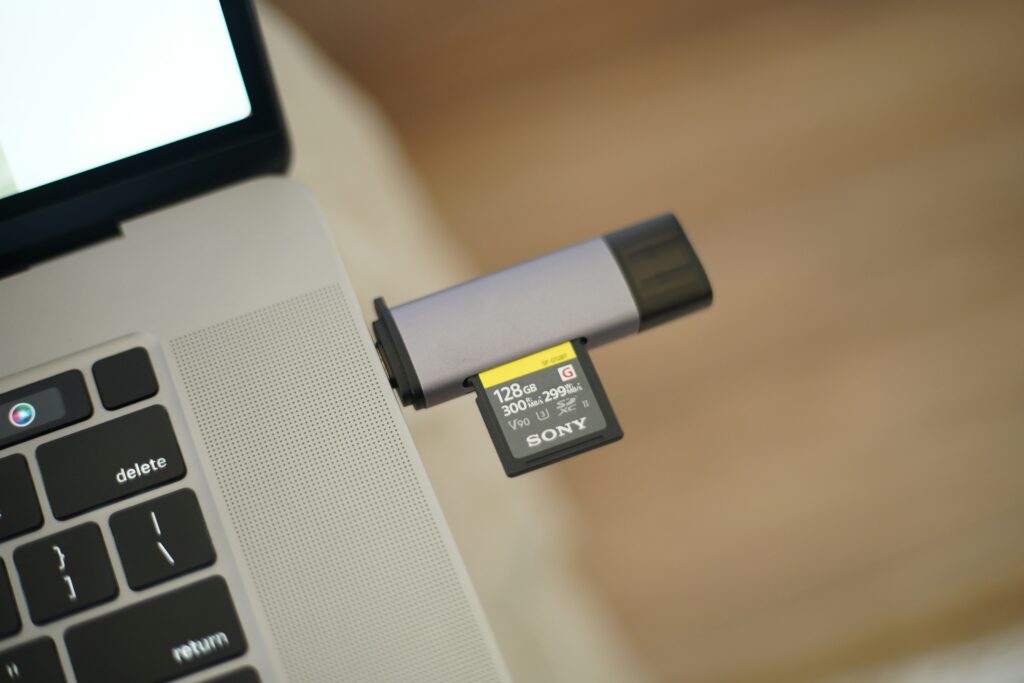
Sony has decided to temporarily suspend the acceptance of orders for many of its memory cards for photography and video in Japan, a measure that once again highlights how tension in the global memory market is affecting very specific products within the tech ecosystem. The company announced on March 27, 2026 that it is no longer accepting new orders for several CFexpress Type A, CFexpress Type B, and SDXC/SDHC cards, both through authorized distributors and the Japanese Sony Store. Sony cited “global semiconductor (memory) shortages” and other factors. No reactivation date has been given; the company merely stated it will review the situation as the supply evolves.
Although the announcement was made in Japan, the underlying message is much broader: pressure on flash memory is no longer limited to data centers, AI servers, or large consumer electronics manufacturers. It now directly affects a highly visible segment of the professional and prosumer market, such as high-performance cards for cameras. And in Sony’s case, this touches a particularly sensitive point: its Alpha ecosystem and its commitment to formats like CFexpress Type A.
Affected models and why they matter
The order suspension specifically impacts certain Sony product lines. For CFexpress Type A, models affected include CEA-G1920T, CEA-G960T, CEA-G480T, and CEA-G240T. For CFexpress Type B, the affected models are CEB-G480T and CEB-G240T. Regarding SDXC/SDHC cards, the list includes SF-G256T, SF-G128T, SF-G64T, SF-M512T, SF-M256T, SF-M128T, SF-E256, SF-E128A, and SF-E64A. Sony refers to this as a pause in the acceptance of orders rather than a complete withdrawal from these lines, but future availability will depend on existing stock and a supply chain still under pressure.
To the average user, it may seem like a minor move, but it’s not. CFexpress Type A cards are not just any accessories within Sony’s universe—they are integral to high-end workflows involving professional video, burst shooting, and high-bit-rate recording. If the official channel stops accepting orders, the impact could quickly lead to higher prices, lower stock levels, and an even greater reliance on alternative markets or third-party manufacturers.
Memory as the new bottleneck
Sony’s official explanation points to a global memory shortage, a rationale consistent with industry analysts’ observations. TrendForce warned in March 2026 that the NAND Flash market remains under intense pressure from cloud demand and large-volume contracts, which are constraining availability and driving up prices. The firm also revised upward its price forecasts for memory in the first quarter of the year, in both DRAM and NAND, indicating that the tension is now structural rather than episodic.
This helps explain why a company like Sony might choose to halt orders for a specific product line. When memory costs rise and supplies are limited, manufacturers must decide where to allocate their resources. In such scenarios, the most profitable or strategic categories tend to take priority over smaller or specialized lines. While Sony has not explicitly stated it is reallocating memory to other divisions, this move aligns with industrial logic: when a critical component is scarce, the product catalog is reordered based on margins, volumes, and priorities.
A warning for the photography and content creation market
Beyond Sony’s specific case, the news sends a clear signal to the digital imaging sector: the supply chain remains vulnerable even for seemingly mature products. The rise of Artificial Intelligence has shifted some market focus toward GPUs, HBM, enterprise SSDs, and large data infrastructures, but memory remains fundamental across many devices. When markets tighten, pressure inevitably spreads to cameras, cards, laptops, and other products competing for the same resources.
For photographers, videographers, and creators using Sony cameras, the message is clear: high-performance storage options can no longer be taken for granted. And for the broader tech market, the takeaway is equally evident: the impact of the AI economy is felt far beyond servers, affecting traditional value chains that appeared less exposed. Sony has not ruled out resuming orders, but the lack of a specific date underscores the current level of uncertainty.
Frequently Asked Questions
Has Sony permanently stopped manufacturing memory cards?
No, it has not announced such a decision. What it has communicated is a temporary suspension of order acceptance for several CFexpress and SD cards in Japan, with no specific reactivation date.
Which Sony cards are affected?
The measure affects various CFexpress Type A, CFexpress Type B, and SDXC/SDHC models, including the CEA-G, CEB-G, SF-G, SF-M, and SF-E series detailed in the official announcement.
Why could this be a problem for Sony Alpha camera users?
Because many of Sony’s advanced cameras rely on CFexpress Type A for burst shooting, high-bitrate video, and professional workflows. This format is less common than a standard SD card.
Is this related to demand for memory for AI?
Sony does not explicitly say so, but TrendForce describes a NAND and DRAM market strained by cloud demand and large-volume contracts—a context consistent with such decisions.
