
NVIDIA has been dominating the conversation around Artificial Intelligence, data centers, and gaming GPUs for years, but now the market is looking toward a much more disruptive possibility: its direct entry into the laptop segment with its own SoC. The idea isn’t new, but in recent weeks it has gained strength with a new wave of leaks and analyses pointing to a family of chips for laptops developed in collaboration with MediaTek and based on Arm. The problem is that, to date, most of what’s being published remains unconfirmed information from NVIDIA.
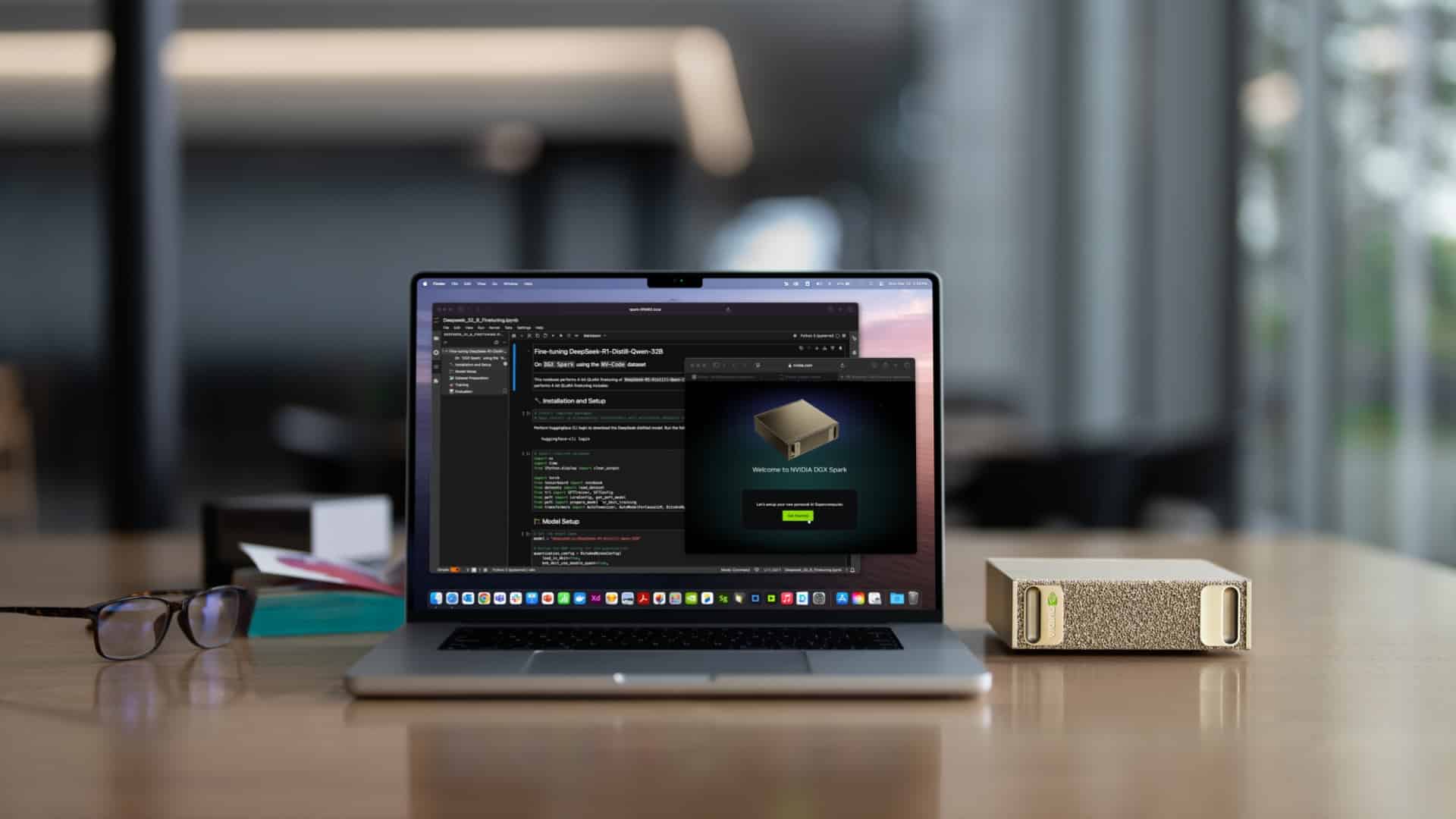
What is confirmed is the context that makes this move credible. NVIDIA is already working with MediaTek in other categories such as automotive and desktop superchips for AI. MediaTek announced in 2024 its Dimensity Auto Cockpit platforms in collaboration with NVIDIA DRIVE technology, and in January 2025, it confirmed collaboration on the design of the GB10 Grace Blackwell Superchip used by NVIDIA in DGX Spark, its compact AI development system. NVIDIA, for its part, describes this GB10 as a chip with a 20-core Arm CPU and Blackwell GPU, designed with MediaTek’s help in energy efficiency, connectivity, and SoC integration.
This detail is important because it helps understand why a rumor about an NVIDIA-powered laptop doesn’t sound far-fetched. The company already has a solid technological base to build on: Arm architecture, its own GPU, experience in CPU-GPU integration, and a long-term partner in efficient SoCs like MediaTek. It wouldn’t be an improvisation but a logical extension of a strategy that has already started in edge AI, automotive, and personal AI systems.
What’s being rumored about the N1 and N1X chips
The unconfirmed part is generating the most noise. Several industry sources point to two provisional SoCs, N1 and N1X, with a potential debut at Computex 2026. According to these reports, they would be Arm-based chips for laptops manufactured by TSMC and aimed at competing in both premium notebooks and the new category of local AI devices. However, NVIDIA has yet to publish an official technical spec sheet, a formal launch date, or a list of confirmed manufacturers.
The biggest appeal of these rumors lies in the combination. If NVIDIA manages to put a capable Arm CPU along with an integrated GPU far more powerful than the market average in a laptop, the balance of power could shift. For decades, Intel and AMD have controlled the heart of laptops, while NVIDIA primarily thrived in discrete graphics. An in-house chip for laptops would allow targeting the segment where CPU and GPU are already integrated—precisely the space where much of the AI PC narrative is unfolding. This market opportunity is real: Jensen Huang has publicly explained that NVIDIA has been successful in gaming and workstation sectors with discrete GPUs, but there’s a large integrated segment that has so far been underserved.
Why NVIDIA wants to enter now
The reason isn’t just to sell more laptops. NVIDIA aims to extend its control across the entire AI stack, from data centers to personal devices. If it secures a significant presence in laptops, it won’t just be selling silicon; it will also be pushing its software, frameworks, models, and its vision for local AI. In other words, it wouldn’t compete only on performance but also on platform dominance.
This makes its potential entry different from other efforts on Windows on Arm. Qualcomm has emphasized efficiency and autonomy. Apple has built its own solutions on its own terms in Macs. NVIDIA, on the other hand, could come with a proposal more focused on graphics, edge AI, and model acceleration. Such positioning could be particularly attractive for creators, developers, and power users who see laptops not just as PCs, but as personal workstations for local inference and hybrid cloud-device workflows.
The biggest obstacle: being NVIDIA isn’t enough
However, it’s important to temper enthusiasm. One thing is that the project makes sense from an industrial perspective, and quite another that it will disrupt the market from day one. The first hurdle is the Windows on Arm ecosystem, which still faces compatibility, perception, and native software challenges. The second is the supply chain: TSMC’s capacity and the pressures on advanced memory are still limited, and NVIDIA’s current priorities are much more profitable in data centers and AI accelerators.
The third challenge is the market itself. Intel and AMD are not standing still. Intel continues to defend its position in laptops with new Core Ultra families and a strong push on NPU and efficiency, while AMD has gained traction with high-performance integrated systems and mobile platforms. NVIDIA can arrive with a strong brand, but entering the laptop market involves more than designing a great chip: availability, battery life, thermal management, price, OEM support, and a stable user experience from day one are crucial.
What matters now: reading the signs, not just the headlines
At this point, the best way to interpret the story is this: NVIDIA does have the industrial and technological foundation to enter the laptop market, but most of the reports about N1 and N1X are still market speculation and leaks, not official products. The signals are strong, and the move makes a lot of sense. But we’re not yet facing an official launch that warrants waiting or changing purchasing plans just yet.
If something is finally announced at Computex, it won’t just be another chip. It would be NVIDIA’s most serious attempt to go from dominating graphics acceleration to competing at the core of the portable PC. If successful, AMD and Intel won’t lose their market overnight, but for the first time in a long while, they may face a competitor with real muscle in AI, GPU, and software simultaneously.
Frequently Asked Questions
Has NVIDIA officially announced its chips for laptops?
Not yet. There are multiple leaks and industry analyses, but NVIDIA has not yet made an official announcement with specifications, pricing, or a release date.
What is confirmed about the collaboration with MediaTek?
It is confirmed that MediaTek collaborated with NVIDIA on designing the GB10 Grace Blackwell Superchip for DGX Spark, and both companies are already working together in automotive with Dimensity Auto Cockpit.
Why would a laptop with an NVIDIA chip make sense?
Because it would allow the company to enter the growing integrated laptop market, extend its local AI strategy, and better control the combination of CPU, GPU, software, and acceleration for edge AI.
Could it really impact Intel and AMD?
Yes, but only if NVIDIA manages to turn these rumors into real products with good performance, battery life, price, and OEM support. The potential threat exists, but it’s not yet materialized.
