
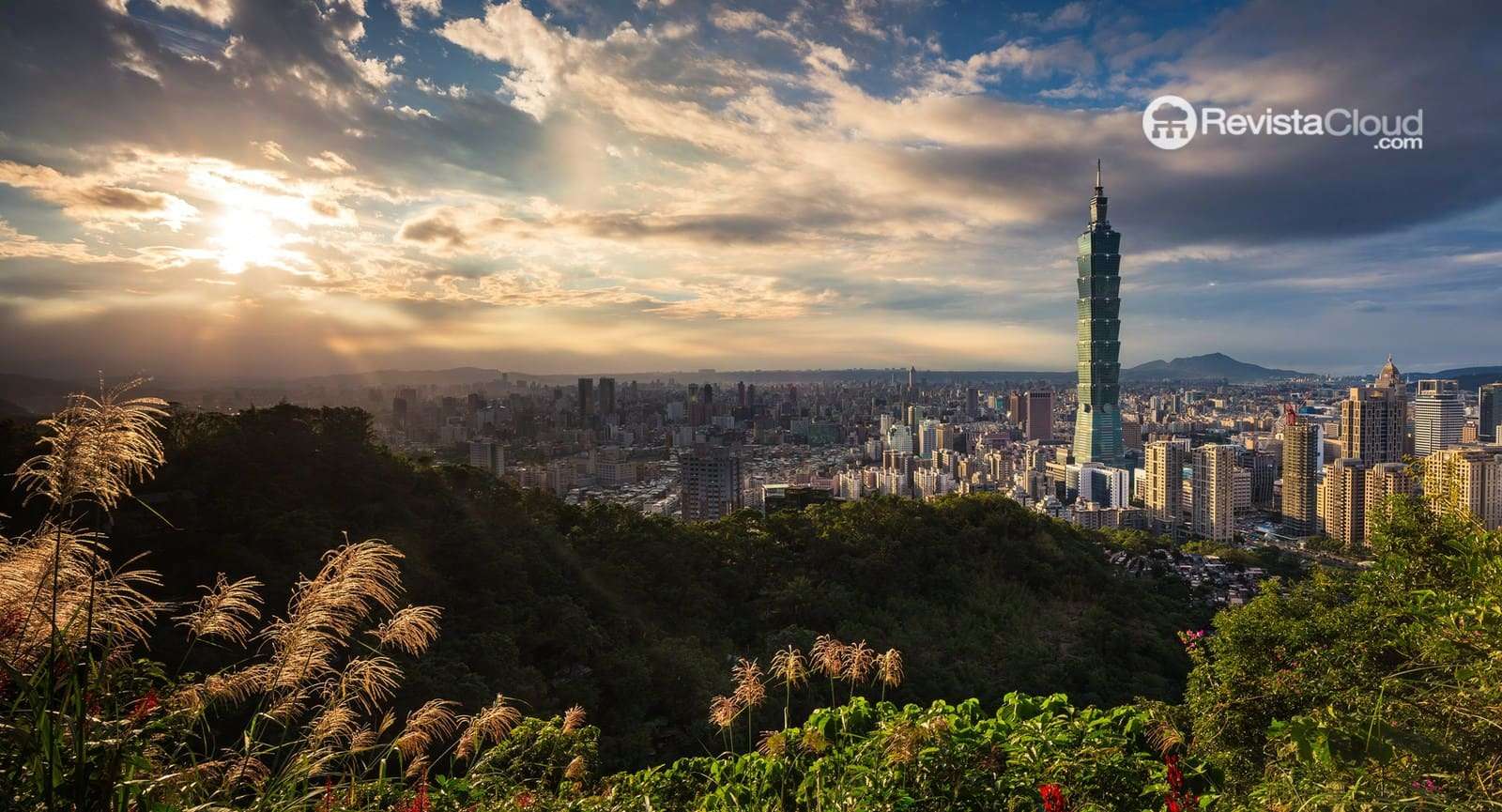
Taiwan is looking up at the sky with concern again. The island is experiencing its driest winter in 75 years across much of its western strip, precisely where the bulk of its semiconductor industry is concentrated. The situation has prompted the activation of water conservation and redistribution measures in Hsinchu, one of the country’s major tech hubs, though authorities currently insist that there is no expected direct impact on industrial supply.
The coincidence is not minor. Hsinchu is no ordinary region within Taiwan’s industrial map: it hosts part of the world’s most important manufacturing ecosystem, at a time when global demand for chips for Artificial Intelligence, data centers, and advanced computing remains sky-high. TSMC, the world’s largest contract chip manufacturer, maintains key facilities there and has also confirmed that its 2-nanometer technology entered mass production in Q4 2025, with Fab 20 and Fab 22 as N2 production facilities. The company also notes that in 2024 it established advanced 2-nanometer facilities in Hsinchu and Kaohsiung.
Drought tightens, but the official message remains one of control
Signs of water stress are real. Taiwan’s Irrigation Agency reported on February 23rd that accumulated precipitation over the previous three months in areas south of Hsinchu had fallen to 10% or 20% of the historical average for that period. In the Hsinchu-Miaoli area, levels reached only about 10% of the average; in Taichung-Changhua-Nantou-Yunlin, about 11%; and in Chiayi-Tainan-Kaohsiung-Pingtung, around 14%. Moreover, the agency warned that March would range from normal to below-normal levels, with no significant rainfall forecasted for April.
Simultaneously, the Water Resources Agency raised Hsinchu’s water alert to yellow on March 12th and implemented nighttime reduced-pressure water supply, first from 11:00 pm to 5:00 am, then maintained between 10:00 pm and 5:00 am. The yellow alert indicates pressure reductions and partial suspension of non-essential public water use. On March 24th, the same agency confirmed Hsinchu remained at yellow, while Taichung moved to green. Nonetheless, the official message was clear: in principle, these measures should not affect domestic or industrial supply.
To maintain that balance, authorities have resorted to concrete compensation measures. In Hsinchu, the government is diverting 175,000 tons daily from Shihmen Reservoir in Taoyuan and 55,000 tons from Yungheshan in Miaoli. They’ve also asked local science and industrial parks to voluntarily reduce water usage by 7%. There is pressure, but the official strategy aims precisely to prevent the issue from escalating to affect manufacturing output.
Why Hsinchu matters so much to the global chip supply chain
Hsinchu’s importance goes beyond symbolic weight. TSMC’s headquarters, its historic fab network, and some of its most advanced capacity are located there. The company’s official website confirms extensive manufacturing presence in Hsinchu, and its technology roadmap positions Fab 20 as one of the facilities involved in 2-nanometer production. In other words, part of the most sensitive infrastructure for the next generation of chips remains closely tied to a region now under water-related scrutiny.
This does not mean the global chip supply is on the brink of immediate disruption. In fact, available information encourages caution rather than alarmism. Taiwan’s alert system has not activated severe industrial restrictions in Hsinchu, and authorities emphasize that resource redistribution should keep supply stable, at least in the short term. However, the strategic outlook is crucial: the potential bottleneck is not only geopolitical or electrical but also involves fundamental resources like water.
TSMC has been preparing for a scenario like this for years
The drought has not caught TSMC unprepared. The company has long integrated water management into its resilience strategy. In its official water statement, TSMC states it aims to reduce natural water consumption, increase the use of recycled water, and strengthen water risk management at its factories. Its action plans include diversifying sources, improving efficiency, and gradually increasing the use of reused water in fabs.
This approach is not theoretical. An academic study published in 2024 reported that TSMC withdrew 104 million cubic meters of water in 2022, achieving a process water recycling rate of 85.7%. This high figure for such a water-intensive industry as semiconductors helps explain how the company has navigated prior episodes of water stress without material impact on production. It also highlights a growing industry-wide idea: competitive advantage no longer depends solely on node or performance but also on the ability to reliably secure critical utilities.
Nevertheless, the risk remains. The experience from 2021 showed that Taiwan can sustain production while tightening restrictions, but also made clear that there’s a limit. If dry conditions persist into the hotter months and pressure on reservoirs and rivers continues, the debate will shift from meteorological concerns to industrial ones. When Hsinchu enters a risk conversation, the entire world listens, especially in the chip industry.
Frequently Asked Questions
Is Taiwan really experiencing its worst drought in 75 years?
All indications from Taiwanese authorities and multiple national and international media agree that the western strip of the island is undergoing its driest winter in 75 years, with precipitation only 9% to 35% of the historical average across several basins since November.
Is TSMC’s Hsinchu production at immediate risk?
Not at the moment. The Water Resources Agency keeps Hsinchu on a yellow alert and has imposed reduced nighttime pressure, but has indicated that in principle, industrial supply should not be affected.
Why is Hsinchu so critical for the global chip industry?
Because it hosts essential parts of Taiwan’s manufacturing ecosystem, including key TSMC facilities. Additionally, TSMC has linked Fab 20 and Fab 22 to 2-nanometer production.
What is TSMC doing to mitigate water risk?
TSMC states it is reducing the use of natural water, increasing recycled water, and enhancing efficiency and water risk management. An academic study shows that in 2022, its process water recycling reached 85.7%.
