
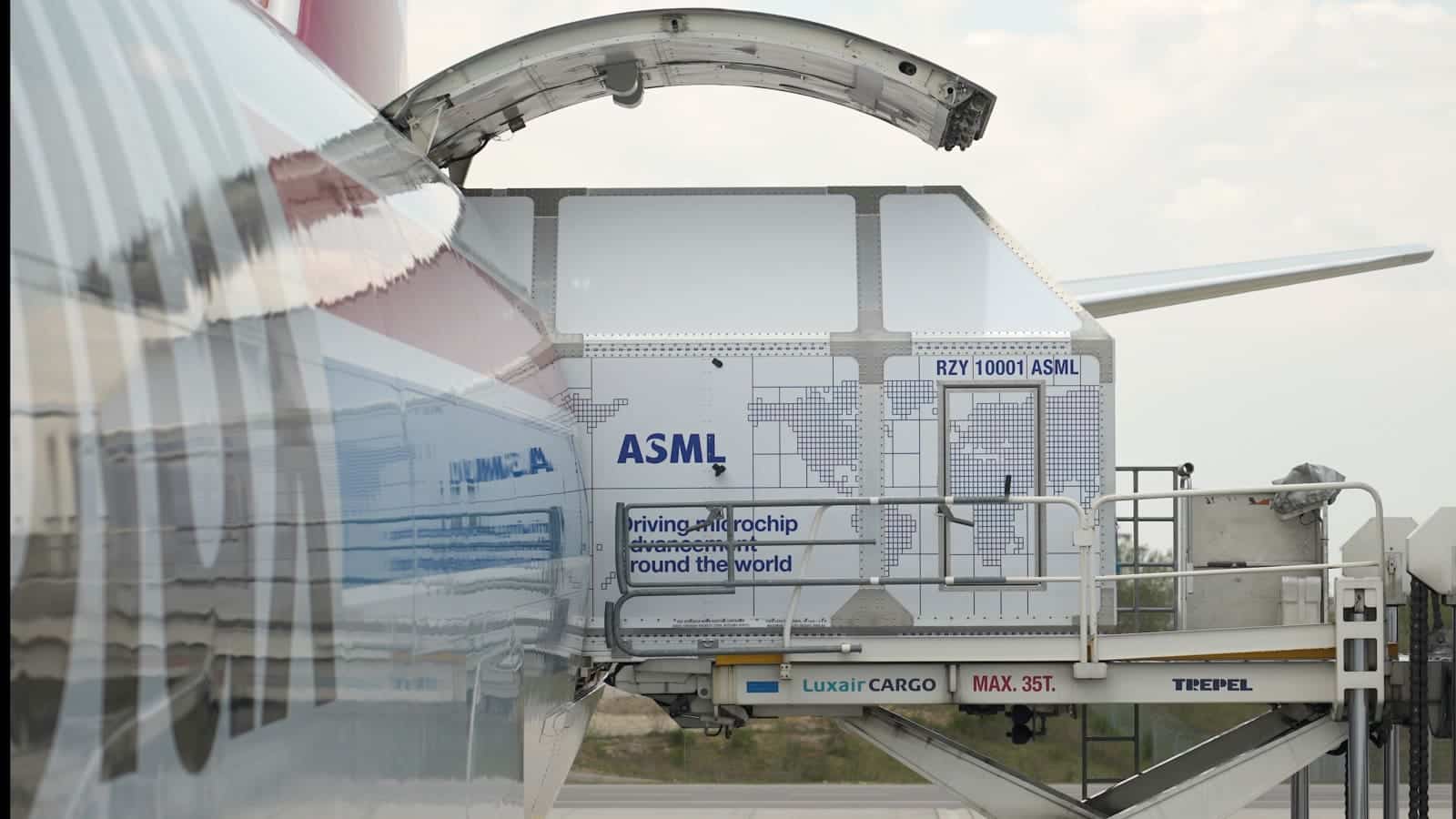
SK hynix has made a move on one of the most sensitive points in the entire chip industry: the capacity to secure EUV lithography amid the ongoing race for AI memory. The South Korean company has formalized a purchase of ASML equipment totaling $7.97 billion, equivalent to 11.95 trillion won, with deliveries expected until the end of 2027. According to information published after the regulatory filing, this is the largest individual order of its kind known for ASML.
The transaction is significant because it comes at a time when memory has shifted from being a nearly routine component to becoming one of the bottlenecks for AI. SK hynix is not just buying machinery; they are securing production capacity at the scarcest link in the chain to manufacture advanced DRAM and HBM in the coming years. The industry message is clear: the company wants to be well positioned for the next phase of the market, when HBM4 and future generations of memory become even more critical for GPUs, accelerators, and high-performance servers.
Although some analyses have portrayed the move as if SK hynix has already definitively surpassed Samsung and Micron, that conclusion is still premature. What can be said with some confidence is that SK hynix has aggressively strengthened its future capabilities, while competitors are also accelerating. Samsung has started moving HBM4 toward customers and is trying to recover ground, and Micron continues to expand vigorously in HBM. So, the game is not over; what changes with this order is the level of preparedness SK hynix has to maintain its volume and execution advantage.
An order designed for the complete AI cycle
The significance of the contract lies not only in its size but also in its timeline. The staggered deliveries until 2027 indicate that SK hynix is not just reacting to the next quarter but to the medium-term AI cycle, where supply of advanced memory will remain tight for years. Reuters pointed out that the equipment will be used for mass production of next-generation memory chips and that the purchase aligns with the opening of the new Yongin plant in February 2027, as well as reinforcing the M15X facility in Cheongju.
This is one of the key aspects of the news. A few days ago, it was revealed that SK hynix had accelerated the deployment of its M15X plant to meet the demand driven by AI. The company is effectively executing two parts of the same plan: increasing manufacturing capacity and gaining access to lithography machines that enable the production of more advanced nodes with better yields. In an industry where expansions take years and where ASML remains the only major EUV supplier, securing tools today is a way to safeguard market share tomorrow.
Market estimates cited by Reuters mention around 30 EUV machines, although neither ASML nor SK hynix has publicly disclosed an exact number. This volume helps explain why the deal is viewed as a demonstration of strong financial and industrial muscle. ASML closed 2024 with a backlog of €38.8 billion, so this contract further boosts its visibility and reinforces the idea that demand for critical equipment will remain very high outside of China.
HBM, advanced DRAM, and intensifying competition
The fundamental reason is well known: AI is driving unprecedented demand for HBM and high-performance DRAM. TrendForce maintains that SK hynix will continue to lead the HBM market in 2026, though it also forecasts a significant recovery for Samsung thanks to HBM3e and HBM4, while Micron is aggressively expanding its capacity. In its March scenario, SK hynix would hold about 50% of global bit production, compared to Samsung’s increase to 28%.
This means that the ASML order is not just a routine equipment purchase but a strategic move both defensively and offensively. Defensively, it prevents rivals from closing the gap too quickly. Offensively, it allows SK hynix to continue presenting itself as the best-prepared manufacturer to meet the upcoming demand wave driven by NVIDIA platforms and other major AI clients. Jensen Huang had already asked SK hynix to accelerate the supply of HBM4 by six months, highlighting how memory is dictating the industry’s calendar.
Another relevant point is that SK hynix does not currently lead all memory segments. TrendForce reported in February that Samsung regained the top spot globally in DRAM revenue in Q4 2024, with $19.156 billion and a 35.4% share, while SK hynix ranked second with $17.22 billion and a 32.1% share. This indicates SK hynix dominates in HBM, but the overall memory competition remains very active. That’s why this EUV order is so strategically important.
Not the end of high prices, but a very serious signal
The key question for the market is whether these kinds of investments will eventually lower memory prices. The short answer is: probably not in the near term. The agreement’s timeline suggests the opposite: since deliveries extend until 2027, the actual impact on capacity and supply will take time to materialize and will not immediately ease current tensions. Additionally, Samsung is also finalizing multi-year agreements and ramping up production, a sign that manufacturers expect strong demand for advanced memory to continue for quite some time.
What this announcement truly shifts is the perception of who is willing to invest early and heavily to secure the next phase of the cycle. SK hynix has not won the game with a single contract, but it has demonstrated its desire to compete in AI from the most critical foundation: the ability to produce advanced memory when the market needs it most. In an industry where the real bottleneck is not just demand but access to the tools that enable scaling supply, this move carries much more weight than a simple investment figure suggests.
Frequently Asked Questions
How much has SK hynix invested in ASML equipment?
SK hynix has announced a lithography equipment purchase totaling 11.95 trillion won, or roughly $7.97 billion, with deliveries scheduled until the end of 2027.
Is this truly the largest known order for ASML?
Post-regulatory filing information describes it as the largest individual order known for ASML to date. The Dutch company has not publicly commented on the contract.
Does this move definitively surpass Samsung and Micron?
Not yet. SK hynix significantly strengthens its future position, but Samsung is recovering ground in HBM4, and Micron continues expanding aggressively. The competition remains very open.
Will this investment soon lower memory prices?
Probably not in the short term. Since deliveries extend until 2027, the actual impact on capacity and supply will take time to manifest.
