
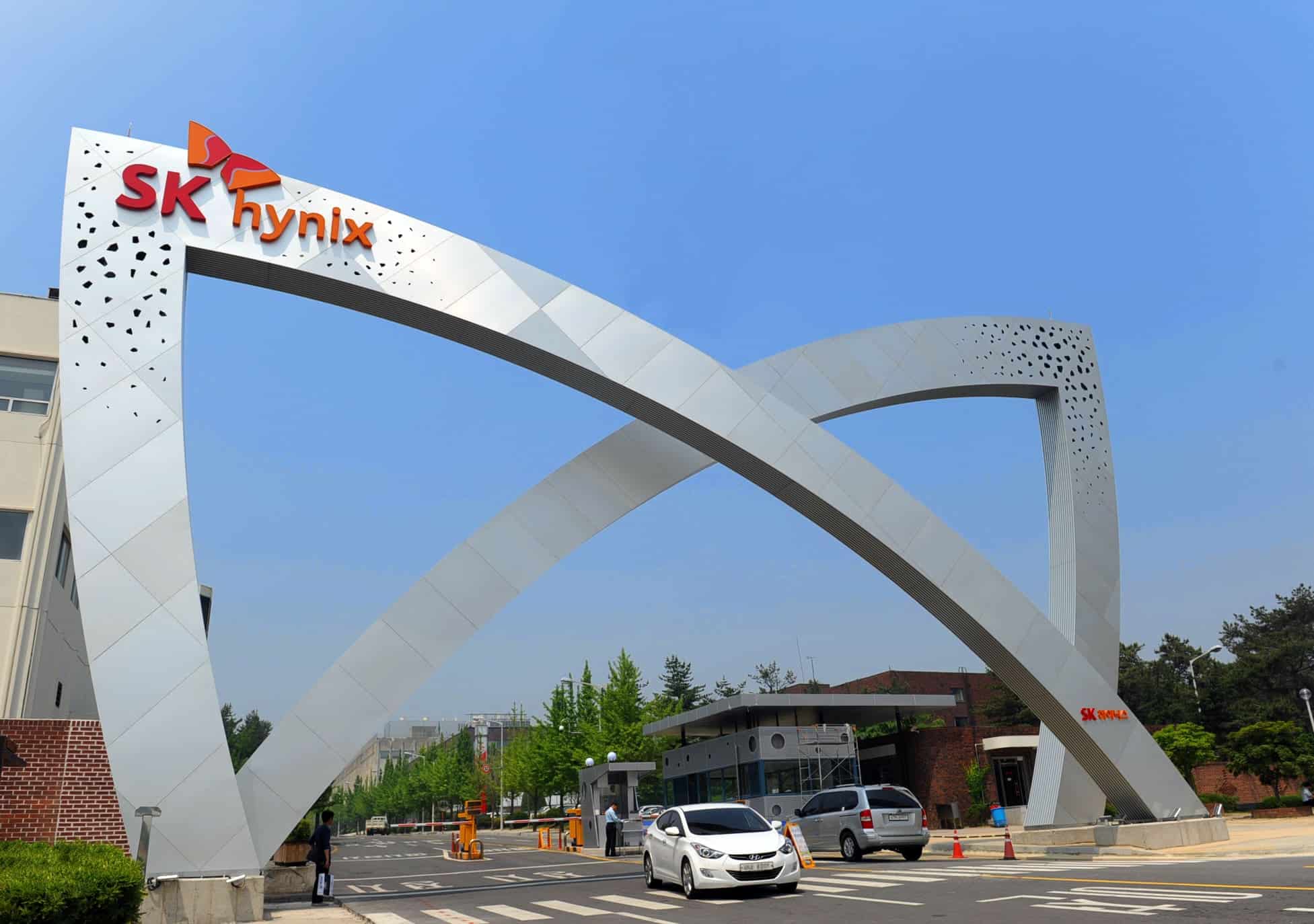
SK Hynix has decided to accelerate efforts at one of its key factories expected to support its memory offensive for artificial intelligence. According to Asian industry sources, the company has opened its second cleanroom at the M15X plant in Cheongju earlier than planned and has already begun transferring equipment. This move would place this deployment roughly two months ahead of the market’s anticipated schedule. Although the company has not yet issued an official statement about this milestone, the action aligns with its message over recent months: to expand capacity as soon as possible to respond to sustained demand for advanced memory.
This news is significant. SK Hynix had already confirmed in January, during its 2025 results presentation, its intention to “maximize” M15X’s capacity early on. M15X is a new DRAM facility in Cheongju aimed at boosting production of next-generation memories, including high-bandwidth memory (HBM). Furthermore, in February, the company announced it was moving up the opening of its first cleanroom in its future Yongin fab from May to February 2027—another indication of the urgency behind its industrial expansion efforts.
A Key Factory to Sustain the AI Boom
M15X is not just any manufacturing plant in SK Hynix’s network. In April 2024, the company announced an investment exceeding 20 trillion won to build this facility alongside its M15 plant in Cheongju, with the goal of producing new DRAM and addressing the surge in high-bandwidth memory critical for accelerators and AI systems. The company’s corporate communication clearly stated that M15X was intended as a bridge to productive capacity until Yongin truly comes online.
Accelerating the second cleanroom is particularly noteworthy because, in the semiconductor industry, opening a cleanroom and beginning equipment installation is a significant step: it marks the transition from civil works to actual chip manufacturing preparation. Published data from March 24 also indicates that the first cleanroom at M15X had started wafer entry by February, suggesting that commercial production for this initial phase could begin in the first half of 2026. SK Hynix has not confirmed this in an official announcement, so this should be regarded as industry information rather than a finalized detail.
The HBM Race Is Happening in Real Time
The underlying reason is clear: the memory market is experiencing a new supercycle driven by artificial intelligence. The demand for HBM—essential for powering GPUs and high-performance accelerators—has disrupted the traditional balance of DRAM supply. SK Hynix has established a very strong position here, especially as a key supplier in multiple recent generations of AI memory. However, competition has intensified, with Samsung regaining ground in conventional DRAM.
Omdia’s data positioned Samsung again as the world’s leading DRAM producer by revenue in Q4 2025 with $19.156 billion and a 36.6% market share, while SK Hynix ranked second with $17.226 billion and 32.9%. This shift does not diminish SK Hynix’s leadership in HBM, but it explains why capacity expansion has become a strategic priority. In this context, speeding up M15X not only helps meet existing orders but also serves as a strategic move to protect competitive position in a market where every quarter counts.
Another important signal came during NVIDIA’s GTC 2026 conference: SK Group chairman Chey Tae-won warned that memory shortages could last until 2030 due to wafer supply constraints and the time needed to ramp up industrial capacity. While this forecast may sound aggressive, it underscores why companies like SK Hynix are accelerating investments, fast-tracking equipment, and planning production earlier than usual.
Implications for Customers and the Market
If early completion of M15X translates into additional production of HBM and advanced DRAM sooner than expected, it could help alleviate some pressure faced by major AI and data center customers. While it won’t instantly resolve supply issues, it can help ease bottlenecks at a critical moment when memory has become one of the most sensitive components in the entire tech value chain.
There’s also a long-term industrial effect. Cheongju is increasingly solidifying its role as a hub for SK Hynix’s advanced memory strategy. Beyond M15X, SK Hynix confirmed in January plans to build a new packaging and testing plant in the same region—an investment reflecting the company’s desire to integrate front-end and back-end manufacturing closer together for AI products. Essentially, it’s not just about producing more chips, but also about organizing the entire supply chain to respond faster to clients such as cloud operators and hardware accelerators.
For now, caution remains essential. The official confirmed strategy is to accelerate M15X, fast-track Yongin, and bolster AI memory capacity. The exact details of the second cleanroom opening ahead of schedule are still sector intel rather than official confirmation. Still, the overarching message is clear: SK Hynix aims to avoid waiting until 2027 to boost production and is seeking to gain months in a race where memory has become one of the most crucial assets in the tech industry.
Frequently Asked Questions
What is SK Hynix’s M15X plant?
It is a new DRAM factory in Cheongju, South Korea, built next to the M15 plant. SK Hynix has described it as a key facility to increase production of advanced memories, including HBM.
Why is advancing the startup of M15X important for SK Hynix?
Because demand for AI memory remains very high, and expanding capacity early can help reduce bottlenecks for HBM and advanced DRAM, both critical components in AI GPUs, accelerators, and servers.
Does SK Hynix still lead the memory market?
It depends on the segment. SK Hynix remains very strong in HBM, but in total DRAM, Samsung reclaimed the top position in revenue in Q4 2025, according to Omdia.
When will the Yongin factory become operational?
SK Hynix announced in February 2026 that it was accelerating the opening of its first cleanroom at the Yongin plant to February 2027.
via: Jukan X
