
The underwater digitization has just taken a big step. Swiss company Hydromea and Norwegian firm Equinor have demonstrated wireless data transmission, in real time and with high bandwidth, from the seabed directly to the cloud. The test combines underwater optical communication, a dedicated subsea network, and connection to cloud and onshore control systems, which both companies present as a milestone for autonomous offshore operations.
At the heart of the demonstration is LUMA, Hydromea’s platform based on free-space optical communication underwater. According to the company, its SWiG-ready devices created an underwater wireless access point capable of transferring data at speeds of up to 10 Mbps and operating at depths of up to 6,000 meters. These data, from seabed sensors or underwater vehicles, were wirelessly sent to Equinor’s infrastructure through their DEEPNET network, ultimately reaching the cloud and onshore control systems.
An advancement designed for drones, sensors, and continuous inspection
More than just a technical demonstration, this move addresses a very specific issue in the underwater world: the difficulty of obtaining real-time data without relying on umbilical cables, periodic recoveries, or support vessel campaigns. Hydromea asserts that this architecture opens the door for sensors and uncrewed underwater vehicles to continuously download information, with less human intervention and fewer wired solutions.
Equinor has been working in this direction for years. The oil company has led projects involving drones and underwater robots, and its own documentation states an intention to expand the use of subsea resident vehicles and standardized docking stations for inspection, maintenance, and repair operations. The company also explains that its AIR program includes IoT communication infrastructure, software for robots and drones, and docking stations for underwater vehicles.
This context helps explain why the demonstration is significant. If a vehicle or sensor can transmit video, telemetry, or structural integrity data in real time from the seabed to a cloud platform, the operational model shifts. Inspection moves from a one-off activity to a continuous observation layer. This can lead to fewer deployed ships, shorter intervention windows, faster anomaly detection, and a better foundation for automating decisions in complex subsea facilities. This is a reasonable inference based on Hydromea and Equinor’s described capabilities and objectives.
It doesn’t replace submarine cables, but adds a critical new layer of connectivity
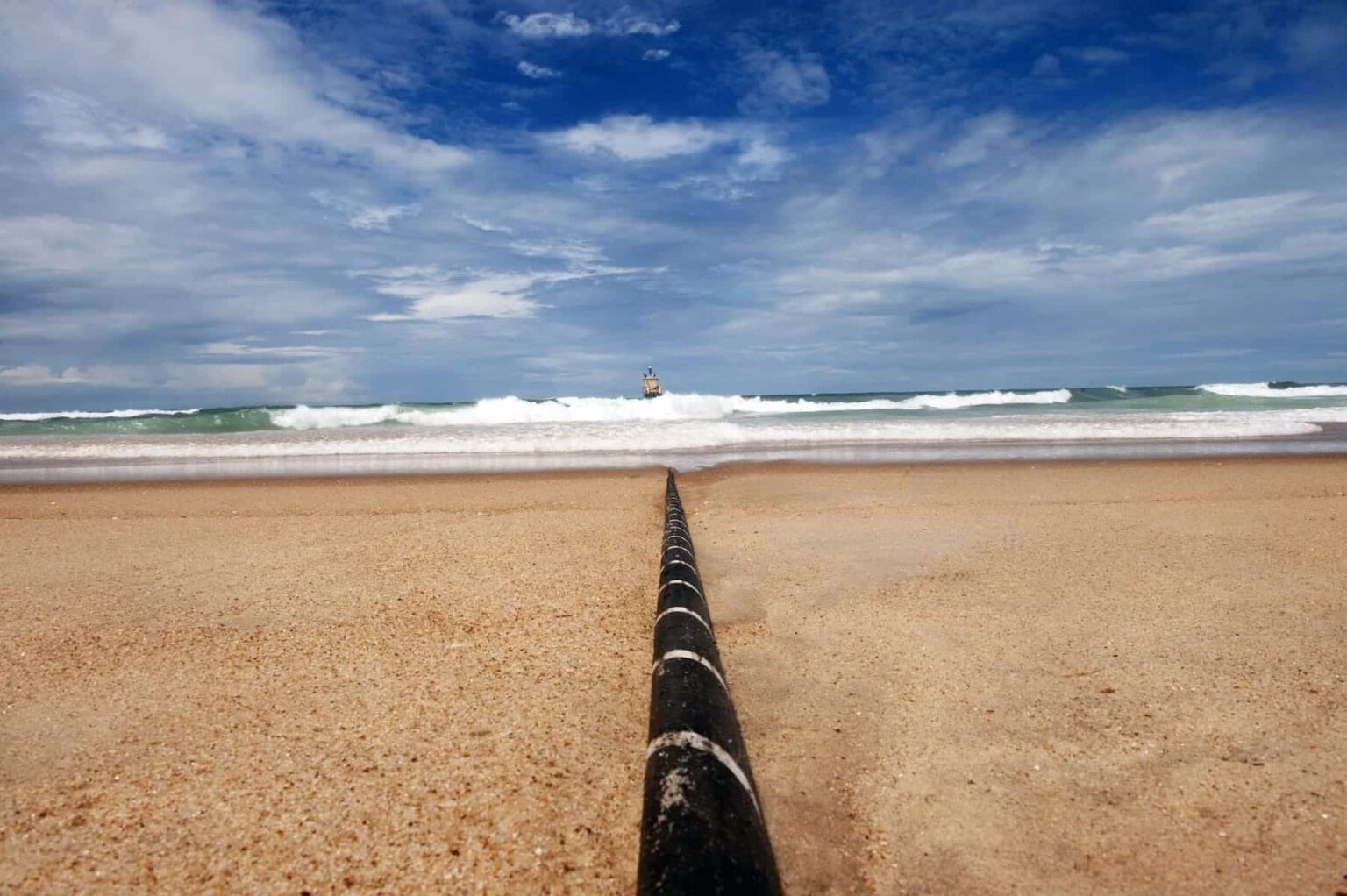
It’s important to clarify: this breakthrough does not replace the large fiber optic submarine cables connecting continents and supporting the Internet. Instead, it proposes an additional, more localized and operational layer of connectivity, aimed at sensors, drones, and underwater assets. Nonetheless, this announcement fits into a broader conversation about the maritime digital infrastructure and its growing strategic importance.
This debate is significant. The Australian Telecommunications Sector Resilience Profile, produced by the Tech Policy Design Centre at Australian National University, notes that submarine cables carry about 98% of global data traffic and warns that they could become single points of failure due to their limited number and exposure to accidental or deliberate damage. The document emphasizes that resilience in the telecom sector increasingly depends on better coordination, information sharing, and preparations for large-scale disruptions.
From this perspective, what Hydromea and Equinor have tested isn’t just relevant for oil and gas. It could also be significant for offshore wind farms, environmental monitoring infrastructures, export power cables, underwater data hubs, and even future security and surveillance architectures for critical assets. When a subsea network transitions from a simple data capture point to functioning as a small local network with cloud access, its operational value clearly increases. This conclusion is based on Hydromea’s described applications for LUMA in energy, monitoring, and underwater infrastructure.
The next challenge is standardization
An important aspect of this announcement is interoperability. Hydromea notes that both itself and Equinor participate in SWiG, an industry group working on standards for underwater wireless technologies. The company states that it leads the development of a global standard for submarine optical communication with bandwidths up to 10 Mbps, to facilitate deployment of these solutions by various manufacturers and operators with less friction. Equinor, Chevron, and TotalEnergies are among those involved in the initiative.
This highlights one of the critical next steps. In the marine environment, a successful laboratory test or pilot isn’t enough if each system remains isolated in its own ecosystem. For this technology to truly scale, the industry will need interoperable systems, common procedures, integrated security, and operational economics that justify adoption over traditional methods. Hydromea and Equinor’s demonstration doesn’t solve all these challenges by itself, but it makes clear that the technical bottleneck is beginning to loosen. When such advancements occur in a strategic layer like the subsea realm, industry stakeholders pay close attention.
Frequently Asked Questions
What exactly have Hydromea and Equinor achieved?
They demonstrated wireless, real-time data transmission from the seabed to the cloud, combining underwater optical communication with Equinor’s DEEPNET network and cloud systems on land.
What speed and depth does the LUMA technology reach?
Hydromea states that its LUMA platform can transmit data at up to 10 Mbps and operate at depths of up to 6,000 meters.
Does this replace submarine Internet cables?
No. It’s a solution for operational connectivity underwater among sensors, drones, and systems managed by the operator, not a replacement for transoceanic fiber optic cables.
Why is standardization of underwater wireless networks important?
Because without interoperability among equipment and manufacturers, large-scale deployment of underwater networks becomes much more difficult. SWiG is working toward this goal, and Hydromea claims to be leading an optical standard for submarine communications up to 10 Mbps.
via: datacenterdynamics and sdxcentral