
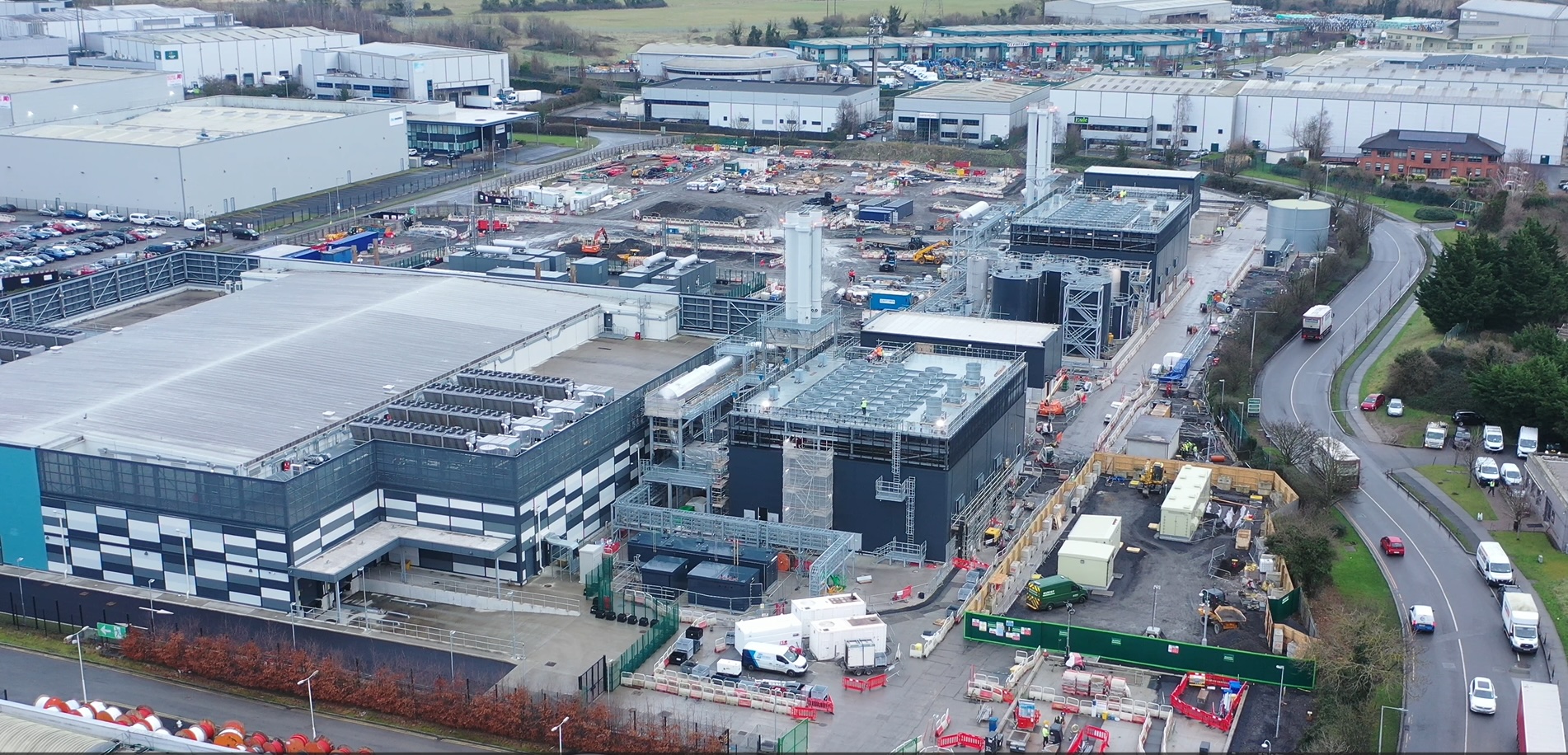
Europe has just added a new large-scale experiment to the race for powering data centers amid growing pressure on the electrical grid. Pure Data Centres Group (Pure DC) and AVK have announced the deployment of a 110 MW on-site microgrid at the operator’s Dublin campus, which both companies describe as the first major microgrid for a data center in Europe. The project is designed to support the operational resilience of the facility in its initial phases, before the full capacity can be fully integrated with the national power system.
The announcement is significant because it illustrates how much energy has become the main bottleneck in the cloud business and AI infrastructure in Europe. Pure DC presents this microgrid as a transitional and complementary solution: a local energy infrastructure with dispatchable capacity that will support the campus’s initial operations while the full connection to the grid is gradually enabled. In the long term, the idea is for the campus to operate with a hybrid setup, combining grid electricity with on-site generation and energy flexibility.
A 110 MW microgrid designed for the early phases of the campus
According to official information from Pure DC, the microgrid consists of three interconnected energy centers, with up to 30 MW per building. The first two, EC1 and EC2, are expected to be fully operational by the end of 2026. The third will come later. Additionally, the design incorporates a Battery Energy Storage System (BESS) to manage load fluctuations, improve operational response, and facilitate greater renewable integration in the future. This combination helps explain why the entire system is presented as a 110 MW infrastructure, even though each individual energy building is described as having capacities of up to 30 MW.
The architecture also includes Combined Heat and Power (CHP) infrastructure, prepared for heat recovery and a potential future connection to district heating networks, always subject to third-party demand and regulatory approvals. Pure DC adds that the system includes residual heat recovery within the energy centers and water management measures such as rainwater harvesting and on-site treatment, to reduce dependency on municipal water in processes associated with the engines.
Another relevant detail is that the installation is designed to accommodate gradual changes in fuel composition, including hydrogen blends and testing with , aligned with potential future decarbonization developments of the gas network. In fact, Pure DC’s website published on the same day another note announcing the completion of a proof-of-concept test using biomethane in data centers, fitting within the broader energy strategy the operator is deploying.
Ireland and the energy challenge for data centers
The project cannot be fully understood without considering the Irish context. EirGrid, the transmission system operator in Ireland, has been warning about the impact of data centers on the country’s electricity demand. In its 2025-2035 operational roadmap, EirGrid states that data centers accounted for 21% of all electricity measured on the Irish grid in 2023, up from 18% in 2022. Projections suggest that by 2032, data centers and other large new consumers could represent around 30% of total electricity demand.
EirGrid also notes that Irish policy for large energy consumers, including data centers, has led to the creation of new connection pathways and a review of how these requests are managed both in the electric and gas networks. Their public website also states that regulatory clarity from the CRU regarding how future demand connection requests, including data centers, should be processed is still pending. This context helps explain why operators like Pure DC are seeking complementary energy solutions and why a system such as this microgrid could be attractive in markets with more strained grid capacities.
Energy as a competitive advantage for cloud and AI
Both Pure DC and AVK emphasize the same idea: the challenge is no longer just technological, but energy-related. Gary Wojtaszek, CEO and interim CEO of Pure DC, states in the announcement that “the biggest hurdle for deploying AI infrastructure in Europe today is not technology but energy.” Meanwhile, AVK presents the installation as proof that microgrids can play a complementary role within national energy planning, especially in markets where grid reinforcement and renewable generation are progressing in phases.
This message aligns with sector evolution. Energy has shifted from being a relatively taken-for-granted utility to a strategic asset that influences the location, design, economics, and competitiveness of new data campuses. Pure DC describes itself as a developer and operator of digital infrastructure in “high-demand, limited-supply markets,” and its official website explicitly links the sector’s growth capacity to the pressure that electric grids are experiencing.
It is also noteworthy that the company and AVK do not portray this model as strictly local. Their announcement already identifies Germany, Netherlands, and the UK as target markets for replicating this technology. This suggests that it’s not just a bespoke solution for a specific campus in Dublin but a potential blueprint for future European sites where grid availability does not keep pace with digital demand.
The big question remains: to what extent will this approach succeed in balancing resilience, rapid deployment, and sustainability? On paper, the installation includes BESS, heat recovery, readiness for low-carbon fuels, and future hybrid integration with the grid. But it also underscores that Europe’s race for cloud and AI will increasingly depend on the ability to co-locate compute and energy resources at the right place and time. And that makes this Dublin microgrid more than a technical novelty: it’s a signal of where the entire industry is headed.
Frequently Asked Questions
What have Pure DC and AVK announced in Dublin?
They announced a 110 MW on-site microgrid for Pure DC’s Dublin campus, described as the first large-scale microgrid for a data center in Europe.
What will this microgrid do for a data center?
It will provide dispatchable energy capacity during the initial operational phases of the campus, before full integration with the national grid, and later it will be part of a hybrid setup with the grid.
Why is Ireland a sensitive market for these projects?
Because data centers already have a significant impact on the country’s electricity demand: EirGrid indicates they accounted for 21% of all electricity measured on the Irish grid in 2023.
What sustainability features does Pure DC’s microgrid include?
It includes BESS, CHP, heat recovery, preparation for biomethane and hydrogen blends, as well as water management measures like rainwater harvesting and on-site treatment.
via: pure DC
