
The race for Artificial Intelligence is entering a phase where talking about models, chips, or software is no longer enough. The real bottleneck is beginning to shift toward infrastructure, and the figures are skyrocketing. Moody’s Ratings forecasts that capital spending by the major US hyperscalers will reach $700 billion in 2026—about six times more than in 2022—and continue growing in 2027 to $870 billion. The agency believes that demand for AI still clearly exceeds supply but warns that the market is starting to worry about risks of overbuilding, deteriorating free cash flow, and increasing debt levels.
The news isn’t just about the size of the investment but also a shift in tone that’s beginning to appear among companies and investors. According to Moody’s, hyperscalers see under-investing in AI as an existential threat, while part of the market fears that this expansion could lead to oversized assets or weaker-than-expected returns. The agency also reminds that, due to the capital-intensive nature of AI data centers, it typically takes between 12 and 24 months from the initial expenditure for that asset to start generating revenue from the investment.
It’s not an isolated figure or mere theoretical exaggeration. Reuters reported in January and February that Amazon, Alphabet, Meta, and Microsoft are collectively already planning for over $500 billion in investments by 2026. Amazon projects $200 billion, Alphabet guides between $175 billion and $185 billion, and Meta has increased its forecast to between $115 billion and $135 billion. Meanwhile, Microsoft reported a quarter with $37.5 billion in CapEx—66% more than a year earlier. Seen this way, Moody’s estimate doesn’t seem excessive but rather an extrapolation of an escalation already reflected in the accounts of the big tech firms.
A historic expenditure with a clear industrial logic
Behind this surge of investment is an obvious reason: AI is consuming computing capacity, networking, and energy at a pace that just two years ago would have seemed unthinkable. Alphabet acknowledged in February that it was still limited by available capacity even as it accelerated infrastructure deployment. Amazon, for its part, argued that demand in AWS remains strong despite capacity constraints. And Meta has admitted it will face internal limitations through much of 2026, to the point of relying also on third parties to expand computing muscle.
Moody’s interprets this context as a sign that, at least for now, the main risk is not a lack of demand but that the industry cannot deploy enough assets in time. In fact, the agency claims that revenue growth is already accelerating: the median growth rate for Meta, AWS, Alphabet, Microsoft Azure, and Oracle has increased from 26% at the end of 2023 to 39% at the end of 2025. Their thesis is that, as more capacity goes into service and signed contracts turn into revenue, some current market doubts could ease.
The example that most reinforces this narrative might be Oracle. Reuters reported this week that the company raised its revenue forecast for 2027 to $90 billion and significantly increased its pending performance obligations, or RPO, to $553 billion—up 325% year-over-year. In other words, the market may debate whether spending is excessive, but there are already signs that part of that future capacity is contractually committed.
Investors are more wary of debt and cash flow
The problem is that this expansion isn’t free. Moody’s notes that the rapid growth in CapEx is eroding these companies’ historical free cash flow and pushing them toward greater borrowing. Reuters had already warned in January that funding needs related to AI would strongly boost corporate bond issuance in the US. Barclays estimated a total issuance of $2.46 trillion in 2026, while Bank of America expected the five major hyperscalers to borrow around $140 billion annually over the next three years, with the possibility of even exceeding $300 billion annually.
This shift is already evident in specific transactions. Reuters recently reported that Amazon was preparing a bond issuance of around $37 billion to support its AI push, while Oracle announced in February that it planned to raise between $45 billion and $50 billion through debt and equity to expand its cloud infrastructure. The clear message: even with very solid balance sheets, companies are starting to combine operating cash flow with external financing to sustain their building pace.
This highlights the gap Moody’s points out between industrial and financial perspectives. For management teams, underinvesting in AI could mean losing a strategic position that’s hard to recover, while investors’ concern is that the “invest now, profit later” logic could go too far, ultimately hurting margins, valuations, and credit profiles. Reuters already showed this divergence in January: Meta was rewarded in the stock market because its advertising business continued to fund AI efforts with robust growth, whereas Microsoft and Amazon experienced cooler reactions due to the massive CapEx and doubts about immediate returns.
Energy could be the major brake in 2027
Additionally, there’s a limit that’s not just about money. Moody’s believes that electricity availability will restrict AI capacity in 2027, so demand will outstrip supply even if spending continues to grow. This isn’t a minor warning. Reuters reported in February that in PJM—home to the world’s highest-density data centers—projections of new installations had already driven electricity costs up by about 1,000% in less than two years.
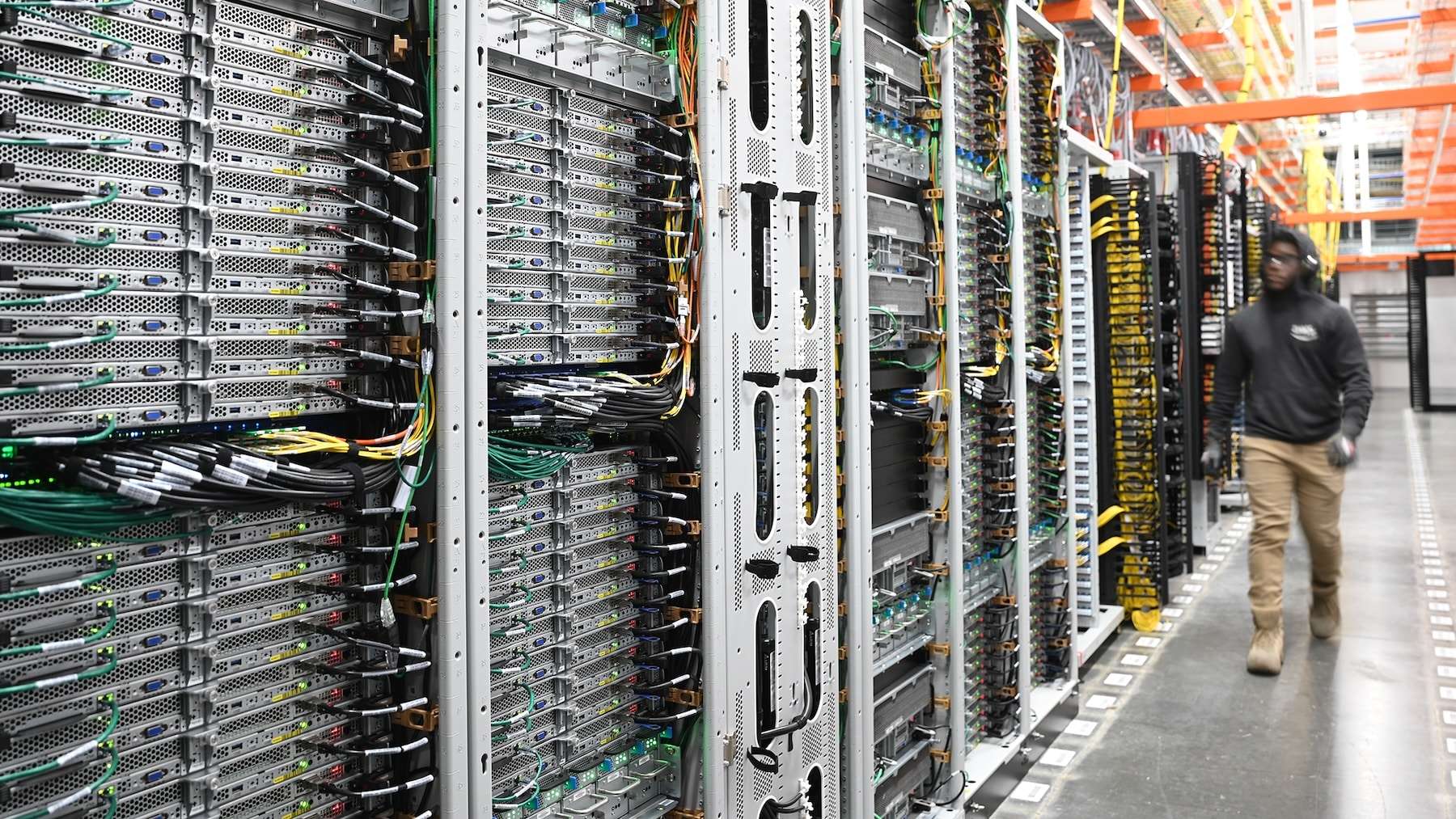
This energy factor helps explain why the data center market is in such a paradoxical situation. On one hand, there’s a fear of overinvestment. On the other, the effective construction of useful capacity is limited by the grid, permits, transformers, land, cooling, and construction timelines. In theory, too much capital might chase AI, but in practice, megawatts and racks ready to turn that investment into services are still missing. This tension explains why Moody’s does not see an immediate supply excess but does warn of rising risks to credit metrics if profit growth doesn’t keep pace.
The conclusion is less straightforward than bubble or euphoria headlines suggest. Hyperscalers are spending more than ever because they believe AI redefines their competitive position. At the same time, investors are beginning to demand more than long-term promises: they want proof of monetization, financial discipline, and a credible roadmap for turning contracts, backlog, and future capacity into real cash. That strategic urgency versus financial prudence conflict will shape much of the cloud and infrastructure business over the next two years.
Frequently Asked Questions
How much does Moody’s estimate hyperscalers will spend in 2026?
Moody’s Ratings estimates that the total CapEx for major US hyperscalers will reach $700 billion in 2026 and rise to $870 billion in 2027.
Why are large tech companies’ AI spending concerns for investors?
Because it requires significant upfront expenditure, pressures free cash flow, and is increasing reliance on debt. Moody’s warns that if profit growth doesn’t keep up, there could be a downgrade in credit quality.
Are there signs that this spending is already generating real business?
Yes. Moody’s states that revenue growth among several major cloud and AI players has accelerated, and Oracle recently announced a substantial increase in its contracted backlog, with an RPO of $553 billion.
What could be the main limit to AI expansion in 2027?
Electricity. Moody’s believes that inadequate power supply will restrain some of the new capacity, and Reuters has already reported significant energy cost tensions in markets like PJM due to the rise in data centers.
