
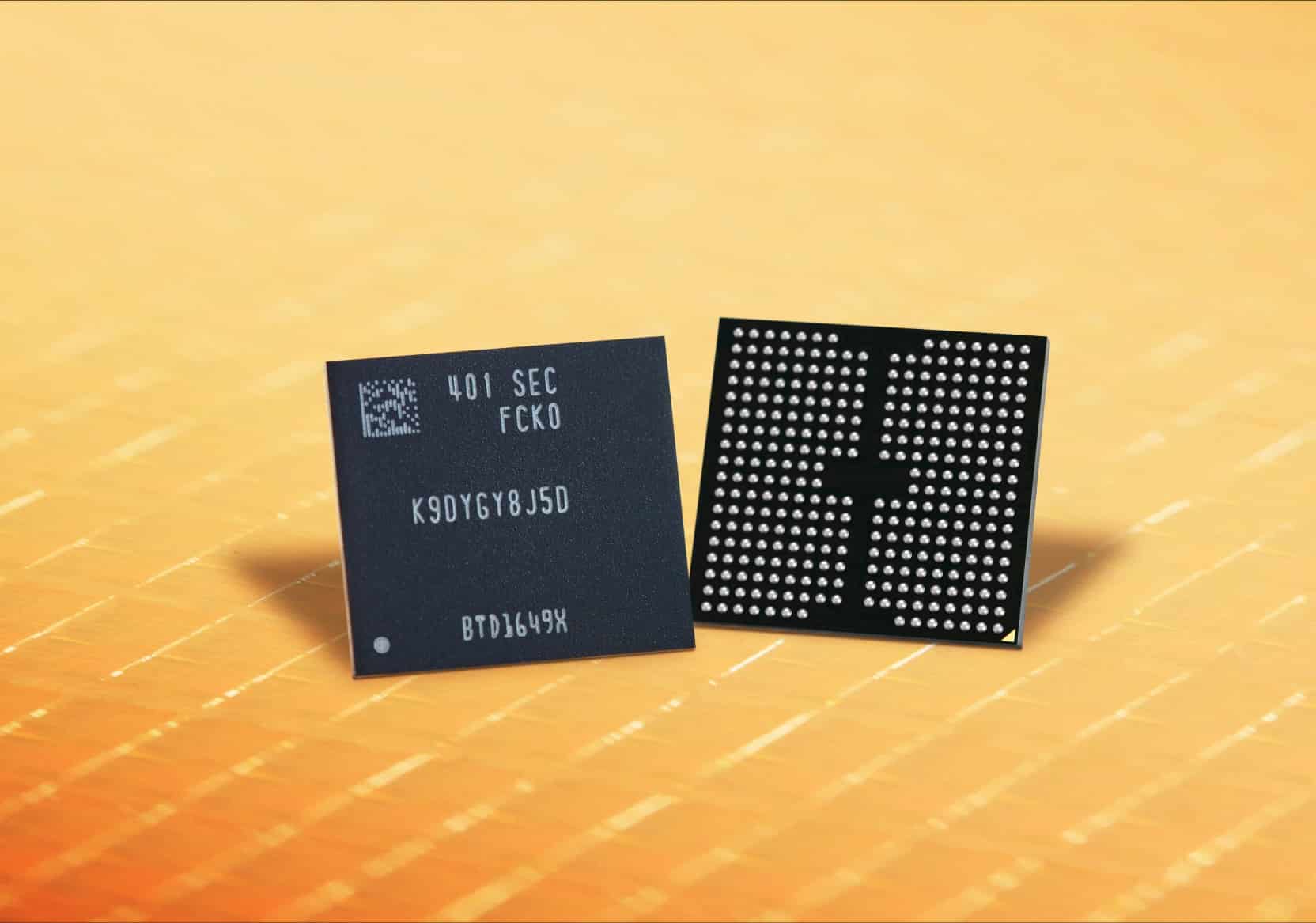
The memory market is experiencing a new episode of tension, and this time the focus is no longer solely on DRAM or HBM for artificial intelligence. NAND, the memory that powers SSDs, enterprise units, and much of modern storage, is also increasing sharply in price. What’s concerning for the PC market isn’t just the rise itself but the speed at which it’s happening and the demand backing it.
The clearest sign has come from South Korea. According to information published by Sedaily, Samsung, the world’s leading NAND market player, has decided to implement a price increase in Q2 similar to that of Q1. The Korean media itself states that after the significant adjustment already made early this year, the supply prices for various NAND products will rise again in this quarter. This is not a minor detail because when the biggest manufacturer in the sector applies pressure on prices, the rest of the market usually follows suit.
This news also arrives at a time when several analysis firms are starting to describe a fairly clear underlying situation: Artificial Intelligence is increasingly absorbing industrial capacity, not only in high-performance memory but also in storage. The usual narrative claimed that AI would mainly benefit HBM and, secondarily, server DRAM. However, that perspective is starting to fall short. The rise of data centers, large-scale models, inference at scale, and the growing use of enterprise SSDs in AI workloads are also driving NAND demand.
AI is no longer just pulling HBM: now it’s also pushing on storage
Samsung already hinted at this direction in its Q4 2025 earnings presentation. In the investor documentation, the company explained its intention to “proactively respond” to NAND demand tied to AI, focusing on high-performance TLC SSDs for AI-related workloads and higher-value products like enterprise SSDs. This means the shift isn’t just market speculation; the company itself recognizes that AI storage is gaining importance within its strategy.
TrendForce paints a similar picture but from a broader perspective. The consulting firm recently noted that the five largest global NAND suppliers increased their revenues by 23.8% quarter-over-quarter in Q4 2025, reaching $21.17 billion, mainly driven by demand for enterprise SSDs fueled by large AI server deployments in North American hyperscalers. Additionally, there’s a significant factor: shortages of hard drives and extended delivery times, which are prompting more orders toward NAND-based solutions.
This imbalance between supply and demand is already affecting prices. TrendForce reports that NAND prices are expected to rise between 85% and 90% quarter-over-quarter in Q1 2026, with their March bulletin cautioning about a “structural divergence”: while rising costs slow PC and smartphone consumption, enterprise demand linked to AI remains strong, maintaining tight supply. In this context, suppliers are shifting capacity toward server applications, where margins are more attractive.
Concrete data also underscores the seriousness of the issue. TrendForce estimated that the average fixed price of 128 Gb MLC NAND was $12.67 in February 2026, 33.9% higher than the previous month and 452.3% above the level a year earlier. These figures are very difficult to ignore. Although the entire market doesn’t adjust immediately or all products reflect these increases at once, the overall trend is sufficiently strong to anticipate tension throughout the supply chain.
What affects data centers today may impact PCs tomorrow
This is where real concern for the consumer market begins. When enterprise storage and AI demand take priority, the client segment risks being sidelined. Similar patterns have occurred before with different memory families, and the trend is starting to resemble it. First, demand for high-value data center products rises; then manufacturers adjust production and product mix; finally, the impact trickles down to consumer SSDs, system integrators, laptop manufacturers, and ultimately the end user.
For now, nothing is set in stone. Samsung has not officially announced on its channels the specific price hike for Q2 as reported by Sedaily, so that data should be considered relevant market information but not an official company statement. Nevertheless, all signals point in the same direction: enterprise NAND demand is growing, suppliers are prioritizing profitable segments, and specialized analysts are already talking about sustained pressure through much of 2026.
This has several implications. First, SSDs could become significantly more expensive again, both in channels and in pre-built systems. Second, it affects system integrators and computer manufacturers, which may face higher memory costs and less availability if supply continues to focus on data centers and AI storage. Third, strategically, if AI industry continues to absorb resources from DRAM, HBM, and now NAND, the PC market could face a more persistent component inflation cycle than previously thought.
A market that is shifting priorities
At its core, what’s happening with NAND is yet another sign of how AI is reshaping the tech industry. It’s no longer just about who makes better accelerators or places more GPUs in a rack. It’s about who controls the memory, storage, and available production capacity. When major cloud clients enter with such strength, the balance shifts for everyone.
Therefore, talking about a NAND crisis today doesn’t mean an imminent collapse of the PC market but acknowledging that the landscape is changing. The demand center is moving toward AI infrastructure, and that usually has ripple effects. You might not see immediate changes across all retail shelves or product lines, but the industry is already sending a clear signal: storage is under pressure again, and this time, the driver isn’t mobile devices or the traditional PC cycle but the global race to build more capacity for Artificial Intelligence.
Frequently Asked Questions
Why is NAND prices rising so much in 2026?
Several factors align: strong demand for enterprise SSDs for AI data centers, tight production capacity, manufacturers prioritizing higher-margin products, and ongoing shortages of hard drives in certain segments.
How might the NAND price increase impact SSD costs for PCs and laptops?
If manufacturers focus on enterprise units and AI continues to absorb capacity, consumer SSDs are likely to become more expensive, and PC makers will face higher costs and less availability if supply remains concentrated in data centers and AI storage.
Has Samsung officially confirmed it will double NAND prices in Q2?
Not in official materials. The information comes from Sedaily, a Korean economic media outlet, which claims Samsung is preparing a price increase in Q2 aligned with Q1. Samsung has officially acknowledged prioritizing NAND demand related to AI and high-performance SSDs.
Does AI also require NAND besides HBM and DRAM?
Yes. AI depends not only on fast memory for computation but also on large storage volumes for data, context, vector bases, inference, and high-performance enterprise SSDs. This is increasing NAND’s importance in data center infrastructure.
via: sedaily
