
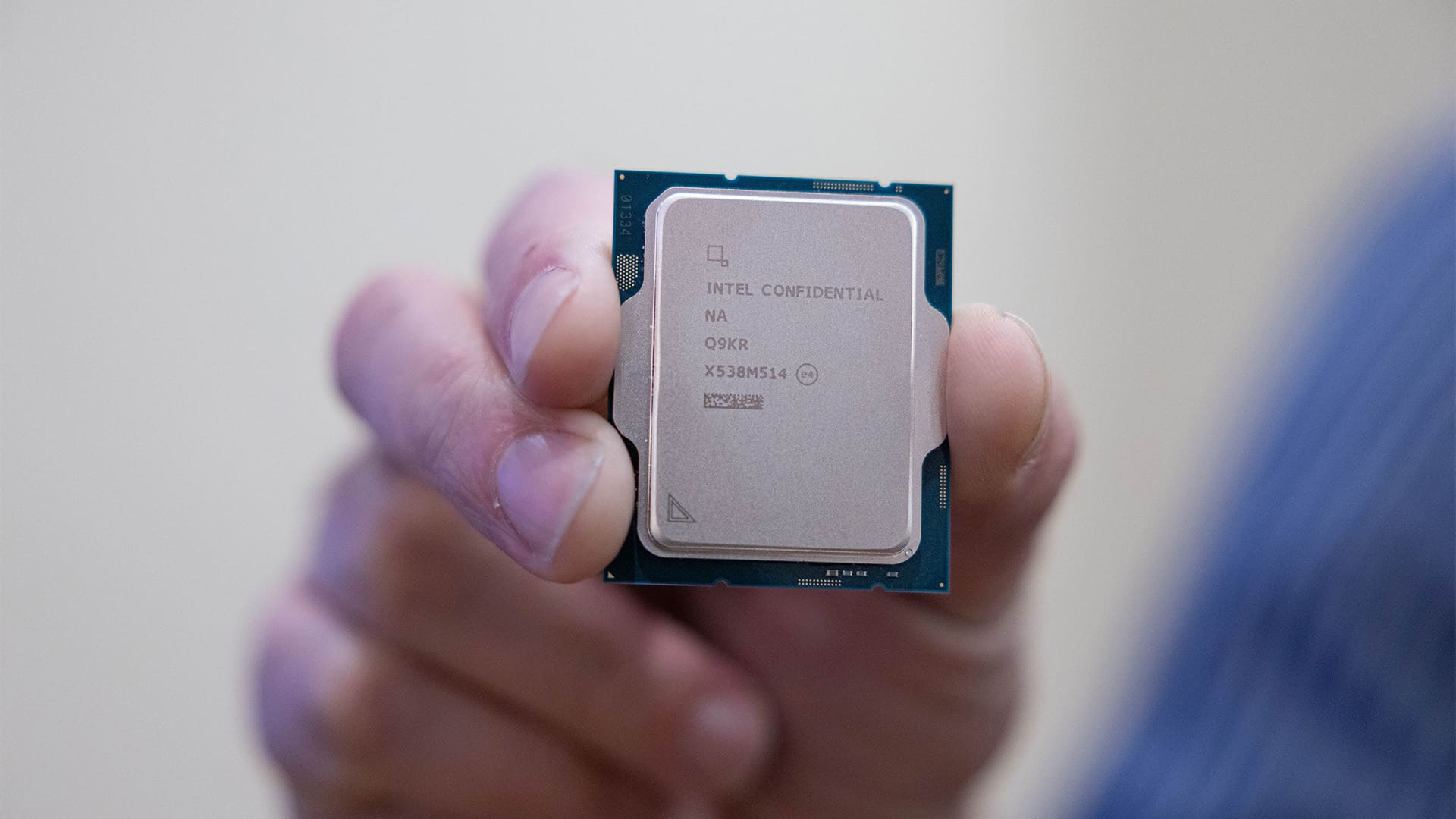
Intel has leveraged Embedded World 2026, held in Nuremberg, to unveil a new offensive in one of the areas most crucial to its growth outside traditional PCs: the edge. The company announced the Intel Core Series 2 with P-cores, an industrial platform designed for critical real-time workloads, and also showcased a new Edge AI Suite for Health & Life Sciences, aimed at patient monitoring through artificial intelligence. The offering targets two particularly sensitive markets: industrial automation and connected healthcare.
The significance of the announcement is not just in the release of new chips but in the strategic message Intel wants to deliver. The manufacturer emphasizes that edge remains one of its fastest-growing segments, and brute processing power alone is no longer enough: platforms now need to combine predictable latency, support for mixed workloads, and local AI acceleration. In this context, the new Core Series 2 aims to fill a very specific niche: industrial equipment and embedded systems that require precise responses without the complexity and higher costs of multi-processor architectures.
A design built for real-time and critical workloads
Intel presents this family as an “industrial-ready” platform for mission-critical applications. On its official edge and embedded page, the company highlights that these P-core only processors are intended for control, automation, robotics, and edge servers, with a clear focus on performance consistency and streamlined scheduling. This detail is key: by avoiding hybrid configurations, Intel aims to provide a practical advantage for environments where predictability is as important as raw performance.
The lineup includes 11 products launched in Q1 2026, with configurations of 8, 10, and 12 cores, turbo frequencies up to 5.9 GHz in some models, and integrated Intel UHD Graphics 770 or 730 depending on the version. Intel also emphasizes that the platform offers socket compatibility within certain edge environments and that its industrial lifecycle program guarantees availability and support for up to 10 years. This is a traditional but crucial point for automation, manufacturing, and embedded systems, where update cycles do not follow the fast pace of consumer markets.
The company supports the launch with performance comparisons, which, as always, should be read with caution. According to their own estimates, an Intel Core 9 273PE can deliver up to 2.5 times more deterministic response and up to 3.8 times better deterministic performance than an AMD Ryzen 7 9700X in certain tests, along with up to 4.4 times less maximum PCIe latency in the tested material. Intel also compares the Core 9 273PQE with its own Core i9-14901E, claiming up to 1.5 times more multi-threaded performance. These figures come from the company’s internal methodologies or estimates documented in their performance literature, providing insight into the product’s positioning but not replacing independent system testing.
Nevertheless, the technical message is consistent. Intel wants to make clear that these chips are not intended for gaming or general desktop use but for scenarios where controlled latency offers more value than raw benchmark numbers: industrial controllers, robotics, local inference at the edge, and systems with multiple concurrent loads that cannot tolerate erratic responses.
The new approach: AI for patient monitoring
The second major announcement has more to do with software, ecosystem, and verticalization. Intel introduced a preliminary version of its Health & Life Sciences Edge AI Suite, a new edge AI suite designed so OEMs, ODMs, and ISVs can test platforms with scenarios closer to real-world applications. Instead of focusing on synthetic benchmarks, the company promotes validated reference pipelines and benchmarking tools for clinical monitoring workloads.
The suite is centered on patient monitoring supported by three explicitly mentioned workloads: arrhythmia detection via ECG using AI, remote photoplethysmography, and anonymous 3D visual tracking. The goal is for these workloads to run locally on Intel processors within healthcare environments, which is especially relevant now as hospitals and equipment manufacturers seek more automation, real-time analysis, and less reliance on cloud infrastructure for sensitive tasks.
It’s important to note that Intel still describes this as a preview. The preliminary version is available on GitHub, while general availability is planned for the second quarter of 2026. On the Intel Builders page, the company defines this suite as an edge-native framework to demonstrate and evaluate multimodal health and life sciences solutions, optimized for Core Ultra Series 2 and Core Ultra Series 3. This clarifies that the goal is not just to sell CPUs but to build a broader ecosystem of tools and references to accelerate vertical development.
Intel aims to sell a platform, not just processors
The most notable aspect of the announcement is perhaps not the specifications or the new chips’ names but how Intel is shaping its edge offering. The Core Series 2 with P-cores target the most industrial and real-time applications; the Core Ultra Series 3, introduced earlier, represent the AI-accelerated segment for edge devices; and the Edge AI Suites serve as software glue to bring specific use cases closer to clients and partners.
This strategy makes sense in a market where the trend is shifting away from selling just silicon toward offering a combined hardware, long-term support, deployment tools, and sector-specific references. In industry, this means predictable latency and simplified architectures; in healthcare, it shows a commitment to reliable multimodal workloads outside laboratory conditions. Intel isn’t the only player in this game, but it seeks to strengthen its position where its historical presence in edge and embedded markets still provides a solid foundation.
In the short term, the announcement leaves a clear conclusion: Intel wants to stay relevant at the edge not only through raw power but by emphasizing determinism, industrial longevity, and sector-specific software. How OEMs respond and the real performance of these chips in production deployments remains to be seen, but the direction is unmistakable: the edge is no longer a generic market but a collection of verticals where every millisecond, watt, and use case matters more than ever.
Frequently Asked Questions
What are the Intel Core Series 2 with P-cores?
New edge and embedded processors introduced by Intel at Embedded World 2026, designed for critical real-time workloads and tailored toward industrial automation, robotics, and edge servers.
How many cores do the new Core Series 2 for edge have?
The lineup includes models with 8, 10, and 12 cores, with turbo frequencies up to 5.9 GHz on some versions, totaling 11 products.
What does Intel’s new Edge AI Suite for healthcare do?
The Health & Life Sciences suite offers validated pipelines and benchmarking tools for AI-based patient monitoring, including arrhythmia detection via ECG, remote photoplethysmography, and anonymous 3D visual tracking.
When will Intel’s new healthcare AI suite be available?
Intel indicates the preview is already accessible on GitHub, with general availability scheduled for Q2 2026.
via: newsroom.intel
